How to Use an Air Fryer Microwave: A Complete Guide
Master the combined air fryer microwave with safety tips, settings, and practical steps to crisp, reheat, and cook healthier meals efficiently.


Mastering how to use air fryer microwave lets you crisp, reheat, and cook a wide range of foods with fewer dishes. In this guide, you’ll learn safe setup, essential settings, and practical steps to get consistent results across meals. By combining convection, microwave, and air-fry modes, you can save time while preserving flavor and nutrients.
What is a combined air fryer microwave and why use one?
According to Air Fryer 101, a combined air fryer microwave is a versatile appliance that merges three cooking approaches into one device: convection microwave heating, air circulation for crisping, and a dedicated air-fry chamber. This versatility lets you sauté, roast, bake, reheat, and crisp without hauling out multiple devices. For busy households, the payoff is speed, countertop efficiency, and less kitchen clutter. The key is understanding the strengths of each mode and knowing when to use them for different foods. When used correctly, you can cut overall cooking time by a third to a half for many recipes, while maintaining texture and flavor.
How the technology blends convection, microwave, and air-fry modes
In practice, an air fryer microwave switches among three core mechanisms: microwave heat cooks from inside, convection air circulates to create a crispy exterior, and the air fry feature uses fast, dry heat with a high fan speed to mimic traditional frying. Mastery comes from pairing modes: microwaving softens and heats through food quickly, convection browns surfaces, and air frying delivers that crisp bite. Start with simple items like reheated leftovers or small vegetables to feel how each mode behaves, then layer modes for hybrids (e.g., microwave to heat through, finish with air fry to crisp).
Safety considerations and what to avoid
Safety matters more when a single appliance covers multiple functions. Always use microwave-safe containers and avoid metal. Do not block air vents or stack foods excessively; crowding can block airflow and lead to uneven cooking. Use oven mitts for hot trays, keep the door closed while microwaving, and check internal temperatures with a food thermometer. Finally, read the user manual for power limits and recommended cooking times to minimize risk of overheating, sparking, or melting insulation.
Getting started: setup, placement, and preheating considerations
Place the unit on a flat, heat-resistant surface with at least 4 inches of clearance on all sides. Preheating is not always required, but for crisp results, a brief warm-up helps establish a stable cooking environment. Use microwave-safe parchment or silicone mats to prevent sticking, and choose appropriate cookware—shallow metal pans can work in some models if the manufacturer approves them. Finally, organize your ingredients so thinner items are spaced to promote even airflow.
Practical cooking with the air fryer microwave: quick-start ideas
A practical start includes 1) reheating pizza by microwaving briefly, then finishing with a short air-fry to restore crust texture; 2) reheating fried foods with a light spray of oil to re-crisp; 3) steaming vegetables in the microwave portion, then crisping the edges with the air fry mode. For proteins, begin with a short microwave blast to heat through, followed by a convection-bake finish for browning. These hybrids reduce cooking time while preserving moisture.
Food-specific tips: proteins, vegetables, frozen foods, and reheating
Proteins: ensure an internal temp of 165°F (74°C) for poultry and 145°F (63°C) for others; use a thermometer. Vegetables: cut evenly, toss with a tiny amount of oil, and arrange in a single layer. Frozen foods: choose smaller portions and reduce both time and power; many models require shorter cook times than a standard air fryer. Reheating: cover with a microwave-safe lid to trap steam, then finish with a brief crisping cycle for texture.
Cleaning, maintenance, and troubleshooting essentials
Unplug the unit and let it cool before cleaning. Remove accessories and wash with warm soapy water; dry thoroughly to prevent rust. Wipe the interior with a damp cloth—avoid abrasive cleaners that could damage coatings. Regularly inspect vents and seals, and replace damaged components per the manufacturer’s guidance. If you notice uneven cooking, re-position food and check that your settings align with the recipe or manual.
Tools & Materials
- Air fryer microwave unit(Ensure it supports microwave + convection + air fry modes; review the user manual for supported functions.)
- Microwave-safe containers(Use glass, ceramic, or microwave-safe silicone; avoid metal.)
- Oven-safe thermometer or instant-read thermometer(Check internal temperatures safely (165°F/74°C for poultry; 145°F/63°C for others).)
- Silicone mats or parchment paper(Prevents sticking and makes cleanup easier; ensure it is microwave-safe.)
- Oven mitts or silicone grip tongs(Protect hands when handling hot trays and racks.)
- Non-slip mat or rack(Keeps containers stable and improves air circulation.)
- Oil spray or brush(Lightly coat foods to enhance crisp without greasiness.)
Steps
Estimated time: 25-40 minutes
- 1
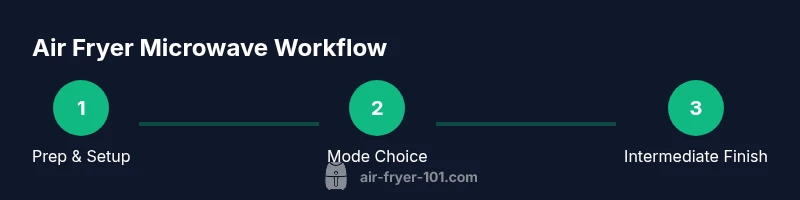
Prepare the appliance and ingredients
Clear the workspace, place the unit on a stable, heat-resistant surface, and gather all tools. Ensure the food is portioned evenly and placed in microwave-safe containers. Have parchment or silicone mats ready to prevent sticking and easy cleanup.
Tip: Arrange ingredients in a single layer if possible to promote even airflow. - 2
Choose the appropriate mode and preheat if necessary
Review the recipe and select a mode: microwave for heating through, convection for browning, or air fry for crisping. If your model recommends preheating for a crisper finish, allow the unit to reach operating temperature before adding food.
Tip: Preheating is more helpful for crisp textures; skip if your item is thin or already hot. - 3
Arrange food for even cooking
Spread items in a single layer with space between pieces. Avoid stacking or overfilling the basket, which can block airflow and create uneven results.
Tip: Turn or shake the basket halfway through to ensure uniform browning. - 4
Set time and temperature
Start with conservative times and temperatures from the recipe, then adjust based on early results. For hybrids, you may microwave briefly and finish with a crisping step.
Tip: Use a thermometer to verify doneness instead of relying solely on color. - 5
Monitor progress and adjust as needed
Check the progress at the halfway mark and reposition items if needed. If the food seems underdone but the surface is browning too quickly, reduce heat or switch modes temporarily.
Tip: Listening to the appliance’s beeps helps you time adjustments precisely. - 6
Finish and verify doneness
Ensure internal temperatures meet safe guidelines (165°F/74°C for poultry). Allow a brief rest before serving to re-distribute juices and finish carryover cooking.
Tip: Resting strengthens texture and moisture balance. - 7
Clean up and maintain the device
Unplug, cool, and wash accessories in warm, soapy water. Dry thoroughly; check vents and seals for debris. Store the unit with the door ajar to prevent odors when not in use for long periods.
Tip: Regular cleaning reduces odors and preserves performance.
Got Questions?
What is the difference between an air fryer microwave and a traditional air fryer?
An air fryer microwave combines convection microwave heating with an air-frying function, allowing you to heat through and crisp at the same time. A traditional air fryer relies on hot air circulation without microwave heating, so it’s better for crisping but not quick reheating of leftovers.
A combined unit heats foods through microwaving and then crisps with air fry mode, saving time compared to using separate devices.
Can I cook raw chicken in an air fryer microwave?
Yes, you can, but ensure the internal temperature reaches 165°F (74°C). Use a thermometer and follow safe handling guidelines to prevent undercooking.
Yes, but you must verify it's fully cooked with a thermometer.
Is it safe to use metal in an air fryer microwave?
Only if the manufacturer explicitly permits metal in the microwave mode and the cookware is rated for microwave use. When in doubt, use microwave-safe glass or ceramic.
Check the manual—most models require avoiding metal in microwave mode.
Do I need to preheat the unit for every recipe?
Preheating helps with crisping and even browning for certain foods. For quick reheats or delicate items, you may skip preheating.
Preheating is optional depending on what you’re cooking and the model you own.
What foods work best for a crispy finish in this device?
Leftover fries, wings, roasted vegetables, and battered items tend to crisp well when finished with the air fry mode after an initial warm or microwave step.
Crispy favorites include fries, wings, and roasted veggies.
How do I clean and maintain the air fryer microwave?
Unplug and cool, wash accessories in warm soapy water, and wipe the interior with a damp cloth. Keep vents clear and inspect seals regularly.
Clean after use and inspect parts to keep performance high.
Watch Video
Quick Summary
- Master all three modes (microwave, convection, air fry) for versatile results
- Always use microwave-safe containers and monitor internal temps
- Space foods evenly and avoid overcrowding for even cooking
- Preheat when crisping is a priority and clean promptly after cooking