What to Spray Air Fryer With: Safe Oils and Tips
Learn what to spray air fryer with to prevent sticking, promote browning, and protect nonstick coatings. Discover safe oil options and proper application with practical steps and tips.


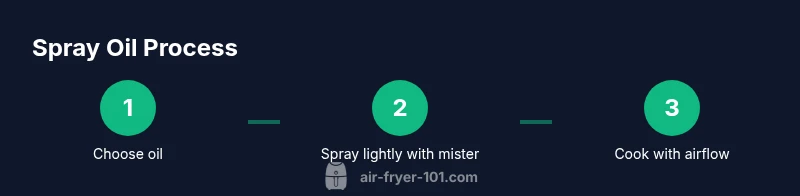
To prevent sticking and promote browning, spray a light coat of oil using a pump bottle or aerosol-free mister. Suitable options include avocado, canola, or light olive oil. Avoid aerosols and cooking sprays with propellants, which can damage nonstick coatings and gum up the vent. Apply after preheating, wipe excess, and re-spray as needed during cooking.
What to spray air fryer with: safe options and limitations
To keep your air fryer performing well, choose non-aerosol, oil-based sprays or pump misters and use them sparingly. According to Air Fryer 101, the best practice is to apply a light, even coat to the basket or food surface rather than saturating the food. Most nonstick baskets tolerate small amounts of light oil well, which helps browning without smoking. Aerosol cooking sprays can contain propellants and additives that leave sticky residues on the nonstick coating and ventilation paths. Air Fryer 101 analysis shows that frequent use of propellants can contribute to residue buildup over time. For that reason, skip aerosols and instead opt for a refillable mister or a dedicated oil spray bottle. If you must use pre-diluted spray, ensure it is labeled for cooking and does not contain harmful additives. The core idea is to minimize oil while achieving an even coating to promote crispiness.
Oil types by purpose
Different oils behave differently in air fryers. For a neutral flavor and high heat tolerance, choose refined avocado oil, canola, or light olive oil. Avocado oil has one of the highest smoke points, making it a reliable choice for hotter settings. Canola and sunflower oils offer light flavor and good spray-ability in pump bottles. Some blends are marketed as 'high-heat' or 'grill-safe'—review labels to confirm neutral flavor and no added sugar. If you prefer butter or dairy flavors, use a tiny amount stirred into the food after cooking rather than spraying butter directly onto the basket. Air Fryer 101's guidance emphasizes minimizing saturated fats while preserving browning and texture. Always test a small batch first to gauge browning and smoke before cooking large portions.
How to apply to different components
Spray the basket or rack surface lightly, not the air chamber. Hold the mister about 6 to 8 inches away and sweep in a thin, even layer. For foods, toss or lightly mist the surface before arranging in a single layer; avoid soaking pieces. Preheat the air fryer to the recommended temperature, then spray after preheating to preserve surface coating. If you plan a longer cook, you can re-spray halfway through, but use minimal amounts to prevent soggy results. If your basket has ridges, rotate the pieces during cooking to promote even browning and reapply oil sparingly as needed.
Common mistakes and how to fix
Mistake: spraying too heavily, leading to soggy textures and heavier smoke. Fix: apply a light mist and wipe away any pooled oil before starting. Mistake: spraying directly into the heating element. Fix: aim the spray at the basket surface only. Mistake: relying on traditional aerosol sprays. Fix: switch to pump mister or oil bottle. Air Fryer 101 notes that coating methods should create a uniform film rather than drips. Experiment with a tiny amount on a test batch to dial in the right spray quantity.
Cleaning and residue prevention
Residue from sprays can accumulate on the basket and vents. After cooking, let the basket cool, then wash with warm soapy water; avoid abrasives that could scratch the coating. If you notice a dull film after several uses, wipe the basket with a damp cloth to remove surface oil. Regular maintenance, including a quick wipe-down after each use, helps preserve nonstick surfaces and improves release for future batches. Air Fryer 101 recommends cleaning your spray bottle and re-checking the oil level to avoid contaminating batches.
Alternatives to spraying
If you want to minimize oil completely, consider oiling the basket slightly with a brush or tossing the food in a light coating before loading the basket. Dry-seasoned air helps create crisp textures without added fat. You can also use parchment liners designed for air fryers to reduce sticking. Finally, consider air-frying foods that inherently release little moisture so you can control sticking with small adjustments rather than heavy spraying.
Safety considerations and best practices
Always read your air fryer manual for limits on oil usage and the recommended type of spray. Use oils with high smoke points and minimal saturated fat; avoid flavored oils with sugar or honey that may caramelize. In poorly ventilated kitchens, even small oil quantities can smoke at high temperatures; ensure good airflow. The Air Fryer 101 team recommends monitoring smoke and heat closely and adjusting spray amounts to taste and safety. If you are unsure about a new spray, test a small amount and observe results before cooking full portions. This approach helps protect your appliance while delivering consistent browning.
Tools & Materials
- Oil spray bottle / pump mister(A reusable mister lets you control oil quantity and avoids propellants)
- Neutral cooking oils (avocado, canola, or light olive)(Choose high smoke point oils for best results)
- Optional baking brush(For brushing on oil if you prefer brushing to spraying)
- Paper towels or clean cloth(For wiping excess oil and quick cleanups)
- Measuring cup or small funnel(Helpful for filling the mister without spills)
Steps
Estimated time: 15-25 minutes
- 1
Gather tools and ingredients
Collect your spray bottle, chosen oil, paper towels, and your air fryer. This upfront preparation prevents interruptions and helps you apply oil evenly. Keeping everything organized reduces the chance of over-oiling during cooking.
Tip: Lay out a small workstation near the air fryer for efficiency. - 2
Preheat the air fryer
Preheating ensures the surface is hot enough for browning and helps oil distribute evenly when you spray. Set the temperature to the recommended level for your meal and let the unit reach heat before adding food.
Tip: Preheating reduces the amount of oil needed and sharpens browning. - 3
Fill and test your spray
Fill the mister to about 80% capacity and prime by spraying a few times away from food to clear the nozzle. This ensures a smooth, even spray and prevents sudden bursts that could dribble oil into the wrong area.
Tip: Shake or swirl the bottle lightly after filling to mix contents. - 4
Apply a light, even oil coat
Hold the mister 6–8 inches from the basket and sweep in a thin layer. Avoid pooling oil in crevices to prevent soggy textures; a little goes a long way in air frying.
Tip: Aim for a single, uniform pass rather than multiple heavy spritzes. - 5
Cook in a single layer and monitor
Arrange food in a single layer for even air flow. Start cooking; about halfway through, re-spray sparingly if the surface appears dull or dry, then finish cooking without adding excess oil.
Tip: Over-spraying mid-cook can cause soggy edges. - 6
Finish and clean
Once done, let the basket cool before washing. Clean the spray bottle and wipe down the exterior to prevent buildup. This keeps nonstick surfaces intact for future batches.
Tip: Regular cleaning extends the life of your spray bottle and basket.
Got Questions?
Can I spray butter or margarine in an air fryer?
Butter or margarine can burn or separate at high heat, so they are not ideal for spraying. If you want a buttery flavor, add a small amount after cooking or melt it separately and drizzle lightly.
Butter sprays aren’t recommended; consider adding a tiny amount after cooking or using clarified butter separately.
Is cooking spray with propellants safe for air fryers?
Most traditional aerosols use propellants that can leave sticky residues and may affect nonstick coatings. Prefer a refillable pump mister with pure oil.
Propellants can leave residue; use a pump mister with oil instead.
What oils are best for air fryer cooking?
High smoke point, neutral-flavored oils like avocado, canola, or light olive oil work well. Avoid strong-flavored oils that can overpower foods.
Use avocado, canola, or light olive oil for best results.
How often should I re-spray during a long cook?
Re-spray only if you notice dullness or surface drying. Use a very light coating to maintain crispiness without pooling.
Respray sparingly only if needed during longer cooks.
Can I reuse oil spray bottles?
Yes, but rinse and dry thoroughly between uses to avoid contamination and off flavors.
Yes—just clean it well between uses.
Do air fryers require spraying every time?
Not always. Some foods release enough oil naturally; spraying mainly helps with sticking or browning. Adjust based on your recipe.
You don’t need to spray every time; adjust by recipe.
Watch Video
Quick Summary
- Spray with a pump mister to avoid propellants
- Choose high smoke point, neutral oils
- Spray lightly and evenly, not heavily
- Re-spray sparingly for longer cooks
- Keep baskets clean to prevent residue buildup