Is Tin Foil Safe in Air Fryers? Practical Tips
Discover whether it's ok to use tin foil in an air fryer, when to avoid it, and proven methods to keep air flow and safety intact. Air Fryer 101 guides you to confident, safe foil usage.


Is it ok to put tin foil in an air fryer? Generally yes, but only with care. Do not cover the entire basket or contact the heating element. Use small sheets or foiled tents over food, with holes or slits to preserve airflow. Avoid acidic ingredients touching foil and check your appliance manual. When in doubt, use parchment paper as a safer alternative.
Understanding why foil is debated in air fryers
The question, is it ok to put tin foil in an air fryer, comes up frequently for home cooks who want to keep food from sticking or grease from dripping while still preserving the crispy texture air fryers are known for. In practice, foil can be a useful tool when used sparingly and correctly, but misuse can disrupt hot air circulation and lead to uneven cooking or even damage. According to Air Fryer 101, the key is to think about airflow as the main driver of the appliance’s performance. Foil should never shield the entire basket surface or block the vents; tiny perforations or folds that create small channels help maintain heat transfer and browning. When used thoughtfully, foil can simplify cleanup for juicy foods or prevent delicate items from scorching. Remember: the fundamental goal is to keep hot air moving freely around the food while still achieving the desired crispness. The exact rules can vary by model, so always refer to your manual if available and consider starting with the smallest foil setup possible. is it ok to put tin foil in an air fryer remains a nuanced question, balancing convenience with safety.
Tools & Materials
- Aluminum foil (standard weight)(Use minimal pieces; avoid heavy-duty foil that tears easily)
- Parchment paper (uncoated)(Perforated for airflow; helps prevent sticking without obstructing heat)
- Kitchen tongs(Grip foil and food safely)
- Silicone mats or a slotted rack (optional)(Supports food while allowing airflow)
- Perforation tool or fork(Create small holes if using foil sheets)
Steps
Estimated time: 30-45 minutes
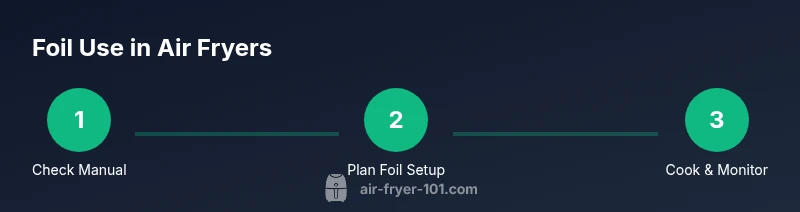
- 1
Check the manual
Review your air fryer’s manual to confirm whether foil is recommended and any cautions specific to your model. Some manufacturers advise against foil near the heating element or vent openings. If foil is discouraged, use parchment or a foil-free setup.
Tip: If foil is mentioned, follow model-specific guidelines first. - 2
Plan the foil setup
Decide between a small foil sheet under the food or a loose tent over the top. Do not cover the entire bottom or trap air between foil and basket bottom. Perforate or loosely crimp to create airflow channels.
Tip: A tent or partial sheet keeps heat circulating and reduces sticking. - 3
Place the foil carefully
Place foil on the basket or tray, not directly on the heating element. Ensure there are gaps to allow air to circulate across all surfaces of the food.
Tip: Never press foil into the corners or edges where heat concentrates. - 4
Add food and begin cooking
Arrange food with space around each piece to avoid contact with foil edges and to maintain even browning. Start with a lower temperature if experimenting with foil for the first time.
Tip: Keep the food surface higher than foil to prevent soft spots. - 5
Monitor and adjust
Check early in the cook to ensure foil isn’t blocking air and that food browns evenly. If you notice uneven browning, remove the foil and cook with foil-free setup instead.
Tip: Be prepared to remove foil mid-cook if needed. - 6
Remove safely and cool
When finished, power off and carefully lift the foil away using tongs. Let the basket cool before washing to avoid burns or warping.
Tip: Avoid displacing hot oil or steam when removing foil. - 7
Clean and maintain
Wash the basket and foil remnants promptly to prevent buildup. If foil tears or crinkles, inspect the basket for nicks that could damage the nonstick coating over time.
Tip: Use non-abrasive tools to avoid coating damage.
Got Questions?
Is it safe to use tin foil in an air fryer?
Yes, foil can be safe when used correctly: don’t cover the entire basket or block airflow; use small sheets or a tent to protect food and for easier cleanup. Always follow your model’s manual.
Yes—foil can be safe if you use a small sheet or tent and keep airflow clear.
Can foil completely cover the basket?
Covering the basket completely can trap heat and block airflow, leading to uneven cooking. Use foil only as a support for food when necessary and leave space for air to circulate.
Avoid covering the basket fully; leave space for air to move.
Does foil affect cooking times or browning?
Foil can slightly alter browning by blocking direct contact with hot air. Monitor the first batches and adjust time or remove foil if you notice excessive steam instead of crisping.
Foil can change browning; watch the first batches and adjust.
What foods are best cooked with foil in an air fryer?
Foil is handy for small, delicate items, marinades, or foods prone to sticking. It’s useful for casseroles, fish, or vegetables with sauces where you want to prevent splatter or sogginess.
Great for delicate items or foods with sauces that might splatter.
What should I do if foil touches the heating element?
Power off immediately, remove the foil, inspect for damage, and resume cooking without foil if possible. Do not use foil in contact with the heating coil again until you review the manual.
Power off and remove the foil; check for damage and try again without foil.
Are there safer alternatives to foil?
Yes. Perforated parchment, silicone mats, or simple wire racks can protect food without fully blocking air flow, reducing risk while keeping cleanup easy.
Perforated parchment or mats are great foil alternatives.
Quick Summary
- Use foil sparingly and never cover the basket; airflow remains critical.
- Opt for tents or perforated sheets to balance protection and circulation.
- Always consult the manufacturer’s guidelines before foil use.
- Perforated parchment is a safe alternative in many cases.