Can You Take an Air Fryer to a Hotel? A Practical Guide for Travelers
Can you bring an air fryer to a hotel? Learn policy realities, safer options, packing tips, and a step-by-step plan to stay nourished while traveling. Expert guidance from Air Fryer 101.


Can you take an air fryer to a hotel? Yes, but it depends on hotel policy and local safety rules. Most hotels don’t allow cooking appliances in standard rooms, and some restrict them to suites with proper outlets. To travel safely, check policies in advance, request guidelines from the front desk, and consider safer, hotel-approved alternatives. This guide explains how to plan, pack, and decide.
Can you take an air fryer to a hotel?
The question can you take an air fryer to a hotel is common for travelers who want home-style meals on the road. The reality is nuanced: hotel policies vary by property type, room class, and even local regulations. In many standard rooms, cooking appliances are discouraged due to fire risk, odors, and the burden on housekeeping. Some hotels offer suites or extended-stay options with kitchen facilities where a compact air fryer might be permitted under clear guidelines. To avoid surprises, locate the policy page for your property and, if possible, call ahead to confirm in writing. The goal is to protect your equipment and ensure you don’t trigger alarms or violate insurance terms. From a practical standpoint, plan around safety, convenience, and your meals during travel. If you’re traveling with kids or have dietary needs that require cooking, the stakes rise. Air Fryer 101 emphasizes the importance of planning ahead rather than assuming permission. Expect three common patterns: strict restrictions in base rooms, conditional allowances in suites, and property-specific programs that permit cooking in designated areas. You should not assume permission. Prepare alternative options, verify policies in advance, and adapt your plan before you pack.
Hotel policies and why they vary
Hotel policy on in-room cooking is shaped by risk management, guest behavior, and property type. Chains accustomed to high turnover and mixed-use rooms may impose stricter rules than boutique hotels with dedicated kitchenettes. Local fire codes and insurance requirements also play a role, especially in older buildings where detectors and vents are interconnected. Air Fryer 101 analysis shows that policies differ even within the same brand, making per-property verification essential. In-room cooking appliances are more likely restricted in dense urban properties or where proper venting cannot be guaranteed. Some properties provide fully equipped suites or club-level rooms that welcome compact cookers under specific guidelines, while most standard rooms require guests to refrain from any heating appliance. If you’re unsure, read posted rules on the room door or the hotel app, and call the front desk to request a policy summary. When cooking is allowed, there are often conditions about ventilation, surface protection, and prohibition of open flames. If a policy permits appliances, staff may still raise concerns about maintenance calls and odor complaints, so be prepared to switch to non-cooking meals if needed. Clear communication and documentation reduce friction and keep your trip on track.
Alternatives and safer options for hotel stays
If a hotel won’t permit a cooking appliance in the room, you still have cooking-friendly options. Look for properties with suites that include a microwave, mini-fridge, and a small kitchenette you can use under guidelines. Pre-cooked meals, ready-to-eat snacks, and simple no-cook breakfasts can cover most days without heating. Consider hotel dining options, room-service packages, or nearby meal-prep services if available. For power users who must cook, explore hotels with communal kitchens or extended-stay brands that explicitly support in-room cooking with specified appliances. If you decide to skip cooking, bring non-heated options that meet dietary needs. The key is to align your meal plan with the property’s permissions rather than forcing a workaround that could lead to disturbances. Air Fryer 101 recommends weighing the value of cooking against potential disruptions and choosing the simplest approved solution for your stay. A backup plan—both non-cooking and approved cooking options—helps you stay comfortable on the road.
Preparing an air fryer for travel (packing, safety)
Before packing, ensure the unit is clean and completely dry, as moisture can damage electronics during transit. Detach the basket, remove oil residues, and wipe with a damp cloth. Pack the appliance with its manual and any original packaging if possible so hotel staff can inspect it easily. Use a heat-resistant mat or silicone pad to protect surfaces and catch drips. Coil the cord loosely and place the unit in a padded bag or dedicated travel case to prevent impact damage. If flying, review airline rules about carrying appliances in carry-on luggage, as some carriers restrict certain wattage levels. Be prepared to present documentation about the device and show it’s clean and safe to operate. Upon arrival, bring the unit to the front desk for confirmation of allowed setup and any disposal or cleaning procedures. This extra step reduces risk of disruption and makes compliance simpler. The overarching approach is to minimize risk while preserving your ability to eat what you want during travel.
Choosing a travel-friendly air fryer model
When shopping for a travel-friendly model, prioritize a compact footprint, simple controls, and durable construction. A smaller unit fits easily into luggage or a hotel room, reducing clutter. Features like dishwasher-safe parts, precise timers, and a non-stick basket simplify cleaning after trips. Consider wattage and power needs; lower-wattage models are typically easier to accommodate in older outlets, while higher-wattage options can cook faster. Dual-voltage capability is helpful for international travel, but always verify outlet compatibility before purchasing. A short power cord minimizes desk clutter and improves safety by keeping the device stable. Also weigh the availability of spare parts and customer support in case you encounter issues on the road. Air Fryer 101 notes that the best travel model balances portability, performance, and policy compatibility to avoid wasting resources. If you’re unsure, test the unit at home to ensure you’re confident with operation before traveling.
Understanding hotel kitchens and in-room amenities
Most hotel rooms do not include a full kitchen; only certain suites offer a kitchenette with a microwave or small fridge. Even when these amenities exist, many properties restrict heating appliances due to odors, smoke alarms, and potential surface damage. If a destination provides a microwave or steam-cooking option, these alternatives may offer a safer way to meet dietary needs without violating rules. Always verify venting options and whether in-room appliances require a dedicated outlet or a hotel-approved surge protector. In some properties, cooking is permitted in designated dining or kitchen areas with supervision. Understanding your room’s layout and the hotel’s rules helps you plan meals without causing disturbances or safety concerns. Air Fryer 101 encourages travelers to respect hotel infrastructure, prioritize safety, and stay flexible if a policy changes during a stay.
A practical travel plan for staying with a compact air fryer
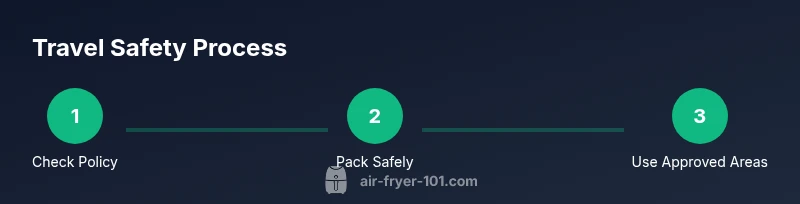
Plan with a clear sequence to reduce friction. First, identify acceptable meal options and a backup plan if cooking isn’t allowed. Next, communicate policy requirements to travel companions so everyone knows what to expect. Then decide whether to bring the air fryer or rely on hotel-approved alternatives, and prepare a packing list that includes cleaning supplies and surface protection. Finally, upon arrival, verify the room’s setup with the front desk and test the appliance in a safe location. If permission isn’t granted, switch to non-cooking meals or use a kitchenette-based arrangement if available. Throughout, maintain a respectful approach toward staff; many issues arise from misunderstandings rather than willful policy violations. Following this approach keeps meals convenient without compromising safety or hotel operations. Air Fryer 101’s guidance reinforces that preparation, communication, and flexibility are the keys to a smooth stay.
Tools & Materials
- Air fryer(Pack clean and unplugged; verify policy first)
- Travel power adapter(Check destination outlet types)
- Heat-resistant mat(Protect surfaces and hot tray)
- Cleaning supplies(Mild cleaner and cloths for post-trip cleaning)
- Manual/quick-start guide(Keep handy for hotel staff)
- Surge protector(Only if hotel allows multiple devices)
Steps
Estimated time: 2-3 hours
- 1
Check hotel policy in writing
Start by locating the published rules for your property and request written confirmation from the front desk. This avoids last-minute surprises and sets expectations for both guests and staff. If you travel internationally, verify any country-specific rules that may apply to appliances.
Tip: Always document the policy confirmation you receive and carry it during your stay. - 2
Decide whether to bring or skip
Assess your meal plan, the room type, and the likelihood you’ll need cooking. If the policy is restrictive, consider pre-cooked meals or hotel dining options instead of forcing in-room heating. Your decision should prioritize safety and simplicity.
Tip: If there’s any doubt, choose non-cooking alternatives to minimize risk. - 3
Pack and prep the unit
Clean the air fryer thoroughly, dry completely, and pack it in a padded bag. Include the manual and any parts you’ll need to reassemble. Remove sharp objects and ensure there’s no oil residue that could attract pests or create odors.
Tip: Drying completely prevents moisture-related electrical issues during transit. - 4
Travel safely with the appliance
Keep the device on a heat-resistant surface and avoid outlets that are shared with high-wattage equipment unless explicitly approved. Do not leave the appliance unattended while powered. If you’re flying, confirm airline rules for carrying cooking devices.
Tip: Use a travel case to cushion the unit and prevent accidental activation. - 5
Set up in permitted area
When you arrive, present the policy confirmation and confirm permitted setup with the front desk. Use only approved surfaces and ensure the device is unplugged when not in use. Monitor the room for any alarms or unusual smells during initial use.
Tip: Test in a non-occupied moment and avoid overnight cooking in rooms without explicit permission. - 6
Post-use care
Unplug the unit after cooking, allow it to cool, and store it in its case or luggage. Wipe down surfaces and dispose of any waste responsibly in accordance with hotel rules. If odor or residue remains, consult housekeeping guidelines before storing.
Tip: A quick wipe after use prevents lingering smells and simplifies check-out.
Got Questions?
Are air fryers allowed in hotel rooms?
Policy varies by property. Always check with the front desk and review posted rules before bringing any cooking appliance.
Policies differ by property; check with the front desk first.
Can I use an air fryer in a hotel room with a kitchenette?
If the hotel provides a kitchenette and allows cooking under guidelines, you may use an air fryer there.
If cooking is allowed in the kitchenette, you can use it there.
What are safer travel options if cooking isn’t allowed?
Opt for no-cook meals, hotel microwaves, or ready-to-eat foods and dining options on-site.
No-cook or microwave options are safer when cooking isn’t allowed.
What should I do if I’m unsure about policies?
Call the hotel and request written confirmation before bringing any appliance.
Get written confirmation from the hotel before you travel.
Are there safety concerns with using hot appliances in rooms?
Yes—risk of fire, odors, and alarm triggers. Always follow hotel rules and use approved locations.
There are real safety concerns; follow the rules carefully.
What if the room has no safe place for the appliance?
Do not use the appliance; switch to alternatives or book a room with approved facilities.
If there’s no safe place, don’t use it.
Watch Video
Quick Summary
- Check hotel policy before packing and verify in writing.
- Policies vary; expect restrictions in standard rooms.
- Have a backup plan with non-cooking options ready.
- Choose a travel-friendly model and test at home.
- Air Fryer 101 recommends planning ahead and prioritizing safety.