Can You Use Aluminium Foil in an Air Fryer? A Practical Guide
Explore safe, practical guidelines for using aluminium foil in air fryers. Learn placement, airflow, safety tips, and alternatives to achieve crisp results with less mess—trusted guidance from Air Fryer 101.


Yes, in most cases you can use aluminium foil in an air fryer, but with important safety guidelines. Use only small, flat sheets that do not block air flow, and avoid covering the entire basket. Puncture or crumple the foil to create ventilation, and never exceed the manufacturer’s guidelines. Air Fryer 101 emphasizes caution to prevent smoke or fire.
Introduction: Foil and Air Fryers in Safe Practice
According to Air Fryer 101, the question of whether you can use aluminium foil in an air fryer isn’t a universal yes or no; it depends on your model and recipe. The phrase air fryer can use aluminium foil is often cited in safety guides, but it isn’t a blanket approval. This guide explains when foil is helpful, how to place it, common pitfalls, and safer alternatives. You’ll learn how to keep crispy textures, minimize cleanup, and maintain safety while cooking a wide range of foods—from chicken wings to vegetables and snacks. Throughout, we’ll reference practical tips, model-specific notes, and real-world examples so home cooks can cook with confidence. Air Fryer 101’s approach blends efficiency, health considerations, and budget awareness to help you get the most from foil-enabled air frying.
How Heat and Airflow Interact with Foil in an Air Fryer
Foil can change how heat travels inside the chamber. Because air fryers rely on hot air circulating rapidly, crumpled or oversized foil can obstruct airflow and lead to uneven browning or longer cook times. The goal is to keep the foil as a light barrier that shields food from direct contact with the basket’s surface, while still leaving plenty of space for air to move. Perforated or vented foil is often preferable to solid sheets. When used correctly, foil helps reduce mess and makes it easier to lift sticky foods, but misuse can cause smoke or even trigger the smoke alarm. Air Fryer 101 analysis shows that proper foil use correlates with more even crisping and less sticking, especially with sticky marinades and breaded items. The key is restraint: only wrap or line where needed and always avoid covering the entire basket or obstructing vents.
Foil Placement: Do's and Don'ts
Placing foil correctly is the difference between predictable results and a cooking headache. Do use a small amount of foil that covers only the bottom of the basket or just beneath the food. Do perforate or crimp holes to maintain airflow. Do not fully cover the basket or block the air intake and exhaust. Do shield foods that would otherwise stick, but avoid high-fat foods directly on foil if the fat can pool and cause flare-ups. Don’t reuse heavily creased sheets—they trap grease and can burn. Air Fryer 101’s practical approach emphasizes minimal foil when possible and responsible placement when necessary.
Practical Foil-Usage Scenarios: When It Helps and When It Hinders
Foil shines for messy meals: marinated chicken wings, sticky potatoes, or breaded snacks that would otherwise cling to the basket. It also helps with reheat tasks where excess moisture would make foods soggy. On the flip side, foods that benefit from peak surface browning—thin fries, chickpeas, or delicate vegetables—often perform better with no foil or with perforated liners so air can crisp every side. In all cases, keep the foil light, lifted at the edges to allow air to circulate, and never place foil underneath a rack that blocks airflow. Remember that the foil should never extend beyond the edges of the basket; stray edges can flutter and touch the heating element.
Alternatives to Foil: Parchment, Liners, and Better Airflow Tricks
If you want easier cleanup without compromising airflow, consider parchment paper liners designed for air fryers, silicone liners, or perforated parchment. These options offer similar mess-control with improved air circulation. You can also reduce mess by spraying or brushing a light coat of oil directly onto the food and using a wire rack to elevate items above foiled surfaces. Air Fryer 101 recommends experimenting with parchment sheets that are specifically rated for high-heat cooking in air fryers. By choosing breathable liners, you preserve crisp texture while still keeping cleanup manageable.
Safety and Maintenance: What to Inspect After Cooking with Foil
After cooking with foil, inspect the basket and interior for any foil remnants or grease buildup. Let the appliance cool before removing foil pieces to avoid burns. Clean the basket and tray promptly to prevent resin buildup and odors. If you notice smoke, stop cooking, remove the foil carefully, and open the vent for ventilation. Routine maintenance includes checking the basket’s coating for wear and replacing liners when you see damage. Air Fryer 101 notes that consistent cleaning extends machine life and ensures safer operation over time.
Quick Recipe Ideas That Work with Foil—and What to Watch For
Try foil-lined veggies with a light spray of oil, garlic, and herbs for easy cleanup; chicken tenders with a dry rub can stay crisp when foil is used only as a shield against direct contact. Foil is particularly helpful for marinated fish or meatballs that might otherwise fall apart. For all experiments, begin with shorter cook times to gauge browning and adjust as needed. Remember to check progress frequently during the first attempts and keep foil edges loose to maintain airflow.
Common Mistakes and a Safety Checklist
Avoid crumpled, sharp-edged foils that can snag on the basket and tear. Do not place foil over the whole basket—air needs space to circulate. Never place foil directly on the heating element. Always respect your model’s guidelines and start with small pieces. Use a meat thermometer to confirm doneness and keep a clean, dry workspace to prevent slips.
Final Quick Tips for Safe, Crisp Results
- Always favor perforated foil or liners that allow air to pass through.
- Keep foil edges elevated to let air flow beneath the food.
- Start with the smallest foil sheet and add only if needed.
- If unsure, opt for parchment or a perforated liner instead of foil.
- Regularly inspect your air fryer and replace worn baskets as needed.
Tools & Materials
- Aluminium foil (standard, non-toxic)(Use small, flat sheets; avoid heavy-duty or thick foil that blocks airflow.)
- Air fryer basket and pan(Ensure foil does not block vents or touch the heating element.)
- Tongs or spatula(To place and remove foil and food safely without tearing foil.)
- Parchment liners (optional)(An alternative to foil that often preserves airflow and reduces mess.)
- Spray oil or neutral oil (optional)(Light coating may help with browning when using foil.)
Steps
Estimated time: Estimated total time: 25-40 minutes
- 1
Check model guidelines
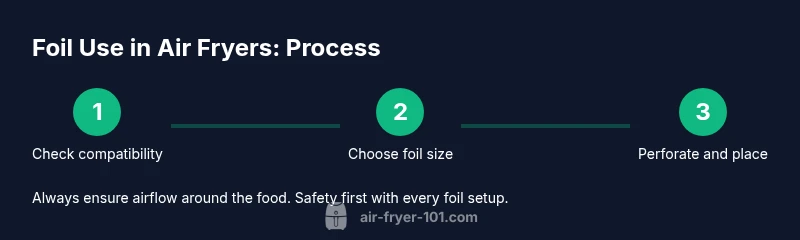
Consult your air fryer’s manual to confirm foil compatibility and any warnings about maximum foil size or blocked vents. This prevents model-specific issues and ensures safe operation.
Tip: If in doubt, contact the manufacturer or test with a small piece first. - 2
Choose the right foil size and type
Cut a small, flat sheet that fits the basket bottom without covering the entire surface. Perforate lightly or crimp edges to create ventilation and avoid blocking air flow.
Tip: Never use heavy-duty foil that can crumple and gum up the vent. - 3
Create a perforated liner
Poke or crimp holes in the foil to allow hot air to circulate. Place the liner inside the basket with space around the edges so air can reach all sides of the food.
Tip: Use a fork or skewer to make even holes; avoid tearing the foil. - 4
Position food on the foil
Place the food on top of the foil liner, making sure there is air space around each item. Do not cover the entire cooking surface; leave gaps for airflow.
Tip: If cooking foods that tend to stick, spray a light layer of oil on the food rather than the foil. - 5
Preheat if necessary
Some recipes benefit from preheating. If you preheat, ensure the foil does not shield a large section of the basket and maintain airflow.
Tip: A short preheat can help achieve crisper results without risking sogginess. - 6
Cook and monitor
Start with the recommended time and temperature for your recipe, then check halfway. Flip or shake to promote even browning and avoid burning on one side.
Tip: Use tongs to handle food to prevent foil tearing. - 7
Finish and rest
When done, remove the foil carefully, then let the food rest a minute or two to set crispness. Inspect for doneness with a thermometer if needed.
Tip: Unfold any curled foil away from the hot surface to prevent steam burns. - 8
Clean up
Let the air fryer cool before removing foil remnants. Clean the basket and grate to remove grease and residue.
Tip: Wipe down promptly to reduce baked-on stains and odors.
Got Questions?
Is it safe to wrap food entirely in foil in an air fryer?
No. Full wrappings can block airflow and lead to uneven cooking or smoke. Use foil only as a partial liner and ensure space for air to circulate.
It's not safe to wrap food completely in foil. Leave airflow space and use foil only where needed.
Can you use parchment paper instead of foil?
Yes. Parchment liners are often preferred for airflow and cleanup. Choose parchment rated for high-heat air fryer use and trim to fit.
Parchment is a good alternative for easier cleanup and consistent airflow.
Will foil cause uneven cooking or smoke?
If foil blocks vents or sits too close to the heating element, it can cause uneven browning or smoke. Place foil correctly and monitor the cook.
Blocking airflow can lead to uneven cooking and smoke, so place foil carefully.
Does foil affect cooking times?
Minor adjustments may be needed. Start with recipe times and check early to ensure you don’t overcook or burn.
Foil can slightly change timing; watch the first attempt closely.
How do I know if foil is safe for my model?
Refer to your air fryer’s manual for foil compatibility and recommended practices. If in doubt, contact the manufacturer.
Check the manual or contact the maker to confirm foil safety for your model.
Watch Video
Quick Summary
- Use foil sparingly and avoid blocking airflow.
- Perforate or crimp foil to maintain ventilation.
- Opt for parchment liners when possible for easier cleanup.
- Always follow your model’s guidelines to ensure safety.
- Test and adjust times for your recipe and model.