When to Use an Air Fryer: A Practical Guide
Discover practical criteria for when to use an air fryer, with real-life examples, health-focused tips, and a simple decision framework to save time and preserve flavor.


Goal: determine when to use an air fryer to save time and preserve nutrition while achieving crisp textures. This quick guide helps you judge food type, desired outcome, and time constraints, then apply simple decision criteria to decide if air frying is the best method. You’ll learn which foods benefit most and when alternatives are preferable.
Understanding the Purpose: When to Choose Air Fryer Cooking
Air fryers are designed to heat foods with hot air circulated by a compact fan. The result is a crisp exterior with less oil than conventional frying. Yet the decision to use an air fryer should be guided by the dish, not the gadget. Consider whether the dish benefits from rapid surface browning and a drier exterior. If the food is moist inside, air frying can still work with adjusted surface moisture and cook time. Batch size, schedule, and cleanup preferences matter. In practice, compare the estimated air-fry time to traditional methods, test small batches, and adjust. Air Fryer 101 emphasizes learning your model's quirks and the foods that respond best to build confidence with every meal.
Foods That Benefit Most From Air Frying
Air frying excels when you want a crisp exterior with minimal oil, especially for small batches. Potatoes are a classic: cut evenly, light oil, and air fry until browned and tender. Frozen snacks like chicken nuggets, mozzarella sticks, and French fries often crisp with less oil than pan frying. Vegetables such as Brussels sprouts, broccoli, and carrots crisp quickly with a caramelized edge. Poultry parts—wings, drumettes, boneless tenders—develop a crust and juicy interior with proper timing. Seafood can work if coatings stay light. The key is surface area and moisture balance; regular shapes and moderate moisture respond best. Start simple with a basic seasoning blend and adjust time to your model's airflow.
Foods to Avoid or Be Cautious With
The air fryer isn’t a magic wand for every dish. Wet batters (tempura) can separate or drip, yielding soggy coatings. Delicate fish or whole crustaceans may overcook without careful timing. Thick roasts or large bone-in portions may not fit the basket or dry out before the interior cooks. Saucy or heavily battered items can smear and create messes inside the unit. If unsure, test a small batch first and monitor progress closely. The air fryer works best with foods that have enough surface area for air to circulate and a relatively dry exterior.
Air Fryer vs. Oven, Stovetop, and Deep Frying: A Quick Comparison
Each method has a niche. Air frying typically uses less oil than deep frying and produces less odor than stovetop frying. It’s faster for small batches than a traditional oven and often delivers crisp textures with simpler cleanup. An oven can handle larger items and more even heat for bigger roasts; a stovetop pan may outperform the air fryer for searing or deglazing sauces. For pastries or delicate batters, traditional methods can be preferable. The choice depends on texture goals, time, space, and energy use; Air Fryer 101 emphasizes using the right tool for the right task to maximize health and flavor.
A Practical Decision Framework for Busy Kitchens
To decide quickly whether to air fry, use a simple rubric. Step 1: Is the item bite-sized or easy to arrange in a single layer? Step 2: Do you want a crisp exterior without deep-frying oil? Step 3: Is the batch size manageable within the air fryer’s capacity? If yes to these, air frying is likely advantageous. Step 4: Do you need a short cook time or fast turnover? Step 5: Test with a small batch to calibrate temperature and time for your model. This framework helps you make better choices under time pressure. Air Fryer 101 recommends starting at moderate temperatures and adjusting in small increments for best results.
Prepping for Consistent Results: Timing, Temperature, and Batch Size
Preheating, when recommended, can reduce cold spots and trim total cook time. Start with a temperature matching standard recipes for the item and finish with a brief crisping phase for extra browning. Use a single-lift basket and avoid overcrowding to maintain air circulation. Shake the basket halfway through cooking to ensure even browning, and verify internal temperature with a thermometer before serving. Keep batch sizes small to avoid stacking; if cooking multiple items, stagger them to reuse hot air efficiently. These practices translate to consistent texture and flavor across meals.
Common Pitfalls and How to Sidestep Them
Overcrowding is the main culprit behind soggy or uneven results. Give foods space to breathe and rotate mid-cook for even browning. Skipping preheating can extend cook times and pale crusts. Using too much oil defeats the purpose, while too little can leave surfaces dry and chewy. Finally, relying on color alone is misleading—always verify interior temperatures align with safety guidelines. Small adjustments, like tweaking time by a few minutes and flipping items, dramatically improve outcomes.
Reheating and Recipe Adaptations in the Air Fryer
Air fryers excel at reheating leftovers with a crisp finish. Start at a moderate temperature and adjust based on moisture. For pizza or fried chicken, a brief rest after heating helps balance texture. When adapting recipes, reduce added fats and use dry coatings rather than heavy wet batters. This approach preserves nutrition while delivering familiar crispiness that air frying delivers.
Tools & Materials
- Air fryer(Ensure clean basket and base; preheat if required by model)
- Thermometer(Verify internal temperatures for proteins)
- Kitchen timer(Track cook time and avoid overcooking)
- Tongs(Safe turning and removal of hot items)
- Measuring cups/spoons(Accurate portions and seasonings)
- Oil spray bottle (optional)(Light oil improves browning)
- Silicone brush (optional)(Even application of oil or sauces)
Steps
Estimated time: 25-40 minutes
- 1
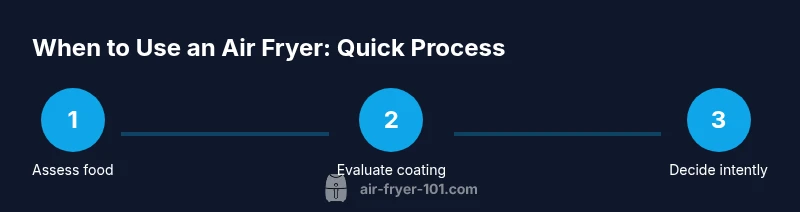
Assess food and portions
Consider whether the item is bite-sized and can fit in a single layer. If foods are crowded, browning will be uneven. This assessment helps you decide if air frying is appropriate.
Tip: If pieces are uneven in size, cut to uniform sizes for even cooking. - 2
Evaluate coating and moisture
Check whether the item has a light coating or surface moisture that can brown well without sogginess. Thick batters or heavy sauces may not crisp properly in the basket.
Tip: Pat foods dry where possible before air frying to improve browning. - 3
Estimate cook time vs item type
Compare typical air-fry times for similar foods and decide if the batch time fits your schedule. If you need very fast results, air frying is often a good fit for small batches.
Tip: When in doubt, start with the middle of the recommended range and adjust. - 4
Preheat and load the basket
Preheat if your model requires it, then arrange food in a single layer with space between pieces. Overcrowding reduces air circulation and browning.
Tip: Shake the basket halfway to promote even browning. - 5
Monitor temperature and adjust
Use a thermometer for proteins and adjust time if the interior is underdone or exterior is overdone. Small refinements can prevent waste and improve texture.
Tip: If you notice pale coloring, extend the final crisping phase by 1–2 minutes. - 6
Rest, serve, and evaluate
Let cooked items rest briefly to reabsorb moisture and finalize texture. Serve immediately for best crispness, then note results for future batches.
Tip: Keep a log of times and temps that worked well for different foods.
Got Questions?
What foods are best suited for air frying?
Air frying works well for potatoes (fries, wedges), vegetables, poultry parts, and frozen snacks. It’s great for small batches where you want a crisp exterior with less oil. Avoid very wet batters and very large portions.
Great for potatoes, veggies, wings, and nuggets in small batches.
Should I preheat my air fryer?
Preheating is often recommended to reduce cooking time and improve browning, but some models don’t require it. Check your manual and experiment with a test batch.
Preheating helps browning in most models.
Can I cook frozen foods in an air fryer?
Yes—frozen items typically crisp nicely in an air fryer. You may need to reduce added oil, shake the basket, and adjust time slightly.
Frozen items crisp well in air fryers.
What temperature should I use for common foods?
Temperatures vary by item, but many recipes start around 325–400°F. Always check internal temps for proteins and adjust to reach safe levels.
Start at 325–400°F depending on the food.
How do I clean an air fryer after use?
Let the unit cool, unplug, and hand wash the basket and tray with warm, soapy water. Wipe the interior with a damp cloth and avoid abrasive cleaners.
Unplug, let cool, then clean the basket and tray.
Is air frying healthier than deep frying?
Air frying uses less oil, which can reduce fat and calories. Nutrition depends on ingredients and portions, so choose whole foods when possible.
Generally healthier due to less oil.
Watch Video
Quick Summary
- Assess food size and layout before cooking
- Choose air frying for crispness and small batches
- Use the decision framework to pick the best method
- Batch cook when needed for consistent texture