When Reheating Fries in an Air Fryer: A Complete How-To
Learn how to reheat fries in an air fryer for crisp, restaurant-like texture. Temperature, timing, and tricks for frozen vs. fresh fries. Healthier, faster, and tastier leftovers.


Follow a 4-6 minute reheating cycle at 350-400°F (175-205°C) with fries in a single layer. Start dry, preheat if your model requires it, shake halfway, and check for crispness. Finish with a light spray of oil if needed, and serve immediately for best texture.
Why reheating fries in an air fryer works
When you reheat fries in an air fryer, the circulating hot air rapidly dries out surface moisture and drives browning, which restores crispiness that microwaving or pan-frying often lacks. The convection breeze coats the exterior in a thin layer of steam-free heat, reviving texture without bathing the fries in oil. This method is especially effective for leftovers from meals or takeout, where the goal is a near-fresh bite without excessive fat. According to Air Fryer 101, the key to success is heat distribution, avoiding overcrowding, and efficient air flow. By understanding these factors, you can consistently achieve a crisp exterior with a tender interior, even with thicker cuts or seasoned fries.
Preheating, drying, and prepping fries
Preheating is optional on many air fryers but beneficial for consistent results. If you skip preheating, the fries may take a minute longer to crisp. Pat the fries dry if they seem damp or oiled; removing surface moisture helps achieve a crisp exterior. If you’re reheating leftover restaurant fries, separate clumps with your fingers to prevent steaming. Lightly spray or toss with a tiny amount of oil only if the fries look dry; this boosts browning without making them greasy. The goal is a dry surface that can quickly absorb heat and re-crisp, not a drenched batch.
Temperature and timing guidelines
Typical guidance sits in the 350–400°F range (175–205°C). Thicker or freshly cut fries may benefit from 375–400°F, while thinner shoestring fries reheat well at the lower end of the range. Start with 4–6 minutes if fries are already cut and only mildly cooled; increase in 1–2 minute increments until you reach your desired crispness. Check halfway by shaking or flipping to ensure even browning. Avoid temperatures above 400°F for very thin fries, which can burn quickly.
Step-by-step reheating workflow
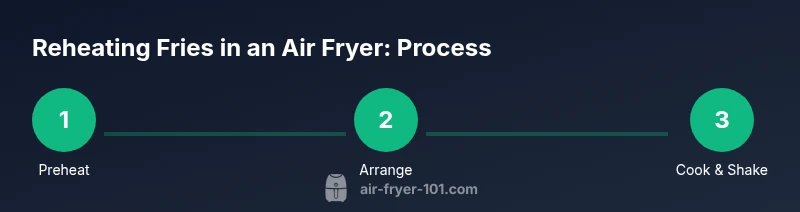
Understanding the sequence helps you nail the texture every time. Begin by setting your air fryer to the target temperature, then arrange the fries in a single layer with space between pieces. Shake the basket halfway through to promote even browning, and assess crispness after the initial cook. If needed, add 1–2 minutes in small increments. Finish by letting the fries rest for a minute before serving to redistribute moisture.
Layering and basket arrangement for even heat
Avoid piling fries on top of each other; overcrowding traps steam and leads to soggy centers. Use a single-layer layout or two slightly staggered layers with a divider if your basket is wide enough. For very large batches, cook in batches to maintain air flow. If you have a perforated tray or metal rack, use it to elevate fries slightly and improve air circulation.
Reheating frozen vs leftover fries
Frozen fries generally tolerate a slightly longer cook time and may benefit from the upper end of the temperature range. Leftover fries that were already fried and lightly seasoned reheat quickly and crisp up with shorter times. If your fries were heavily seasoned or battered, you may need to adjust the heat by 10–15°F (5–8°C) for best browning without burning spices.
Texture tips: achieving crispiness
Tiny adjustments in oil, heat, and spacing yield big texture differences. A light oil spray (or tossing with a teaspoon of oil per batch) can boost browning. Shaking the basket liberates stuck pieces, promoting uniform dryness and color. For extra crisp, finish on a higher temperature for the last 40–60 seconds, watching closely to avoid scorching.
Common mistakes to avoid
Overcrowding or stacking fries leads to steaming instead of roasting. Using too high a temperature without preheating can burn outer edges while centers stay soft. Skipping a shake or flip halves the browning surface, making texture uneven. Finally, reheating fries straight from the fridge without drying can introduce excess moisture that dampens the crust.
Safety and food-safety notes
Always ensure fries are heated to a safe internal temperature before serving, especially if they contain toppings or cheese. Avoid leaving hot fries at room temperature for extended periods after cooking. Clean the air fryer basket after reuse to prevent flavor transfer or smoke from accumulated oils.
Serving ideas and storage reminders
Serve immediately for best texture; reheated fries lose crispness as they cool. Pair with dipping sauces, herbs, or a light sprinkle of sea salt. Store any leftovers in a loose, breathable container in the fridge for up to 1–2 days; reheat again before eating.
Quick troubleshooting guide
If fries are not as crispy as hoped, increase the temperature slightly and extend the time by 1–2 minutes, keeping a close eye. If they taste dry, reduce the time a bit and consider a light oil spray. For very thick fries, consider using a small rack to separate pieces and improve air flow.
Tools & Materials
- Air fryer(Preheat if your model requires it)
- Tongs or spatula(For turning without breaking fries)
- Paper towels(Pat dry if fries feel moist)
- Optional oil spray(Light coating to boost browning)
- Perforated tray or small rack (optional)(Improves air flow for large batches)
Steps
Estimated time: 8-12 minutes
- 1
Preheat the air fryer
Set the air fryer to the target temperature (typically 350–400°F) and preheat for 2–3 minutes if your model has a preheat function. Preheating helps create an immediate hot surface for crisping.
Tip: If your unit doesn't preheat, proceed to the next step and monitor cook time closely. - 2
Pat fries dry
If the fries look damp, pat them lightly with a paper towel to remove surface moisture. This step reduces steam and helps form a crust.
Tip: Dry fries crisp up more reliably than visibly oily leftovers. - 3
Arrange in a single layer
Place fries in a single even layer in the basket or on a rack. Leave space between pieces for air to circulate; avoid stacking.
Tip: For larger batches, cook in two batches to maintain airflow. - 4
Cook and shake
Cook for 4–6 minutes, then shake the basket or flip the fries to promote even browning. Check texture at the 4-minute mark.
Tip: A quick middle shake prevents scorching on one side. - 5
Finish and inspect
Resume cooking in 1–2 minute increments until the desired crispness is reached. Remove promptly to avoid over-crisping.
Tip: Taste one fry to confirm crispness before serving. - 6
Optional final crisp
If fries taste a touch soft, increase temperature by 25°F for 30–60 seconds and watch closely.
Tip: This short burst can revive crust without burning spices. - 7
Season and serve
Season while hot to help the seasoning stick. Serve immediately for the best texture.
Tip: A light pinch of finishing salt enhances flavor without greasiness. - 8
Store leftovers wisely
If you have leftovers, cool briefly, then store in a loosely covered container in the fridge. Reheat again using the same steps.
Tip: Avoid airtight containers that trap moisture.
Got Questions?
Can I reheat frozen fries in an air fryer?
Yes. Preheat, do not thaw, and cook at the upper end of the recommended range for a few extra minutes until crisp.
Yes, you can reheat frozen fries in the air fryer. Preheat, cook at a higher end of the range, and check for crispness.
What temperature is best for reheating fries?
Aim for about 350–400°F (175–205°C) depending on fry thickness and desired crispness.
Aim for 350 to 400 degrees Fahrenheit depending on thickness and how crispy you want them.
How long should reheating take?
Most batches finish in 4–8 minutes with occasional shakes; adjust by 1–2 minutes as needed.
Most batches take about four to eight minutes; shake halfway and adjust as needed.
Is preheating necessary for best results?
Preheating improves initial browning and evenness, but some models work fine without it. Expect a minute or two longer without preheating.
Preheating helps with browning, but it’s not strictly required on all models.
Can I use oil spray to improve crispiness?
A light oil spray can boost browning, but avoid over-oiling to prevent greasiness.
Yes, a light spray helps crispness; don’t overdo it.
Will reheated fries taste as good as fresh?
They won’t be exactly the same, but you can achieve near-fresh texture with proper heat and spacing.
They won't be exactly the same as fresh, but you can get close with the right method.
Should I store leftovers before reheating?
Store leftovers in a loosely covered container in the fridge and reheat within 1–2 days for best texture.
Keep leftovers in the fridge for up to 2 days and reheat promptly.
What about seasoning after reheating?
Season immediately after reheating while the fries are hot to help the flavor cling again.
Season while hot to maximize flavor adhesion.
Watch Video
Quick Summary
- Reheat in a single layer for even crispness
- Shake halfway to promote browning
- Start with 350–400°F and adjust by thickness
- Pat fries dry and avoid overcrowding
- Serve immediately for best texture