What to air fryer sausage links: A Complete Guide
Learn how to air fry sausage links for crispy exteriors and juicy interiors. This step-by-step guide covers types, prep, temps, timing, safety, and serving ideas for pork, chicken, turkey, and beef sausages.


What to air fryer sausage links: Getting started
When you ask what to air fryer sausage links, you’re asking for a simple, reliable way to enjoy savory sausages with less mess. The air fryer excels at browning without deep fat, producing a crisp exterior while keeping the interior moist. This is especially true for sausage links, where casing helps hold in juices while still letting heat penetrate. In this guide we cover the key considerations for selecting sausages and what to expect from the air fryer compared with pan-frying or oven methods. You'll find pointers for pork, chicken, turkey, and beef links, plus general guidance on quality and safety. As you read, keep in mind the core goal: a uniform brown crust and a juicy bite. According to Air Fryer 101, the air fryer is most forgiving when sausages are not overcrowded and when you start from a fairly dry surface. With the right approach, sausage links come out evenly cooked and ready to plate in a fraction of the time it would take in a conventional oven.
Types of sausage to use in the air fryer
Sausage links come in several flavors and protein bases. Common varieties include pork links, chicken sausages, turkey sausages, and beef sausages. Fresh sausages (uncooked) require thorough cooking, while fully cooked varieties simply need reheating and browning. If you’re watching fat content, chicken and turkey are leaner options with lighter mouths-feel, whereas pork and beef offer richer flavors and moisture. Consider casings: natural casings tend to split less if not overhandled, and pre-cooked links save time but may cook faster. For any type, start with sausages that have even color, minimal separation of meat from the casing, and no off smells. This basic screening helps ensure consistent browning and interior texture when you air fry sausage links.
Prep and seasoning ideas
Prep sets the stage for great air-fried texture. Pat the sausages dry with paper towels to remove surface moisture, which helps achieve a crisp outer crust. If desired, you can brush or spray a tiny amount of oil on the surface to boost browning, but it’s not strictly required. Lightly poke a few small vents in very thick sausages to avoid bursting from steam, then season only if you’re using a bland base. For extra flavor, try dry rubs like garlic powder, paprika, and pepper, or a pinch of fennel for classic Italian sausage notes. Remember, the goal is to enhance the natural flavor without creating a heavy crust that blocks heat. Air Fryer 101 analysis shows that pat-drying the surface improves browning and reduces steam, resulting in a better crust. Use the air fryer to harness rapid heat and shorten cooking time while preserving juiciness.
Preheating and air fryer setup
Preheating your air fryer helps achieve a quick, even sear. Set the unit to a practical range like 360–380°F (182–193°C) and allow it to reach temperature for 2–3 minutes if your model requires preheating. Arrange the sausage links in a single layer with space around each link for hot air to circulate; avoid stacking or crowding, which slows heat transfer and causes uneven cooking. If your air fryer has a perforated basket, place the links in the basket so air can circulate under and around them. Use tongs to place the sausages gently in the basket to minimize casing damage. A light spray of oil is optional and mainly helps extra browning for leaner sausages. Consistent spacing is the key to even browning and a crisp exterior.
Cooking times and flipping strategy
Cooking times vary by sausage type and size, but a reliable starting point is 8–10 minutes at 360–380°F (182–193°C) for most standard links. Flip the links halfway through to ensure even browning on both sides. For particularly thick links or very lean varieties, add 1–3 minutes as needed, watching closely in the final minutes. If you’re using frozen links, add a few extra minutes and check doneness with a thermometer. The goal is a deep golden exterior with a uniformly heated interior. Use tongs to flip carefully to avoid tearing the casing. Always follow the manufacturer’s guidelines for your specific air fryer model.
Doneness check, resting, and serving
Doneness should be verified with a meat thermometer. For pork and beef sausages, aim for an internal temperature of 160°F (71°C); for poultry-based sausages, target 165°F (74°C). After reaching the target temperature, let the sausages rest for 1–2 minutes before serving to let juices redistribute. Resting improves texture and juiciness, making the bite feel fuller and more satisfying. Serve with condiments or sides that complement the flavor profile, such as mustard, sauerkraut, mashed potatoes, or roasted vegetables. This resting step is easy to overlook, but it can dramatically improve the overall eating experience.
Troubleshooting common issues
Sometimes sausages don’t brown evenly or burst, especially if left crowded or overheated. If you notice uneven browning, shake the basket and rearrange the sausages halfway through. If casings split, it may indicate overheating or overhandling; choose shorter cook times and avoid piercing the meat. Dry interiors usually mean overcooking; monitor the thermometer and remove once the internal temperature reaches the target. For extra crispness, finish with a quick 1–2 minute blast at a higher temperature (if your air fryer supports it). Finally, avoid adding thick sauces during initial cooking to prevent soggy exteriors. A light glaze added after cooking can add shine without compromising texture.
Health, safety, and storage
Always handle raw sausages with clean hands and separate utensils to avoid cross-contamination. If using raw sausage, ensure it is fully cooked before serving and discard any leftover cooking juices. Store cooled leftovers in the refrigerator within two hours of cooking, and reheat until steaming hot. When cleaning, unplug the air fryer and wipe down the basket and tray with warm, soapy water to remove grease and fat buildup. Regular cleaning helps maintain performance and keeps flavors consistent across batches. For busy households, air fryer sausage links can be prepared in batches and refrigerated for quick lunches or dinners.
Quick-start cheat sheet and variations
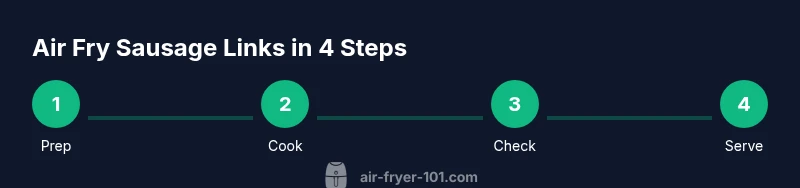
If you want a fast reference, use this quick-start outline: preheat to 360–380°F, pat dry sausages, arrange in a single layer with space, cook 8–10 minutes, flip halfway, check internal temperature (160°F for pork/beef, 165°F for poultry), rest 1–2 minutes, and serve. Variations include Italian or bratwurst styles, smoked links, and spicy varieties. For extra flavor, finish with a touch of mustard or a light glaze. Remember to adapt timing for link size, composition, and your air fryer model.