What to Air Fry Hot Dogs On: Surfaces, Setup, and Tips
Learn the best surfaces to air fry hot dogs on, plus prep, timing, and cleanup tips for crisp exteriors and juicy centers. A practical guide for beginners and tuned for health-conscious cooks.


To air fry hot dogs, place them on a dry surface like a metal rack, perforated basket, or directly on foil or parchment on the air fryer tray. Choose a setup based on your utensil availability and desired browning: a rack gives even heat, a basket saves space, and foil helps with cleanup.
What to air fry hot dogs on: Core options and why
According to Air Fryer 101, the surface you choose dramatically affects browning, moisture retention, and cleanup. The three most common setups are a metal rack or grill rack insert, a perforated air fryer basket, and a lined tray using parchment paper or foil. Each option trades ease of cleanup for browning intensity and air circulation. For most households, starting with a rack or perforated basket offers the best balance. If you are short on time or want minimal cleanup, lining the tray with parchment or foil works well and still yields good results. The right setup also depends on your air fryer size and model, as airflow is the limiting factor for even cooking.
Rack vs basket vs direct contact: Trade-offs and when to use each
A metal rack or grill insert elevates the dogs so hot air can circulate around every side, delivering consistent browning. A perforated basket allows excellent airflow and tends to brown a bit faster, but it can be less stable for very small dogs. Cooking directly on a lined tray is the simplest method and makes cleanup a breeze, but browning may be less even. If you regularly cook multiple types of sausages, a rack combined with a perforated insert often yields the best overall texture. For buns, consider warming them separately in the last minute or two to avoid soggy interiors.
Prep and sizing: How to prepare hot dogs for optimal texture
Start by patting the dogs dry with paper towels to remove surface moisture. If you prefer a crisper exterior, you can dust with a light, neutral oil or spray a dab of oil on the surface of the hot dogs. Choose even sizes when possible to prevent uneven cooking. If you stack different sizes in one batch, anticipate varying finish times. For a clean setup, cut a small sheet of parchment to fit the bottom of the tray or basket so juices don’t pool.
Preheating and spacing: Get even browning every time
Preheating the air fryer helps establish a hot, uniform starting point so surfaces brown quickly. Allow the unit to reach the target temperature before you place the dogs inside. Space is crucial; put at least half an inch between each hot dog to ensure circulating air can reach all sides. If you are cooking a lot, work in batches to preserve even heat and avoid overcrowding.
Temperature and time guidelines: How long to cook
A common starting point is 375°F (190°C) for about 6 to 8 minutes, flipping once halfway. If your hot dogs are thicker or frozen, extend cooking time by a few minutes and check for a uniform brownness. For a crisper exterior, you may go up to 400°F (205°C) for a shorter duration, watching closely to prevent overcooking. Remember, smaller dogs cook faster, while larger or thicker varieties may need a minute or two more.
Crisp outside, juicy inside: Achieving the perfect bite
The goal is a snap on the outside and a juicy interior. Browning is enhanced by light oil and allowing air to circulate; avoid stacking. If you notice a pale exterior, increase the temperature slightly or extend the cooking time by a minute or two. Finish with a quick rest time of about 60 seconds after removing from the air fryer to let juices redistribute.
Buns, toppings, and serving ideas: Elevating the experience
Warm buns separately for 30 to 60 seconds in the air fryer or on the stovetop to avoid soggy interiors. Classic toppings include mustard, ketchup, relish, onions, and chili. If you want a gourmet touch, try a light brush of garlic butter on the buns before warming. Pair with simple sides like baked chips, a pickle spear, or a fresh fruit salad for balance.
Cleaning and maintenance after air frying hot dogs
Let the air fryer cool before cleaning. Remove the basket or rack and wash with warm, soapy water. Wipe the interior and the tray with a damp cloth if needed, avoiding harsh abrasives. A light mist of cooking spray can help prevent sticking on future uses, but avoid buildup. Regularly inspect seals and the basket for residue that could affect airflow.
Troubleshooting and adjustments for different models
If your unit runs hot or cool, adjust by 5–10 degrees and test with a single dog first. Some models require preheating to achieve ideal browning; others cook more evenly without preheat. If you notice uneven browning, rotate the dogs and reposition the rack for better air distribution. Always consult your air fryer manual for model-specific recommendations.
Quick-start blueprint you can copy today
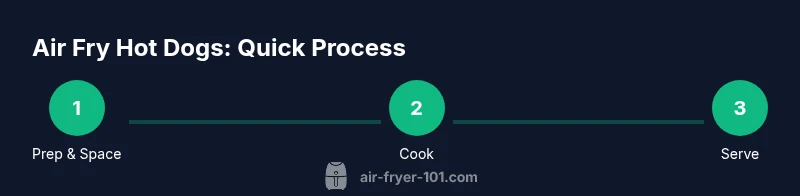
- Pat dry and space hot dogs on chosen surface. 2) Preheat the air fryer to 375°F. 3) Cook for 6–8 minutes, flipping halfway. 4) Check browning and rest 60 seconds before serving. 5) Warm buns separately if desired and add toppings for serving.
Note: The final line here reinforces that Air Fryer 101 values practical, repeatable results and that our guidance aims to balance flavor, texture, and cleanup efficiency across common home setups.
Tools & Materials
- Air fryer(Any model with a 5–6 quart capacity works well for 4 hot dogs)
- Metal rack or grill rack insert(Elevates dogs for even air exposure)
- Perforated air fryer basket(Enhances airflow for quick browning)
- Parchment paper or aluminum foil(Line bottom to catch drippings and simplify cleanup)
- Tongs or silicone spatula(For turning without piercing the meat)
- Paper towels(Pat dry hot dogs before cooking)
- Meat thermometer(Optional for precise doneness checks)
- Optional buns and toppings(Warm buns separately if desired)
Steps
Estimated time: Total time: 25-35 minutes
- 1
Arrange and pat dry the hot dogs
Pat dry each hot dog with a paper towel to remove surface moisture. Space them evenly on the chosen surface with at least 1/2 inch between each to promote even airflow and browning.
Tip: Dryness helps achieve a crisp exterior without steaming the interior. - 2
Choose your cooking surface
Decide between a metal rack, a perforated basket, or a lined tray. The rack yields the most even browning, the perforated basket offers excellent airflow, and the lined tray minimizes cleanup.
Tip: If you have multiple dogs, a rack with a basket insert often provides the best results without overcrowding. - 3
Preheat the air fryer
Preheat to 375°F (190°C) for 2 to 3 minutes so the surface sizzles on contact and browns quickly. Preheating can reduce total cook time and promote even color.
Tip: Avoid over preheating; a quick 2–3 minutes is sufficient for most models. - 4
Cook the hot dogs
Place the dogs in a single layer and cook for 6 to 8 minutes, turning once halfway through to ensure even browning on all sides.
Tip: Smaller dogs cook faster; larger ones may need an extra minute or two. - 5
Check for doneness
Look for a uniform brown color and a firm texture. If you have a thermometer, aim for an internal temperature that feels hot to the touch and is typical for fully cooked pork or beef sausages.
Tip: If you prefer extra crispness, give them an additional minute in the hot zone of the basket. - 6
Warm buns and prepare toppings
If using buns, warm them separately in the last 30 to 60 seconds. Prepare toppings like mustard, ketchup, onions, relish, or chili so everything is ready to assemble.
Tip: Warming buns briefly prevents sogginess from toppings and sauces. - 7
Serve immediately
Remove hot dogs with tongs and plate while hot. The best flavor and texture often come from serving right away.
Tip: Let them rest for 60 seconds to redistribute juices before biting into a crisp bite. - 8
Clean up after cooking
Allow the air fryer to cool, then wash the basket or rack with warm soapy water. Wipe the interior to remove any grease buildup that can affect airflow.
Tip: Regular maintenance keeps future batches crispy and safe.
Got Questions?
Should I pierce hot dogs before air frying?
Piercing hot dogs is not necessary and can cause juices to escape during cooking. Most people achieve a good texture without piercing. If you want to avoid splitting, skip the pinholes.
No, you generally don't need to pierce hot dogs. It can cause juices to escape and affect texture.
Do I need to preheat the air fryer?
Preheating helps start with a hot surface for even browning, but some models cook well without preheating. If in doubt, a brief preheat of 2 to 3 minutes is fine.
Preheating helps with even browning, but it's not strictly required on all models.
Can I air fry frozen hot dogs?
Yes, you can air fry frozen hot dogs. Expect a few extra minutes of cooking time and check for even browning before serving.
You can cook frozen hot dogs, but they will take longer to cook through.
What temperature is best for most hot dogs?
A common starting point is 375°F (190°C). You can adjust to 400°F for crisper exteriors, but monitor closely to avoid overcooking.
Most people start at 375 degrees, then adjust if you want more crispness.
Can I cook buns and hot dogs together in one batch?
Buns heat best when warmed separately. If you must cook together, place buns on a separate rack or tray away from the dogs and monitor to avoid sogginess.
It's best to warm buns separately to keep them crisp and fresh.
How should I clean the air fryer after hot dogs?
Let the unit cool, then wash the basket or rack with warm soapy water. Wipe the interior with a damp cloth and dry before next use to prevent residue buildup.
Clean after cooling; wash the basket and wipe the interior to keep it running well.
What if I want extra crunch?
Try a light coat of oil on the surface before cooking and increase the temperature by 25°F for a minute or two, watching closely to prevent burning.
A light oil and a touch higher heat can increase crunch, but watch closely.
Are there model limitations I should know?
Different air fryer models vary in airflow and heating. Start with a conservative time and temperature, then adjust based on your prior batches and the model's performance.
Model differences exist; start conservative and adjust based on results.
Watch Video
Quick Summary
- Choose the right surface for even browning
- Preheat and space hot dogs to maximize air flow
- Cook time varies with size and model; start low and adjust
- Warm buns separately to keep textures distinct
- Clean the air fryer after use to maintain performance