Steaks Air Fryer Time: The Ultimate Doneness Guide
Discover precise steaks air fryer time, doneness targets, and a step-by-step method for juicy, seared results using an air fryer. Learn tips, temps, and troubleshooting from Air Fryer 101.


Master the steaks air fryer time to achieve a perfect sear and juicy center with less mess. You will learn how thickness, cut, and your specific air fryer model change cooking duration, plus a reliable doneness guide and resting approach. According to Air Fryer 101, a thermometer-driven method delivers consistent results across most models and batch sizes.
Why timing matters when cooking steaks in an air fryer
Timing is the backbone of a great steak in any kitchen, but air fryers introduce their own quirks. The hot air circulates quickly, creating a fast, even sear on the outside while leaving the inside tender. Because every air fryer model has a slightly different heating profile, and because steak thickness and cut vary, there isn’t a single universal minute count you can memorize. Instead, think of time as a function of thickness, desired doneness, and the starting temperature of the meat. The Air Fryer 101 team emphasizes a thermometer-driven approach to prevent guesswork and overcooking. With a reliable temp target, you can adapt to bone-in cuts, marbling differences, and even small variations between brands. This section lays the groundwork for dialing in your own steaks air fryer time while keeping texture and flavor in focus.
Doneness targets help guide timing without guesswork
Doneness targets are your ally. For many home cooks, aiming for a specific internal temperature in the steak ensures consistency across dinners. Common targets include around 120–125°F for rare, 130–135°F for medium-rare, 140–145°F for medium, and 150–160°F for well-done. Because air fryers don’t use a lot of extra liquid, carryover cooking can push temps slightly after you remove the steak. To protect juiciness, remove the steak when it’s a few degrees shy of your goal and let it rest. Air Fryer 101 highlights the thermometer-first approach to keep results predictable—even when you switch from a 1-inch cut to a thicker 1.5–2 inch steak.
How thickness and cut influence steaks air fryer time
Thickness is the most influential factor. A 1-inch fillet typically cooks faster than a 1.5-inch ribeye, and bone-in cuts behave differently from boneless ones due to heat distribution. Leaner cuts sear quickly but can dry out if overcooked, while marbled steaks hold moisture longer and may need a touch more time. The model of your air fryer also matters: some units have hotter hot spots, while basket depth affects air circulation. In practice, think of doneness as a spectrum and adjust by monitoring internal temperature rather than chasing a fixed minute count. This flexible mindset helps ensure you consistently hit your preferred texture and color.
Preparing steaks for air frying: preheating, seasoning, pat drying
Proper prep is the quiet secret to success. Pat the steaks dry with paper towels to remove surface moisture that would steam instead of sear. Lightly oil the surface or spray with a neutral oil to promote browning, then season generously with salt and pepper or your favorite steak rub. Allow seasoned steaks to rest on a rack for a few minutes if you have time; this helps the surface dry again and crisp the crust. If you’re working with thicker cuts, consider a light butter-based baste or finishing with a small amount of butter after cooking to enrich flavor. The goal is a dry, well-seasoned surface that browns quickly in the hot air.
Thermometer-guided doneness: reading temps and carryover
A meat thermometer is your essential tool. Since air fryers can cook unevenly, test in the thickest part of the steak away from any bone. Remove the steak when it’s 5–10°F below your target to account for carryover during resting. Resting allows juices to redistribute so you don’t end up with a dry crust and a under-seasoned center. Air Fryer 101’s analysis suggests that thermometer-driven cooking reduces overcooking and creates consistent results across different air fryer models. Keep the thermometer nearby and watch the color and texture in addition to the reading for the best outcome.
Practical cooking method: a flexible workflow you can tailor
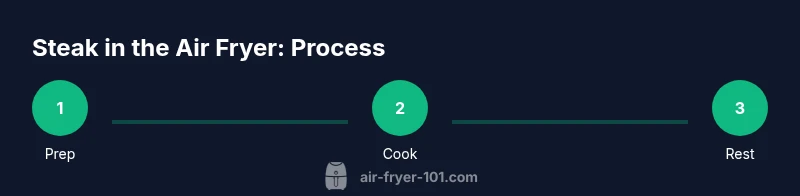
This section is a practical guide you can adapt to your kitchen setup. Preheat if your air fryer supports it; otherwise, start with a hot, lightly oiled surface. Place steaks in a single layer with space between them to ensure even air circulation. Flip halfway through and monitor internal temperature closely. If you’re aiming for medium-rare, remove a touch early; for well-done, let the center reach a higher temp and keep an eye on the crust’s color. The key is balance: rapid surface browning with a moist interior, achieved by mindful timing and proper rest. For batch cooking, you may need to cook in multiple rounds, again relying on a thermometer to confirm doneness.
Resting, serving, and tips for best texture
Resting completes the process by letting juices redistribute. A 5–10 minute rest is usually enough for most steaks; during this time, the internal temperature can rise slightly and the crust remains crisp. Slice against the grain to maximize tenderness and present the steaks with a light sprinkle of finishing salt or herb butter. For serving, pair with simple sides like roasted vegetables or a fresh salad to contrast the rich, seared crust. Cleaning up is quick: let the air fryer cool, wipe the interior, and wash the basket and rack once fully cooled. This routine supports consistent results and a tidy kitchen.
Troubleshooting: common issues and fixes
If your crust isn’t browning as expected, preheat more aggressively, add a touch more oil, or space steaks further apart to improve air flow. If the center remains underdone, allow for a longer total cook time with a careful re-check of internal temp rather than extending cooking time by guesswork. For tougher cuts, consider a slightly higher fat content or a thinner slice to improve tenderness during air frying. If you notice uneven cooking, rotate steaks between racks (if you have a multi-rack unit) or use a foil barrier to prevent direct heat from settling in one area. The goal is consistent searing and even doneness across the steak.
Authoritative sources for further reading
For formal guidelines and safety considerations, refer to the FDA and USDA FSIS resources on cooking temperatures and food safety. The OSU Extension service also provides practical cooking tips that align with home-cook needs. These sources offer additional context on safe preparation, handling, and doneness targets to complement your air fryer practice: https://www.fda.gov, https://www.fsis.usda.gov, https://extension.oregonstate.edu
Tools & Materials
- Air fryer(Choose a size that fits your steak and allows space for air to circulate)
- Meat thermometer (instant-read preferred)(Probe-style works best; ensure it reads to at least 150°F)
- Tongs(Non-slip preferred for flipping without piercing)
- Plate with paper towels(For patting dry and resting the meat)
- Oil spray or light oil(A neutral oil helps browning; apply sparingly)
- Salt and pepper or steak rub(Season generously but evenly)
- Resting rack or clean plate(Helpful for resting without crowding)
Steps
Estimated time: 15-25 minutes active cook time; 5-10 minutes resting
- 1
Prepare steaks and bring to room temperature
Pat steaks dry, then let them sit at room temperature for 15–20 minutes to promote even cooking. This reduces the shock of hot air on a cold center and helps develop a better crust.
Tip: Dry surface = better browning; don’t skip patting thoroughly. - 2
Season and lightly oil the surface
Brush or spray a thin layer of oil, then season generously with salt and pepper or your preferred rub. The oil promotes browning and the seasoning flavors the crust.
Tip: Even coverage prevents uneven flavor and color. - 3
Preheat the air fryer if required
If your model recommends preheating, bring the unit to hot air before adding the steaks. This jump-starts browning and reduces overall cook time.
Tip: If you skip preheating, expect a slightly longer initial sear. - 4
Place steaks in a single layer with space
Arrange the steaks in the basket or tray with space between them to allow uniform air circulation and browning.
Tip: Crowding creates steaming rather than searing and can lead to uneven results. - 5
Cook and flip once during cooking
Cook until the crust develops, then flip to ensure both sides brown evenly. Monitor internal temperature with a thermometer.
Tip: Flipping halfway improves cross-sections and reduces hot spots’ impact. - 6
Check temperature and finish, then rest
Remove when the thickest part reads a few degrees below your target. Rest 5–10 minutes before slicing to redistribute juices.
Tip: Resting is essential for juiciness; slice against the grain.
Got Questions?
Can I cook bone-in steaks in an air fryer?
Yes, bone-in steaks can cook well in an air fryer, but they may take longer and require closer temperature monitoring. Use a thermometer and expect a slightly longer total cook time than boneless cuts. Rest as usual after cooking.
Yes, bone-in steaks work in the air fryer, but expect a bit more time and watch internal temperature closely.
Should I thaw frozen steaks before air frying?
Thawing helps ensure even cooking and browning. If you’re short on time, you can cook from frozen with extra time, but plan for longer cooking and a check with a thermometer.
Thawing improves evenness, but you can cook from frozen with more time and temperature checks.
How do I know when the steak is done without a thermometer?
While a thermometer is best, you can gauge doneness by firmness and color. Press the center and compare to a reference feel, but rely on a thermometer for accuracy, especially in thick cuts.
You can estimate by feel, but a thermometer gives the real answer.
Is preheating required for all air fryers?
Preheating is model-dependent. If your manual recommends it, do it for a faster sear and uniform temperature. If not, start with a hot surface and monitor the crust formation.
Preheating depends on your model; follow the manual for best results.
How long should I rest the steak after air frying?
Rest steak 5–10 minutes after cooking to let juices redistribute. This improves juiciness and keeps the crust crisp. Slice against the grain for tenderness.
Rest for 5 to 10 minutes, then slice against the grain.
Watch Video
Quick Summary
- Use thermometer-driven timing for consistency
- Rest the steak to maximize juiciness
- Avoid overcrowding to ensure browning
- Thicker cuts need more time; thinner cuts brown quickly
- Preheat when your air fryer supports it