Salmon Air Fryer Recipe: Crispy, Juicy Every Time
Learn a reliable salmon air fryer recipe that yields crispy skin and juicy flesh. This guide covers ingredients, seasoning ideas, timing, and practical tips for healthy weeknight dinners.


Juicy salmon with crisp edges in minutes. This compact guide covers the essential method, seasoning ideas, and reliable timing for consistent results across thicknesses and cuts. You’ll learn prep tips, how to preheat, how to choose coatings, and how to adapt the approach for whole fillets or individual portions. See our detailed step-by-step guide for home cooks.
Why Salmon in the Air Fryer Delivers Perfectly Cooked Fish
Salmon is an ideal candidate for air frying because the rapid heat stream seals in moisture while yielding a crisp exterior. When you use an air fryer, the circulating hot air cooks from all sides, reducing the need for heavy oils without sacrificing texture. According to Air Fryer 101, this method consistently delivers even doneness and a caramelized crust on the salmon surface, making weeknight dinners quick and satisfying. The key is choosing the right cut (skin-on fillets with even thickness), drying the surface before cooking, and using a light coat of oil to promote browning. In practice, you’ll notice a golden exterior, a tender center, and minimal splatter compared with pan-searing. This approach also scales well for batch cooking, family meals, and meal-prep when you want to portion out salmon without sacrificing flavor. By the end of this section, you’ll know why the air fryer is a reliable tool for salmon and how to set up your kitchen for success.
Health Benefits and Flavor Profile
A salmon air fryer recipe is not only convenient but also alignment-friendly for health-conscious home cooks. The air fryer uses hot air circulation to crisp the exterior with only a light coating of oil, which can reduce overall fat usage compared with pan-frying. Salmon itself provides high-quality protein and omega-3 fatty acids that support heart health and brain function. The flavor profile develops through quick browning and the natural richness of the fish, often complemented by citrus, herbs, or a light glaze. Air Fryer 101 analysis shows that this method helps retain moisture while producing a satisfying crust, helping you avoid overcooking and dry fillets. To maximize flavor, aim for evenly sized portions, a parser-friendly seasoning blend, and a finishing squeeze of lemon before serving.
Equipment and Ingredient Essentials
You don’t need fancy gear to nail this salmon air fryer recipe—just a reliable air fryer, a silicone brush or spray for oil, and a few pantry staples. Start with skin-on fillets if possible; skin acts as a natural barrier and helps crisp the surface. Choose fillets of uniform thickness to ensure even cooking. Basic seasonings like salt, pepper, garlic powder, and paprika provide a tasty baseline, while lemon zest or dill bring brightness without extra moisture. A meat thermometer (optional) helps confirm doneness without guesswork. Optional add-ons include a light glaze (honey, soy, or maple) for a glossy finish. Fresh lemon wedges round out the plate. This section helps you assemble everything before you start so you can move smoothly from prep to plate.
Preparation and Marinade Options
Simple prep yields reliable results: pat the salmon dry, brush with a thin layer of oil, and season evenly. If you’re using a quick marinade, keep it airy and light—think citrus juice with herbs for 15–20 minutes at most. Longer marinades can alter texture or prevent proper browning, so short marination is usually best. For a dry rub, combine salt, pepper, garlic powder, paprika, and a pinch of brown sugar to help caramelization without burning. If you enjoy a citrus lift, grate a little lemon zest into the seasoning for a bright aroma. Always pat the surface dry again after any marinating step to preserve crispness during cooking.
Mastering the Skin: How to Get Crispy Skin
Crispy skin is the hallmark of a well-executed salmon air fryer recipe. Start with pat-dried skin, then apply a light coat of oil directly on the skin side to promote browning. Place fillets skin-side down in a single layer with space between pieces to ensure hot air can circulate. Avoid over-stacking; even compact batches cook more evenly. If your air fryer runs hot, consider lowering the temperature slightly by 25 degrees and extending the cook time by a minute or two. A final minute of air frying with no skin touching can help deepen that crust without sogginess.
Timing and Temperature Guidelines
A common starting point is to preheat the air fryer to around 400°F (200°C). Cook fillets for about 7–10 minutes depending on thickness and desired doneness, checking for a slight resistance to a fork’s pull at the thickest part. For thinner fillets, reduce time to prevent overcooking; for thicker cuts, use a gentle extension of a couple of minutes. If you have a meat thermometer, aim for an internal temperature of 125–130°F (52–54°C) for medium-rare to just-past-rare; pull at a few degrees lower if you prefer a firmer texture, as residual heat will finish the job. Always rest briefly after cooking to redistribue juices and maintain moistness.
Troubleshooting Common Issues
If the fish ends up dry, you likely cooked it too long or at too high heat for its thickness. Shorten the cook time or lower the temperature by 25°F and test with a small sample. If the surface isn’t browning enough, brush on a touch more oil or increase the cooking time by a minute or two in small increments. For skin that sticks to the basket, lightly oil the basket liner or use a parchment sheet with holes. If you’re cooking multiple fillets, ensure they’re evenly thick and spaced; crowding can lead to uneven browning and undercooked centers. Finally, patting the surface dry just before cooking helps achieve crisper results.
Flavor Variations to Try
Experiment with coatings and glazes to elevate your salmon air fryer recipe. Quick citrus-dill works well with a light olive oil and lemon zest; teriyaki or honey-glaze adds a glossy finish without excessive sweetness. For a savory kick, try a paprika-garlic rub with a touch of chili powder. If you prefer a more delicate profile, skip the glaze and finish with fresh herbs and a squeeze of lemon. Regardless of the variation, the method remains the same: ensure dryness, avoid overcrowding, and monitor doneness to preserve moisture.
Serving Ideas and Pairings
Serve salmon with vibrant sides that balance richness. Roasted vegetables, a crisp green salad, or quinoa and brown rice offer healthy, satisfying accompaniments. A simple yogurt-dill sauce or lemon-butter sauce pairs nicely without overpowering the fish’s natural flavor. For a complete comfort-food vibe, pair with mashed potatoes or a light couscous. If you’re meal-prepping, portion the salmon with a side and store in airtight containers for up to 3 days.
Batch Cooking, Storage, and Reheating
This method scales well for batch cooking. Cook all fillets at once in a single layer if your air fryer basket is large enough, or cook in two batches. Store leftovers in an airtight container in the refrigerator for up to 3 days; reheat gently in the air fryer for a few minutes at 350°F (175°C) to restore crispness. Freeze portions for longer storage, but be aware that texture can change after freezing. When reheating, you may want to brush a thin layer of oil on the surface to encourage browning and moisture retention. The result should remain juicy with a crisp exterior, making your salmon air fryer meals repeat-friendly.
Tools & Materials
- Salmon fillets (skin-on preferred)(4–6 oz portions; 1 inch thickness works best)
- Olive oil or cooking spray(Light coating to promote browning)
- Salt(Kosher salt recommended)
- Black pepper(Freshly ground preferred)
- Paprika, garlic powder, lemon zest (optional)(For flavor variations)
- Lemon wedges (optional for serving)(Bright finish)
- Meat thermometer (optional)(Check internal temp if desired)
Steps
Estimated time: 15-25 minutes
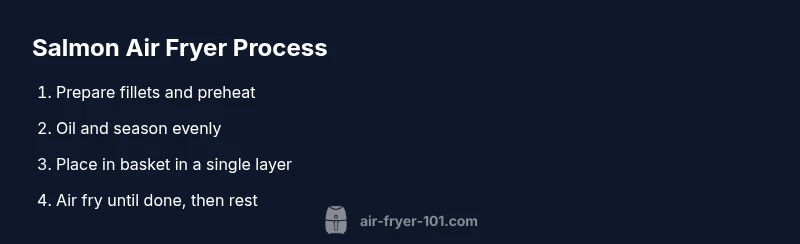
- 1
Preheat the air fryer
Preheat the air fryer to 400°F (200°C) for 3–5 minutes to ensure immediate browning when the fillets go in. This helps you achieve an even crust from the start.
Tip: Preheating reduces overall cook time and improves browning consistency. - 2
Pat dry and oil the fillets
Pat the salmon dry with paper towels, then brush or spray with a light coat of oil. A dry surface promotes better browning and helps the seasonings stick.
Tip: Dry surfaces fry more evenly; avoid excess oil that can pool and steam the top. - 3
Season evenly
Season both sides with salt, pepper, and any chosen dry rub or lemon zest for brightness. Ensure an even coat to avoid patchy color.
Tip: Even distribution prevents salt pockets and uneven browning. - 4
Arrange in basket
Place the fillets skin-side down in a single layer with space between pieces so air can circulate freely. Do not stack.
Tip: Crowding stalls browning and can lead to uneven doneness. - 5
Cook until just opaque
Air fry for 7–10 minutes, depending on thickness. Start checking at the 7-minute mark and adjust as needed.
Tip: Fish continues to cook after removal; remove when just shy of your preferred doneness. - 6
Rest and serve
Let the salmon rest 2–3 minutes, then serve with lemon wedges or a light glaze if desired.
Tip: Resting redistributes juices for a moister bite. - 7
Optional glaze (finish)
If using glaze, brush on during the last minute of cooking or after cooking for a glossy finish.
Tip: Choose glazes that won’t burn; sugar-heavy glazes may char quickly.
Got Questions?
Can I cook frozen salmon directly in the air fryer?
Yes, you can cook from frozen, but thawing yields better texture and more even doneness. If starting from frozen, add a few extra minutes and check for doneness with a fork.
Yes, you can cook from frozen, but thawing yields better texture. If starting from frozen, expect a few extra minutes and check doneness with a fork.
What temperature should I set the air fryer for salmon?
A common starting point is around 400°F (200°C); adjust slightly based on thickness or model. Higher heat helps browning, while thinner fillets cook faster.
A common starting point is around 400°F. Adjust based on thickness and your model.
How do I tell when salmon is done?
Salmon should be opaque and flake easily with a fork. If you use a thermometer, aim for about 125–130°F (52–54°C) for medium doneness to keep it moist.
Look for opaque flesh that flakes with a fork; use a thermometer for precise doneness.
Can I cook skinless fillets?
Yes, skinless fillets can cook well in the air fryer, but you may lose the extra crispness skin provides. Keep an eye on time to prevent drying.
Yes, you can. Skinless fillets cook a bit faster and may not brown as much, so watch the time.
How should I store leftovers?
Cool promptly, then store in an airtight container in the refrigerator for up to 3 days. Reheat in the air fryer at a lower temperature to restore crispness.
Cool quickly and refrigerate. Reheat in the air fryer to recapture crispiness.
Can I reuse the air fryer for different foods after cooking salmon?
Yes. Clean the basket after use and cook different foods in separate batches to avoid flavor transfer. Let the air fryer cool briefly between items.
Yes. Clean between uses and avoid mixing flavors by using separate batches.
Watch Video
Quick Summary
- Choose skin-on fillets for best texture.
- Dry surface and light oiling boost browning.
- Space fillets in the basket to ensure even cooking.
- Monitor doneness to keep salmon moist and flaky.
- Experiment with citrus or herbs for flavor variety.