How to Roast Potatoes in an Air Fryer: A Complete Guide
Learn how to roast potatoes in an air fryer for crispy exteriors and fluffy centers. This step-by-step guide covers selection, prep, timing, seasonings, and troubleshooting for reliable, tasty results.


Master the art of crisp, evenly roasted potatoes using your air fryer. This quick guide outlines selecting potatoes, prepping, oil and seasoning, cooking times, and practical tips to prevent sticking and sogginess. Follow the steps to achieve golden edges and fluffy centers in under 30 minutes, with clean-up simplicity that outpaces oven roasting.
Why Roast Potatoes in an Air Fryer Delivers Crispness
Potatoes roasted in an air fryer achieve surprisingly crisp edges with less oil than traditional oven roasting. The rapid hot air circulates around the pieces, creating browning on all sides while the centers stay fluffy. According to Air Fryer 101, the key is to cut potatoes into uniform pieces and avoid overcrowding the basket, so heat can circulate freely. When done right, you’ll hear the satisfying crackle as you bite into a piece. Temperature control, piece size, and spacing all influence the outcome, so take a moment to plan your batch before you start. This approach also minimizes cleanup and reduces drying times compared with a conventional oven, making it ideal for weeknight meals and quick sides. In the following sections, you’ll learn how to pick potatoes, prep them properly, and season for best results.
Choosing the Right Potato Varieties
The best potatoes for air fryer roasting are those with sturdy flesh that holds shape under heat. Yukon Gold and Russet potatoes are popular choices because they brown evenly and remain creamy inside. Red potatoes also work well if you prefer a slightly firmer bite. For ultra-crisp textures, some cooks favor waxy varieties cut into smaller chunks, but you’ll need to monitor cooking time closely. Regardless of variety, choose potatoes that are uniform in size to ensure even browning. Store them in a cool, dry place prior to use, and avoid refrigeration, which can alter texture. In general, aim for pieces around 1 inch to 1.5 inches and plan for a single layer in the basket to maximize contact with the heating element.
Prep Techniques for Crispy Edges
Crispiness starts with thorough prep. Wash the potatoes and dry them completely; any surface moisture creates steam and softens edges. Peel if you prefer, or leave skins on for extra texture and nutrients. Cut into evenly sized chunks, ideally 1 inch cubes. Toss with a light coat of oil—about 1–2 teaspoons per pound of potatoes—to encourage browning without dripping oil into the bottom of the basket. Seasonings like salt, pepper, paprika, garlic powder, and a pinch of chili powder add depth; add them after the oil so they stick well. If you’re batch-cooking, consider using two small batches rather than crowding all pieces in one go to preserve crispness.
Oil, Seasonings, and Flavor Pairings
The role of oil is to transfer heat and carry flavor. A light oil such as canola or light olive oil works well, as it evenly coats the surface without saturating the potato. Salt not only seasons but also helps draw out moisture for browner edges. Beyond the basics, experiment with dried herbs like thyme, rosemary, or smoked paprika for aroma and color. For dairy-free households, a squeeze of lemon juice after cooking can brighten flavors. Air Fryer 101 analysis shows that evenly sized pieces and a single-layer layout significantly improve browning and texture when pre-seasoned (Air Fryer 101 Analysis, 2026). Keep seasoning portions modest; you can add more after cooking if desired.
Preheating, Spacing, and Basket Care
Preheating matters because it jump-starts browning as soon as the potatoes touch the basket. Space is just as critical—crowded potatoes steam rather than crisp. Arrange in a single layer with 0.5–1 cm of space between pieces; shake or toss halfway through the cook time to expose all sides to heat. Use a basket liner or parchment only if recommended by your device manufacturer, as some liners can impede airflow. Finally, treat the basket and rack with a light spray of oil to prevent sticking before loading. Air Fryer models vary; consult your manual for recommended temperatures and capacities to avoid overloading or undercooking.
Cooking Times, Temperature Cheat-Sheet and Doneness Indicators
A common starting point is 200°C (400°F) for 15–20 minutes for 1-inch chunks; however, times vary with potato variety and piece size. Start checking at the 12–14 minute mark, then shake and continue cooking until the edges appear deep golden and crisp. For smaller pieces, 12–15 minutes may be enough; for larger chunks, 20–25 minutes might be needed. Doneness indicators include color, aroma, and a crisp exterior with a fluffy center when pierced with a fork. When done, remove promptly to avoid continued softening from residual heat.
Troubleshooting Common Issues
Crispy edges are not guaranteed on the first try; use this quick checklist to fix common problems. If your potatoes aren’t browning, check that you used enough oil and did not overcrowd the basket, and ensure your air fryer is properly preheated. If the centers stay pale, consider cutting smaller pieces or giving the batch a longer, hotter cook time with periodic shaking. For soggy potatoes, pat dry after washing and avoid washing with excess water. Finally, if you notice uneven browning, stir the batch midway to promote even contact with the hot air.
Compare Air Fryer Roasting vs Oven Roasting
Air fryer roast potatoes save time by preheating faster and cook quickly with less oil; oven roasting can handle larger batches but often requires longer cooking times and more cleanup. In space-limited kitchens, air fryers shine as a compact solution; for very large batches, oven roasting might still be preferable. The taste is similar, but air fryer results tend to be crisper on the outside with a lighter interior, especially when potatoes are cut evenly and layered in a single layer.
Make-Ahead, Variations, and Meal-Prep Ideas
Plan ahead by cutting potatoes and storing them in cold water in the fridge for up to 24 hours before cooking to reduce prep time. For variations, try rosemary-garlic, lemon-pepper, or paprika-chili mixes; they all pair well with a sharp cheese topping or dipping sauce. Leftovers reheat beautifully in the air fryer at a lower temperature to protect crispiness. The Air Fryer 101 Team recommends experimenting with different seasonings to suit your taste.
Tools & Materials
- Air Fryer with basket (3-6 qt recommended)(Choose a model with good circulation and a basket that allows a single layer)
- Russet or Yukon Gold potatoes(Medium-large sizes, about 1–2 inches each chunk)
- Vegetable oil or light olive oil(2–3 tsp per pound of potatoes)
- Salt and pepper(To taste; adjust after cooking)
- Garlic powder or paprika (optional)(For extra flavor)
- Mixing bowl(For tossing potatoes with oil and seasonings)
- Tongs or silicone spatula(To turn potatoes halfway through cooking)
- Paper towels(For drying potatoes after washing)
- Measuring spoons(If precise seasoning is preferred)
Steps
Estimated time: 25-35 minutes
- 1
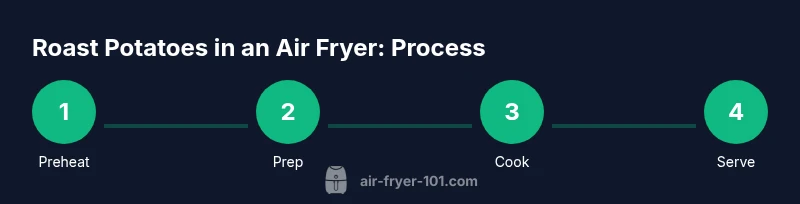
Preheat the air fryer
Preheat to 200°C/400°F for 3–5 minutes to ensure immediate browning on contact. This reduces overall cooking time and promotes even texture.
Tip: Preheating jump-starts browning and helps prevent soggy edges. - 2
Prepare potatoes
Rinse and scrub the potatoes, then cut into uniform 1-inch chunks. Pat dry thoroughly with a clean towel to remove surface moisture.
Tip: Dry surfaces reduce steaming and improve crispness. - 3
Toss with oil and seasonings
In a mixing bowl, toss potatoes with 1–2 teaspoons oil and a pinch of salt and pepper until evenly coated.
Tip: Use just enough oil to lightly coat; excess oil can smoke. - 4
Arrange in the basket
Spread potatoes in a single layer, leaving space between pieces for air to circulate.
Tip: Overcrowding stalls browning; roast in batches if needed. - 5
Cook and shake
Air fry for 15–20 minutes, shaking the basket or tossing the potatoes halfway through.
Tip: Shaking exposes all sides to heat for even browning. - 6
Finish and serve
Check for deep golden color and crisp edges; rest 2 minutes before serving.
Tip: Resting helps set the crust and keeps the interior fluffy.
Got Questions?
What potatoes work best for air fryer roast potatoes?
Russet and Yukon Gold are reliable choices for browning and fluffy interiors; red potatoes work but can be firmer and require shorter cooking times. Always aim for uniform pieces to ensure even browning.
Russet and Yukon Gold are great; red potatoes work too, just watch the timing.
Should I soak or parboil potatoes before air frying?
Soaking removes surface starch and can improve crispness, but isn’t required. If you parboil for 3–5 minutes, the interiors will be extra tender while still crisp on the outside.
Soak or parboil if you want extra tenderness, but it isn’t mandatory.
Can I use baby potatoes or large potatoes cut into chunks?
Both work. Baby potatoes roast quickly and evenly; large potatoes should be cut into uniform chunks for even cooking.
Yes, you can use either—just ensure uniform sizing.
Is oil necessary for air fryer roast potatoes?
Oil helps with browning and texture; you can reduce or omit oil, but expect less crispness and more dryness.
Oil helps them get crispy; you can cut back if needed.
How do I know when they’re done?
Look for a deep golden color, crisp edges, and a fork-tender center. If needed, cook a few more minutes and test again.
Golden color and crisp edges mean they’re done.
Watch Video
Quick Summary
- Preheat before adding potatoes to start browning.
- Cut potatoes evenly and space them in a single layer.
- Dry surfaces well to maximize crisp edges.
- Shake halfway for uniform color and texture.
- Experiment with seasonings to suit taste.