Pork Chops in the Air Fryer: Juicy, Even Cooking
Master pork chops in the air fryer with expert tips: sear, season, and finish to juicy perfection. Includes bone-in vs boneless guidance, times, and temps.


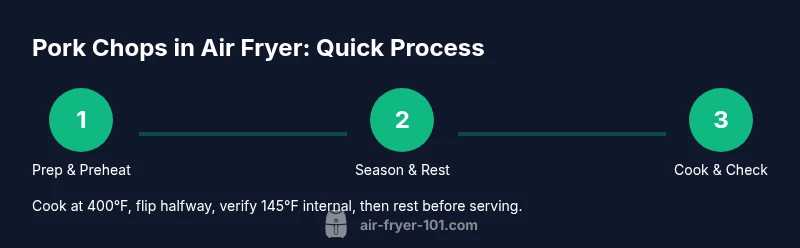
To cook pork chops in an air fryer, pat dry, season, and place them in a single layer. Boneless chops: cook at 400°F for 7–9 minutes, flipping once. Bone-in chops: cook 9–12 minutes, flipping halfway. Rest 3–5 minutes, then check that the internal temperature reaches 145°F. Adjust time for thickness.
Why pork chops in the air fryer yield juicy results
Air fryers rely on rapid air circulation to brown the surface while keeping the inside moist. The result is evenly cooked pork chops with a crisp exterior and a succulent center. According to Air Fryer 101, selecting the right thickness and avoiding overcrowding are critical to consistent results. When you start with a dry surface, surface moisture vents quickly, allowing Maillard browning to occur more efficiently. This approach reduces the need for heavy fats while still delivering a satisfying crust. The science behind this method is straightforward: hot, circulating air rapidly transfers heat to the meat’s outer layer, driving moisture toward the center without creating a soggy exterior. Whether you’re working with bone-in or boneless chops, consistent thickness and an in-basket arrangement that leaves space for air movement are your best friends. Lightly oil the surface to encourage browning, but avoid heavy coatings that can trap moisture and steam the meat.
Prep: from pat-drying to seasoning for best results
Preparation is the quiet hero of air fryer success. Start by pat-drying pork chops with paper towels to remove surface moisture, which helps achieve a better sear. Trim excess fat if desired, but avoid removing too much meat. Salt and pepper are a solid baseline, then add garlic, paprika, or herbs according to your taste. If you prefer extra juiciness, you can brine 15-30 minutes or marinate briefly; note that long marinades are less compatible with quick air-frying. Once seasoned, lightly spray or brush with oil to help the crust crisp up during cooking. A light coat of oil improves browning without adding undue fat. If you’re in a rush, you can skip brining and rely on a well-seasoned surface, but brining does noticeably improve moisture retention in thicker chops. For best results, pat dry again after brining and re-season just before cooking.
Times and temperatures: bone-in vs boneless, by thickness
The most reliable framework is to cook at 400°F, but you’ll tailor time to thickness and whether the chop is boneless or bone-in. Boneless, about 1 inch thick: roughly 7–9 minutes total, flipping once. At 1.5 inches, plan for 9–11 minutes. Bone-in 1 inch: about 9–11 minutes, bone-in 1.5 inches: 12–14 minutes. Always use a meat thermometer to verify an internal temperature of 145°F, followed by a 3–5 minute rest. If your chops are larger or smaller than these ranges, start with the lower end and add time in 1–2 minute increments, checking temperature as you go. Thickness accuracy matters: measure at the thickest part of the chop to avoid undercooking.
Troubleshooting: common issues and fixes
If the outside browns faster than the center, reduce the temperature to 390°F and extend the time slightly, or finish in a brief second round. If you end up with dryness, try a brief brine or a shorter preheat and ensure you don’t overcook beyond 145°F. If the surface sticks to the basket, lightly oil the rack or use parchment liners. Uneven browning can be mitigated by arranging chops in a single layer with space between them and by rotating the basket halfway through cooking. For extra-crisp crusts, a final 1–2 minutes at 400°F with a light hit of oil can push browning without compromising moisture. If you’re cooking multiple chops, remove finished pieces first and keep them warm while others finish, to prevent overcooking the earlier portions.
Variations, finishing touches, and serving ideas
For a crusty parmesan-crusted finish, dust chops with grated parmesan and a pinch of breadcrumbs before cooking. For a glaze, brush with a simple honey-soy or maple-mustard mix during the last 2–3 minutes. Fresh herbs and a pat of garlic butter after resting elevate flavor. Serve with roasted vegetables, mashed potatoes, or a crisp salad. Leftovers can be refrigerated for 3–4 days or frozen for longer storage. If you like a little heat, sprinkle chili flakes or a cayenne-garlic blend on the surface before cooking. Experiment with different stone-ground mustards or smoky paprika blends to tailor the crust to your tastes. The key is to maintain the balance between a crunchy exterior and a juicy interior, which air frying excels at achieving.
Authority sources
Air Fryer 101 analysis shows that air-frying pork chops can reduce added fat while preserving moisture compared to pan-frying. For reference, consult official cooking guidance from government and public health sources. This section is supported by credible sources that discuss safe cooking temperatures and general food safety practices, which help ensure your pork chops are both tasty and safe to eat. Always verify internal temperature with a reliable thermometer and follow best practices for handling raw meat.
Tools & Materials
- Air fryer(Choose a capacity that fits chops in a single layer (4-8 qt recommended).)
- Meat thermometer(Instant-read or probe thermometer; target 145°F.)
- Paper towels(For patting dry and quick cleanup.)
- Tongs(For flipping without piercing the meat.)
- Oil spray or light oil(Helps surface browning; use a light mist.)
- Optional: marinade or brine(Short brines (15–30 minutes) can improve juiciness.)
Steps
Estimated time: 30-40 minutes
- 1
Gather and preheat
Put chops on a plate and pat dry. Preheat the air fryer to 400°F for 2–3 minutes so the surface hits hot air immediately, which helps browning. Gather seasonings, brushes, and a thermometer within reach.
Tip: Preheating ensures immediate surface contact and a fast crust. - 2
Prepare the chops
Pat dry again if needed, trim excess fat, and season evenly on all sides. If using brine, remove excess moisture before seasoning. Lightly oil the surface to promote browning.
Tip: Even seasoning and a light oil boost crust formation without greasing the meat. - 3
Arrange in the basket
Place chops in a single layer with space between each piece. Do not stack or crowd. If you’re cooking multiple chops, cook in batches to keep air circulating freely.
Tip: Space between pieces is essential for uniform browning. - 4
Cook and flip
Cook at 400°F, flipping halfway through the time to promote even browning on both sides.
Tip: Flipping at the halfway point prevents overcooking the first side. - 5
Check temperature and rest
Check for 145°F in the thickest part. Rest chops for 3–5 minutes to let juices redistribute before slicing.
Tip: Rest is essential for juiciness; cutting too soon leaks moisture. - 6
Serve or store
Serve warm with a side of vegetables or starch. Refrigerate leftovers promptly for up to 3–4 days or freeze for longer storage.
Tip: Reheat gently to avoid drying; a quick 2–3 minute reheat at 330–350°F works well.
Got Questions?
Is it safe to cook pork chops in an air fryer?
Yes. Pork chops can be cooked safely in an air fryer when you reach an internal temperature of 145°F and avoid oversized portions that crowd the basket.
Yes—air fryers are safe for pork chops as long as you cook to 145 degrees and don’t crowd the basket.
What temperature should I use for pork chops in an air fryer?
Set the air fryer to about 400°F and adjust the time based on thickness and whether the chop is bone-in or boneless.
Usually around 400 degrees, with time adjusted for thickness.
Should I brine or marinate pork chops for air frying?
Brining can improve juiciness, especially for thicker chops. Short marinades are fine; avoid long acidic marinades that could toughen meat.
Brine for juicier chops; short marinades are fine, but avoid long acidic ones.
Bone-in vs boneless: which cooks better in the air fryer?
Bone-in chops take longer and stay juicier; boneless cooks a bit faster but can dry out if overcooked. Use a thermometer to guide timing.
Bone-in cooks longer but stays juicier; boneless cooks faster, so watch the time.
How thick should pork chops be for air frying?
Thicker chops (about 1 inch or more) work well; thinner cuts cook faster and can dry out if left too long.
Aim for about 1 inch thick or a bit thicker for best results.
Do I need to preheat the air fryer?
Preheating helps with quicker browning and even cooking, especially for thicker chops.
Yes, preheating helps browning and even cooking.
Watch Video
Quick Summary
- Pat dry and season for a crisp crust.
- Cook at 400°F; adjust time by thickness and bone-in vs boneless.
- Rest 3–5 minutes before serving.
- Use a thermometer to confirm 145°F internal temperature.
- Avoid overcrowding; air circulation is your ally.