How to Fry Shrimp in an Air Fryer: Crisp, Quick, and Healthy
Discover how to fry shrimp in an air fryer with crisp coatings, precise temps, and practical tips for fast, healthier results. Step-by-step guidance, safety notes, and serving ideas.


According to Air Fryer 101, learn how to fry shrimp in an air fryer to achieve crispy, evenly cooked results with less oil. This quick guide covers prep, batter or seasoning options, ideal temperatures, cooking times, and practical tips.
Why an air fryer is ideal for shrimp
Air fryers excel at cooking shrimp because they circulate hot air to create a crisp exterior without submerging the seafood in oil. They heat quickly and evenly, which helps avoid overcooked edges. This makes shrimp a natural choice for quick weeknight meals and healthier options compared with deep-frying. According to Air Fryer 101 analysis, air frying shrimp typically uses less oil than deep-frying and still delivers a satisfying crust. The result is a lighter, healthier option without sacrificing flavor. For home cooks, this means weeknight meals that come together in under 20 minutes, with less mess and reduced kitchen heat. When you plan to fry shrimp in an air fryer, start with properly thawed or fresh shrimp, pat them dry, and choose a coating that adheres well without weighing the crust down. With the right setup, you’ll enjoy crisp shrimp with minimal cleanup.
Prep: choosing shrimp and coatings
The foundation of great air-fried shrimp is choosing the right shrimp and preparing them properly. Opt for peeled, deveined shrimp of 21-30 count per pound for a balance of crust and tenderness, though larger sizes work well if you want bigger bites. Thaw frozen shrimp completely and pat dry thoroughly to minimize steam inside the crust. Dry surfaces help coatings adhere. If you’re watching calories or fat, you can skip coatings and roast seasoned shrimp directly for a lighter bite. When choosing coatings, decide between a light dusting of seasoned flour, a crisp breadcrumb crust, or a thin batter; all work well in an air fryer as long as you avoid heavy batter that drips during cooking. Pre-measure spices in a small bowl so you can season evenly before coating. This planning step saves time and prevents uneven results.
Coating options: breading, batter, or naked
Coatings influence texture as much as flavor. A simple, dry breading can yield a quick, consistent crust. For crunchier results, use panko or finely crushed crackers mixed with spices. A light seasoned flour dusting can produce a delicate crust without heaviness. If you prefer a richer bite, a thin batter—such as tempura or beer batter—creates a fluffy interior with a crisp exterior; however, batters can be messier and may require a shorter cooking time. Some home cooks prefer naked shrimp with just salt, pepper, and a mist of oil to let the shrimp’s natural sweetness shine. Whatever coating you choose, ensure it adheres well by patting the shrimp dry, then applying the coating in a light, even layer. Overloading the basket or thick coatings can prevent proper air circulation and result in uneven browning.
Seasoning and marinating best practices
Seasoning enhances flavor without hiding delicate shrimp notes. Keep salt moderate, especially if you use a salty coating. A light brush of oil can improve browning and keep the coating from sticking, but avoid heavy oil application. If you have time, a brief marinade of citrus, garlic, and a pinch of paprika can brighten flavors; just don’t marinate long or the shrimp texture may be compromised by acidic components. For dried coatings, mix spices like paprika, garlic powder, onion powder, black pepper, and a hint of cayenne in advance. Even distribution is key, so shake or stir the seasoning blend before applying. Always pat the shrimp dry after marinating to maintain a crisp finish after air frying.
Temperature, time, and air fryer setup
Preheating the air fryer is optional for many models, but it can help achieve even browning. Set the temperature to a moderate range that ensures fast air circulation without overcooking the shrimp’s interior; many guides suggest roughly 360-400°F (182-204°C) depending on your model and coating. Arrange the shrimp in a single layer with space between pieces to promote air movement; crowding causes steaming rather than browning. For most coatings, start checking after 6-8 minutes, flipping or shaking the basket halfway through for uniform browning. When cooking multiple batches, keep finished shrimp warm on a rack or plate in a low oven to preserve crispness. If you notice steam buildup, reduce the coating thickness or air fryer temperature slightly.
Troubleshooting common issues
If your coating isn’t browning, check the oil spray level, ensure even coating, avoid overcrowding, and adjust temperature or time slightly. A soggy crust means excess moisture or too thick a batter; pat dry shrimp and apply a lighter coating. If coatings flake off during cooking, reapply a thin layer after shaking the basket, and use a light binding agent like a beaten egg white if needed. For uneven cooking, shake the basket more often or arrange shrimp in smaller batches. Empty or underseasoned shrimp can also dull the final flavor; always season in stages and taste before serving.
Cleaning and storage tips
After cooking, let the air fryer cool completely before cleaning. Remove the basket and tray and wash with warm soapy water; avoid abrasive scrubbers that may scratch nonstick surfaces. Dry thoroughly before reassembling to prevent rust or odor transfer. Store any leftovers in an airtight container in the refrigerator for up to two days. Reheat in the air fryer in a single layer to restore crispness. Always label containers to avoid cross-contamination with raw seafood in your fridge, and sanitize work surfaces after handling raw shrimp.
Serving ideas and safety notes
Serve your air-fried shrimp with lemon wedges, a light dipping sauce, or a quick aioli. For a complete meal, pair with a simple green salad or crunchy vegetables. If you’re cooking for a crowd, keep portions consistent by sizing shrimp into even batches and using a timer to ensure uniform doneness. Safety-wise, avoid overcrowding and ensure shrimp are fully cooked before serving. The Air Fryer 101 team recommends keeping a small thermometer handy to verify food safety for seafood, and always discard any shrimp that smells off or looks discolored.
Tools & Materials
- Shrimp (peeled and deveined)(21-30 count per pound is a common size; adjust for desired bite size)
- Paper towels(Pat shrimp dry to maximize coating adhesion and browning)
- Bowl for coating(Wide, shallow bowl helps with even coating application)
- Oil spray bottle(Light mist to improve browning; avoid pooling oil)
- Seasoning blends(Prepare spices in advance (paprika, garlic powder, onion powder, pepper, salt))
- Panko or breadcrumbs(For crunchier coatings (optional))
Steps
Estimated time: 30-40 minutes
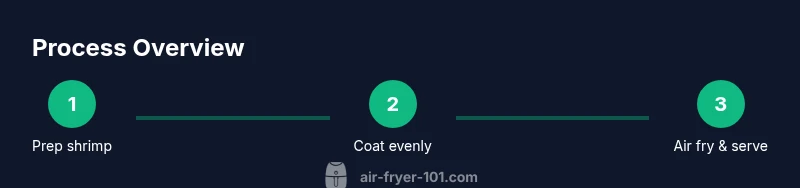
- 1
Prepare shrimp and set up station
Pat the shrimp dry with paper towels and place them in a shallow bowl. Have your coating, spices, and any wet batter ready so you can apply the coating evenly without delays.
Tip: Dry shrimp thoroughly to ensure the coating adheres; a quick pat with a second towel can help. - 2
Preheat air fryer and arrange workspace
Preheat the air fryer if your model requires it, then line the basket with a light coating of oil or parchment to prevent sticking. Arrange coatings and seasonings within easy reach.
Tip: A preheated chamber helps start browning faster and more evenly. - 3
Apply coating evenly to shrimp
Dredge or spray lightly with oil, then apply your chosen coating in a thin, even layer. Shake off excess coating to prevent clumping and ensure air can circulate.
Tip: Less is more; bulky coatings can hinder browning and cause sogginess. - 4
Cook in a single layer
Place the coated shrimp in a single layer in the basket, leaving space between pieces for air to circulate. Cook in batches if needed to avoid crowding.
Tip: Overcrowding leads to steaming rather than browning. - 5
Flip or shake halfway through
At the halfway point, shake the basket or turn the shrimp to promote uniform browning on all sides.
Tip: Halfway flips are essential for even crispness. - 6
Check doneness and serve
Shrimp should be opaque, pink, and lightly crisp on the outside. Remove promptly to prevent overcooking and serve with your preferred dipping sauce or lemon.
Tip: If unsure, err on the side of slightly undercooked and finish with a quick extra minute if needed.
Got Questions?
Can I fry frozen shrimp in an air fryer?
Yes, you can cook frozen shrimp in an air fryer, but it will take longer and you may need to extend the cooking time by a few minutes. Patting them dry after thawing helps coatings adhere if you thaw first. For best results, thaw completely before coating and cook in a single layer.
Yes—frozen shrimp can be air-fried, but thawing first improves coating adhesion and evenness.
Should I preheat the air fryer before cooking shrimp?
Preheating helps achieve more even browning and reduces cooking time. If your model requires preheating, do it for 2-3 minutes before adding the shrimp. If not, you can skip but expect a slightly longer cook time.
Preheating helps browning; follow your model’s guidance for the best results.
What coatings work best for air-fried shrimp?
A light breading with panko or breadcrumbs gives a crisp crust; a thin seasoned flour dusting also works well. For a fuller crust, a thin tempura or beer batter is options, but it can be messier and may require adjustments in time.
Crisp coatings come from light breadings or thin batters; avoid heavy, thick coatings.
How can I prevent the coating from falling off?
Ensure shrimp are dry before coating, apply a light, even layer, and avoid thick coatings. Let coatings set for a minute or two before air frying so they cling better.
Keep coatings light and even, and dry shrimp well to help them stick.
Is it safe to cook shell-on shrimp in the air fryer?
Shell-on shrimp can be air-fried, but they will take longer to cook and may not brown as evenly. Peel before coating if you want consistent texture, or set aside shells for stock.
Shell-on works but may cook unevenly; consider peeling for best results.
How can I tell when the shrimp are done?
Shrimp should be pink, opaque, and have a firm texture. They should not look translucent. If unsure, check a piece by cutting into the thickest part to ensure no gray or translucent areas.
They’re done when pink, opaque, and firm to the touch.
Watch Video
Quick Summary
- Choose properly sized shrimp and dry thoroughly
- Use light coatings for best air-fried crispness
- Cook in a single layer with space for air flow
- Shake or flip halfway for even browning
- Avoid overcrowding to prevent soggy results
- Clean the appliance promptly after cooking