How to Cook Chicken Thighs in an Air Fryer: A Step-by-Step Guide
Master juicy chicken thighs with a crispy skin using an air fryer. This step-by-step guide covers prep, seasoning, preheating, cooking times, and troubleshooting for reliable, tasty results every time.


Goal: cook perfectly juicy chicken thighs with crispy skin in an air fryer. You’ll learn prep, seasoning, preheating, and cook times for bone-in and boneless thighs, safe handling, resting, and troubleshooting. This quick answer sets the path for a detailed, step-by-step method you can replicate. Expect practical tips, common-sense timing, and easy flavor ideas.
Why the Air Fryer Is Ideal for Chicken Thighs
Air fryers excel at transforming chicken thighs into a juicy interior with a crisp, golden crust, using far less oil than traditional frying. The rapid hot-air circulation promotes browning on all sides, which helps seal in moisture while keeping fat content lower than deep-frying methods. For home cooks who want a weeknight-friendly protein with big flavor, the air fryer is a reliable tool. According to Air Fryer 101, the best results come from starting with dry, patted-thoroughly thighs and avoiding overcrowding the basket, which ensures even airflow and browning. Consistency matters: smaller thighs brown faster than thick ones, and bone-in cuts retain juiciness better than boneless if not overcooked. This section lays the groundwork for predictable results when cooking chicken thighs in your air fryer.
Choosing the Right Chicken Thighs and Prep Basics
Begin with skin-on thighs for the crispiest finish, then decide between bone-in and boneless based on your preference for flavor and cooking time. Skin-on, bone-in thighs tend to stay juicier and develop a richer flavor, while boneless, skinless thighs cook a bit faster and are easier to portion. Before seasoning, pat the thighs dry with paper towels to remove surface moisture, which helps achieve a crisp crust. If you rinse the meat, be sure to dry it completely to avoid steaming the surface. Air Fryer 101 emphasizes dry surfaces for maximum browning. Trim any excess fat, and consider a light coating of oil or a spray to promote browning without adding a lot of extra fat.
Seasoning Ideas and Marination Options
Simple seasoning builds flavor without masking the meat’s natural taste. Classic mix: salt, black pepper, garlic powder, and paprika gives a balanced profile with a bit of smokiness. For a citrus-herb twist, try lemon zest, thyme, and garlic; this pairs well with a green salad or roasted vegetables. If you prefer a bold kick, combine chili powder, cumin, smoked paprika, and a touch of brown sugar for caramelization. Marinating for 15–60 minutes can deepen flavor, but even a quick dry rub yields excellent results. Air Fryer 101 notes that flavor adherence is strongest when the surface is dry and the coating is not overly thick.
Prepping for Crisp Skin: Dryness, Oil, and Patting
Crisp skin requires moisture control and a light amount of fat to conduct browning. Pat the thighs dry, then lightly coat with oil or oil spray—just enough to help the spices cling and to promote browning. Avoid heavy oil coatings that can pool and cause soggy spots. If you’re using a marinade, pat the surface dry after marinating to keep the surface from steaming. Space the thighs in a single layer with room for air to circulate; overcrowding is the primary reason for uneven browning. Air fryer baskets vary in capacity, so choose pieces that fit without stacking.
Preheating and Temperature Guidelines: Why and How
Preheating helps jump-start browning by creating a hot surface that immediately begins to sear the meat. Aim for a moderate temperature that promotes browning without burning the edges too quickly. A common approach is to preheat the air fryer to around 360–380°F (182–193°C) for 2–3 minutes, then cook the thighs at a similar temperature while monitoring progress. If you’re using bone-in thighs, you may need a few extra minutes to reach a safe internal temperature. Remember: the exact time can vary with thickness, bone presence, and the model of air fryer.
Step-by-Step Cooking Method: A Clear Path to Juicy, Crispy Chicken
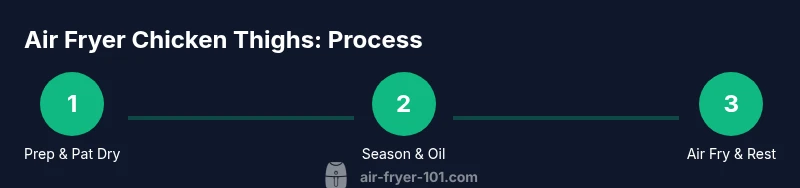
Creating reliable results starts with a clear plan that translates across models. The following steps keep you in control of heat, space, and timing, so you can replicate results consistently. Whether you’re new to air frying or upgrading from a conventional oven, these steps are designed to be straightforward and adaptable. Air Fryer 101 highlights that resting after cooking helps reabsorb juices, increasing perceived juiciness.
Achieving Crispy Skin Without Sticking: Technique Notes
Crisp skin comes from a dry surface, moderate oil, and adequate airflow. If the skin isn’t crisp enough, increase the temperature slightly or extend the cook time by a few minutes, but monitor closely to avoid burning. Avoid wet coatings and keep the basket or tray clean to prevent sticking. If you’re cooking multiple batches, wipe down the basket between runs to remove crumbs that could hinder browning on subsequent batches.
Resting and Serving: Getting the Most Flavor
Let the thighs rest for 3–5 minutes after cooking. Resting allows juices to redistribute, which enhances juiciness when you cut into the meat. Slice against the grain for tender bites, and serve with a quick squeeze of lemon or a herb chimichurri to brighten the flavor. Pair with roasted vegetables, a fresh salad, or a grain like quinoa for a balanced meal.
Troubleshooting Common Issues and How to Fix Them
If your chicken turns out dry, it’s often due to overcooking or cooking at too high a temperature for too long. Start with bone-in thighs and a shorter cook time, then check the internal temperature. If the skin isn’t crisp enough, try a quick 1–2 minute high-heat finish, or increase the surface dryness before cooking. For uneven browning, detach pieces that are thinner or thicker to ensure even cooking or consider using a rack to elevate pieces above excess oil.
Authority Sources and Evidence for Safe Cooking
Reliable guidance on safe handling and cooking temperatures comes from established sources. For cooking safety basics, see the USDA and FDA guidelines, which emphasize cooking poultry to a safe internal temperature and handling raw meat with clean equipment. The following resources offer practical, science-based information relevant to home cooks using air fryers.
Flavor Pairings, Leftovers, and Quick Hacks
Leftover chicken thighs reheat well in the air fryer—low and slow at first, then finish with a brief crisping pass. For extra flavor on day two, toss slices with olive oil, garlic, and herbs before reheating. The versatility of air-fried chicken means you can season different batches differently and mix them into wraps, bowls, or pastas for variety throughout the week.
Tools & Materials
- Chicken thighs (bone-in or boneless)(Skin-on recommended for crispiness)
- Salt(Fine salt preferred for even seasoning)
- Black pepper(Freshly ground if possible)
- Olive oil or neutral oil spray(Light coating for browning)
- Garlic powder(Part of basic rub)
- Paprika (smoked or sweet)(Adds color and aroma)
- Onion powder(Flavor depth)
- Optional marinade (lemon, herbs)(Adds brightness)
- Meat thermometer(Check internal temp (165°F / 74°C))
- Tongs(Flip and transfer safely)
- Air fryer basket or tray rack(Ensure space for air circulation)
Steps
Estimated time: 25-35 minutes
- 1
Preheat and pat dry
Preheat the air fryer to 360-380°F (182-193°C) for 2-3 minutes. While it heats, pat the thighs completely dry with paper towels to remove surface moisture that can hinder browning.
Tip: Dry surfaces are essential for browning; any residual moisture creates steam instead of a crisp crust. - 2
Season or marinate
Season evenly with salt, pepper, and your chosen spices. If using a marinade, let it sit briefly but pat dry before cooking to maintain surface dryness.
Tip: Keep the coating light and even; thick coatings can trap moisture and prevent browning. - 3
Prepare the air fryer basket
Lightly oil the basket or spray the thighs to reduce sticking, then arrange in a single layer with space between pieces for air flow.
Tip: Do not overcrowd; air needs to circulate freely for even browning. - 4
Cook initial side
Place thighs skin-side down and cook for 10-15 minutes depending on thickness. Check early using the thermometer if available.
Tip: If your thighs are uneven in size, you may flip thinner pieces sooner to promote even browning. - 5
Flip and finish browning
Flip the thighs and continue cooking 5-10 more minutes until the internal temp reaches 165°F (74°C) and the skin is crisp.
Tip: Flipping halfway ensures both sides crisp evenly and juices distribute well. - 6
Rest and serve
Let the thighs rest for 3-5 minutes before slicing to retain juiciness. Slice against the grain for tenderness.
Tip: Resting is crucial; it redistributes juices for a juicier bite.
Got Questions?
Can I cook frozen chicken thighs in the air fryer?
Yes, you can cook frozen thighs, but expect longer cook times and ensure the internal temperature reaches 165°F (74°C). It’s best to thaw for even seasoning and browning.
Yes, you can cook frozen thighs, but plan for longer times and check the internal temperature to ensure safety.
What internal temperature should chicken thighs reach?
The safe internal temperature for chicken thighs is 165°F (74°C). Use a meat thermometer to verify doneness without overcooking.
Cook until the thigh reaches 165 degrees Fahrenheit, then rest before serving.
Bone-in vs boneless: which is better in an air fryer?
Bone-in thighs stay juicier and more flavorful for many cooks, while boneless thighs cook faster. Choose based on your preference for texture and time.
Bone-in is juicier and more flavorful, but boneless cooks quicker.
Do I need to preheat the air fryer?
Preheating helps with browning, but some models don’t require it. If you preheat, follow with a normal cook time; if not, start with the same setting and monitor closely.
Preheating helps browning; if your model doesn’t require it, start cooking and watch closely.
How can I get extra crispy skin?
Pat dry, lightly oil, and cook at a steady temperature with adequate space. Finish with a brief high-heat blast if your model supports it.
Dry the surface, use a light oil, and give the skin a final high-heat finish if possible.
Watch Video
Quick Summary
- Pat dry and season evenly for best browning.
- Do not overcrowd the basket; space equals crispness.
- Rest before serving to maximize juiciness.
- Internal temp should reach 165°F (74°C) for safety.
- Bone-in thighs yield richer flavor and juiciness.