How to Air Fry in the Oven: A Complete Guide
Learn how to air fry in the oven for crisp, healthy results. This step-by-step guide covers convection, rack setup, temps, and safety tips to get restaurant-quality crunch without a countertop air fryer.


This guide shows how to air fry in the oven to get crisp, evenly browned results without a countertop air fryer. You’ll optimize convection airflow, rack setup, and cooking times, then test doneness and finish with a quick rest. It’s ideal for busy kitchens and flexible cookware. It also covers preheating, avoiding overcrowding, and safe handling.
What is oven air frying?
Learning how to air fryer in oven gives home cooks a practical way to achieve crisp textures without a dedicated countertop unit. Oven air frying relies on hot air circulating around the food, producing browning similar to frying but with significantly less oil. According to Air Fryer 101, the secret is to maximize convection and surface contact while preventing steam buildup. The trick is to mimic a compact air fryer by using a rack setup and a sheet pan to promote airflow on all sides. In practice, you’ll set up your oven to create rapid air movement, then place items in a single layer so each piece browns evenly. This method works particularly well for small batches of vegetables, fries, and proteins that benefit from quick exterior crisping.
When you search for how to air fryer in oven, you’re learning to stage your oven for optimal air exposure and minimal sogginess. Expect similar browning to a dedicated air fryer, but mind your oven’s hot spots and airflow paths. With patience and the right setup, you can achieve impressive results without buying new equipment. The goal is a light, even crust with a tender interior—no heavy oils required.
How convection helps in an oven
Convection is the core technology that makes oven air frying possible. The fan-assisted heat circulates air around food, speeding browning and reducing the need for large amounts of oil. When you’re learning to air fry in an oven, you’ll want to maximize airflow by elevating the food on a rack and keeping chunks spaced apart. Placement matters: center rack often balances heat exposure, while higher racks can yield more browning on the tops. In practice, convection produces crisper exteriors on potatoes, chicken tenders, and cut vegetables than standard baking. If your oven has both a bake and convection bake setting, start with convection to harness that moving air and switch to bake for delicate items that you don’t want over-crisped.
Air Fryer 101 recommends giving the air a clear path around each piece and avoiding crowding. If air can’t circulate freely, you’ll end up with uneven browning and soggy patches. Rotate trays mid-cook when you’re cooking more than a single sheet. This simple habit helps counteract hot spots and yields consistently crispy results across a batch.
Key differences vs countertop air fryers
Countertop air fryers are compact, fast, and designed specifically for air frying. An oven, by contrast, is a larger, more versatile appliance that can simulate air frying with the right setup. The primary difference is airflow control: a dedicated air fryer has a tight chamber and consistent fan speed, while an oven relies on rack height, tray spacing, and ambient oven air circulation. Oven air frying gives you more space for bigger batches and a wider range of foods, but it may require more careful rack positioning and occasional repositioning to ensure even browning. For many home cooks, oven air frying offers a flexible compromise between capacity and crispness, especially when you’re cooking for a crowd or don’t want to buy another gadget.
Setting up for oven air frying: equipment and layout
A successful oven air fry starts with the right setup. Use a sturdy baking sheet with a wire rack placed on top to elevate food and promote airflow beneath. Lining the sheet with parchment paper or a silicone mat keeps cleanup easy and reduces sticking. Position the rack in the center or upper-middle part of the oven to optimize heat exposure. If your oven has a convection setting, enable it; if not, you can still achieve good results by choosing a hot, stable heat source and ensuring the tray isn’t crowded. Keep a pair of tongs handy to flip pieces for even browning and to adjust spacing as needed during cooking.
Temperature and airflow guidelines
Effective oven air frying hinges on heat and airflow, not guesswork. Use a high-heat approach to encourage rapid browning while avoiding scorching. Ensure there is space around each piece—crowding is the enemy of crisp texture. If your oven has multiple racks, consider cooking on two levels with a halfway rotation to equalize heat distribution. When the airflow is unobstructed, you’ll notice faster color development and a drier exterior, which translates to a satisfyingly crisp bite without deep-frying.
Food prep and tray strategies
Preparation matters as much as temperature. Pat foods dry to remove surface moisture, which can steam rather than crisp. Lightly oil or spray ingredients to aid browning, then season as desired. For fries, keep pieces uniform in size for even cooking; for proteins, pat dry and season generously to make flavor pop under dry heat. A single-layer layout is ideal, but if you must stack, stagger the pieces and give extra time for browning. The goal is consistent contact with hot air, not a crowded pile.
How to test doneness and achieve crisp texture
Crispness is a combination of exterior dryness and interior tenderness. Start checking a little before your expected finish time, then continue cooking in short bursts if needed. Look for a golden-brown exterior and an interior that’s tender but not dry. If you’re not seeing the level of browning you want, give the tray a quick turn and, if possible, raise the temperature slightly for a minute or two. Resting briefly after removal helps set the crust and can improve texture.
Troubleshooting common issues
Soggy bottoms usually point to overcrowding or insufficient airflow. Uneven browning often means hot spots or warped racks. If steam builds up under the food, consider switching to a higher rack or using two racks with more space between items. If sticking is a problem, parchment or a silicone mat helps, along with a light oil spray. Finally, remember that ovens vary; what works in one model might require a small adjustment in another.
Cleaning and maintenance after oven air frying
Cleanup should happen soon after you finish cooking. Wipe the tray, rack, and sheet pan while the oven is still warm but safe to touch. Soak heavily soiled parts to loosen residue, especially if you used fatty foods. Use non-abrasive sponges to preserve finishes. Regularly check seals and fans for crumbs that could affect airflow. Proper maintenance helps you preserve convection efficiency and extend oven life.
Quick-start recipe ideas and tips
Begin with simple items like fries, vegetable wedges, or chicken tenders to practice the technique. As you gain confidence, try more delicate items such as fish fillets or tofu skewers. For best results, keep a consistent single-layer layout and adjust cooking times based on the thickness of the food and your oven’s performance. Flavor boosters—herbs, lemon zest, or paprika—work well with dry heat and require minimal oil.
Tools & Materials
- Oven(Standard kitchen oven with convection option preferred)
- Rack or Wire Cooling Rack(Elevates food for better airflow)
- Baking Sheet(Use a sturdy sheet pan as the base)
- Parchment Paper or Silicone Mat(Protects sheet and aids cleanup)
- Tongs(For flipping and handling hot items)
- Oil Spray or Misto(Light coating to promote browning)
- Oven Mitts(Safe handling of hot trays)
- Food Thermometer (optional)(Use for safety with proteins)
Steps
Estimated time: varies by recipe
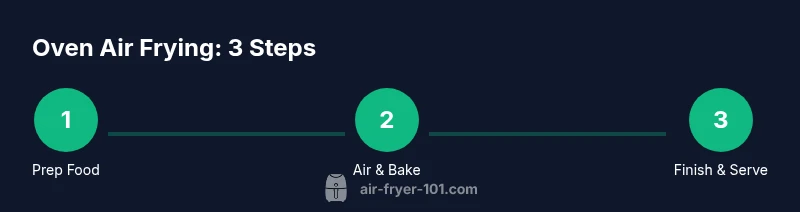
- 1
Preheat and position rack
Preheat the oven to a high, stable setting and place a rack on a sheet pan to create an elevated cooking surface. Position the rack in the center of the oven to balance heat exposure. The goal is to establish an airflow path that minimizes hot spots from the start.
Tip: Preheating reduces the time to reach the browning threshold and helps sear the exterior faster. - 2
Prepare ingredients
Pat foods dry and patience counts here; moisture at the surface inhibits crisping. Lightly oil and season as desired to promote browning and flavor. Cut items uniformly to promote even cooking.
Tip: Dry surfaces thoroughly for best results; moisture is the enemy of crust. - 3
Arrange in a single layer
Spread items in a single, even layer on the racked tray. Leave space between pieces so air can circulate freely. Avoid stacking or overlapping, which creates soggy spots.
Tip: If you’re cooking a large batch, work in batches to preserve air flow. - 4
Use convection and monitor
If your oven has a convection setting, use it to maximize airflow; otherwise rely on the elevated rack and sheet pan to create air movement. Check about halfway through and rotate the tray for even browning.
Tip: Rotating halfway helps mitigate hot spots and yields uniform color. - 5
Test for doneness
Look for a crisp exterior and fully cooked interior. If not satisfied, give a few more minutes in short bursts and flip as needed. Allow a brief rest before serving to set the crust.
Tip: Use a quick test bite to gauge texture without overcooking. - 6
Finish and serve
Remove from oven, let rest briefly, then plate. A light sprinkle of finishing salt or herbs can elevate the final flavor. Wipe the tray while warm to ease cleanup.
Tip: Resting briefly helps lock in juices and crispness. - 7
Optional: reheating leftovers
When reheating, place items on a clean rack and air crisp briefly to re-crisp surfaces that have softened. This prevents sogginess and preserves texture.
Tip: Skip overcrowding even on reheat to retain crunch. - 8
Clean up afterward
Let trays cool, then wash with warm water and a gentle sponge. For stubborn residue, soak and re-clean. Dry thoroughly before next use.
Tip: Regular maintenance keeps convection performance high.
Got Questions?
Can I air fry in a standard oven?
Yes. You can achieve air-fryer-like results in a standard oven by using a wire rack elevated on a sheet pan, giving the hot air access around the food. Convection helps, but even without it you can get crisp textures with careful layout and timing.
Yes. You can air fry in a standard oven by elevating the food on a rack and using a sheet pan to promote airflow, with convection making it easier.
Do I need a convection setting?
A convection setting is helpful because it promotes stronger air movement, improving browning and crispness. If your oven lacks a dedicated convection mode, use a rack and ensure space for air to circulate.
A convection setting helps, but you can still crisp with proper rack placement and spacing.
Is preheating essential?
Preheating establishes a steady hot environment quickly, which helps start the browning process sooner. It’s not strictly mandatory, but it improves initial crisping and reduces overall cooking time.
Preheating creates a stable hot surface for faster browning and crisper results.
What foods work best for oven air frying?
Foods with some surface moisture or starchy coatings, such as potatoes, veggie wedges, chicken tenders, and fish fillets, typically crisp well. Avoid overly thick or dense items that trap steam and delay browning.
Potatoes, vegetables, chicken tenders, and fish fillets work well when air fried in the oven.
Why is my food soggy or uneven?
Sogginess usually comes from crowding and poor airflow. Ensure a single-layer layout with space between pieces. Rotate or switch racks if you notice hot spots or trapped steam.
Soggy results usually mean crowding; give space and rotate for even browning.
How do I clean after oven air frying?
Soak and wash racks, sheet pans, and trays after cooling. Wipe the oven interior if needed, and remove any burnt-on residues. Regular cleaning maintains airflow efficiency and prolongs oven life.
Clean components after cooling to maintain airflow and oven health.
Quick Summary
- Start with proper setup to maximize convection.
- Space pieces for even airflow and browning.
- Check doneness early and adjust as needed.
- Use a rack and liner for best results and cleanup.
- Maintain oven with regular cleaning and inspection.