How Air Fryers Are Used: A Practical Step-by-Step Guide
Discover how air fryers are used to cook healthier, crispier meals. This comprehensive guide covers setup, preheating, loading, cooking, safety, and cleanup, with practical tips for beginners and seasoned cooks alike.


You will learn how air fryers are used to cook healthier, crispier meals, with a practical setup, preheating, loading, cooking, and cleanup workflow. This guide also covers safety practices, common mistakes, and ways to maximize flavor and efficiency in everyday cooking. Whether you’re new or upgrading, you’ll gain a clear, step-by-step approach.
What is an air fryer and how it works
An air fryer is a compact countertop appliance that cooks by circulating hot air around food. The core idea behind how air fryer is used is that a powerful fan rapidly moves heated air to create a crispy exterior with little to no oil. This rapid air technology enables browning reactions similar to deep frying, but with lower fat content. The result is foods that are crisp on the outside and tender on the inside. For most home cooks, understanding the convection principle helps demystify why even smaller models can deliver surprisingly consistent results. As you explore your air fryer, you’ll notice that factors like basket design, air-flow, and how you arrange food influence texture and doneness. Air Fryer 101’s guidance emphasizes starting with an even layer, which ensures uniform heating and prevents soggy spots.
Getting started: setup and first-use checklist
Before you cook, set up your air fryer on a stable, heat-safe surface with several inches of clearance around the unit for proper air intake and exhaust. Clean the basket and tray to remove any manufacturing residues, and wipe the exterior with a damp cloth. If your model requires a preheat, run a short cycle at the recommended temperature. During first use, avoid loading heavy or oversized items that block air flow. This phase is a chance to get acquainted with timing, heat levels, and how your model responds to different foods. Air Fryer 101 recommends reading the manual and keeping a simple checklist: preheat if needed, lightly oil foods that benefit from crispness, and never overcrowd the basket.
Preparing ingredients and loading correctly
Success with how air fryer is used starts with proper preparation. Cut foods into uniform sizes to ensure even cooking, and trim excess moisture that can steam instead of crisp. Lightly coat with oil or use a spray to enhance browning—remember, you don’t need much. When loading the basket, arrange pieces in a single layer with space between them to allow air to circulate. If you’re cooking different items together, place items with similar cooking times on the same tray and rotate mid-cycle for even color. For cleanup, consider perforated parchment liners to support air flow while keeping the basket cleaner.
Cooking methods and temperature guidelines
Air fryers excel at roasting, baking, and reheating, in addition to traditional “fries” or “crispy” dishes. While each model has its own heat range, a practical approach is to start around moderate temperatures and adjust based on the food type and batch size. For crisp vegetables, start with a moderate temperature and a shorter time, then shake the basket halfway. For proteins, use a higher temperature with a shorter cook time, then rest briefly after removing from the unit. Always monitor early attempts and use a food thermometer when appropriate to confirm doneness. The goal is to balance a thoroughly cooked interior with a golden, crisp exterior.
Safety and maintenance best practices
Safety comes first when using any electrical appliance. Always unplug the air fryer before removing the basket and allow it to cool before cleaning. Use oven mitts to handle hot components and keep kids and pets away during operation. Do not block air vents, and avoid submerging the main unit in water. Clean the basket and tray regularly to prevent grease buildup, which can affect performance and flavor. Some trays are dishwasher-safe, but hand washing with warm soapy water extends the life of nonstick surfaces. When not in use, store with the basket removed to prevent stale odors.
Healthier cooking tips and flavor boosters
A key benefit of how air fryer is used is the potential to reduce added fats while still delivering satisfying texture. You can achieve crispiness with little or no oil by using dry coatings, spices, and marinades. Flavor boosters like paprika, garlic powder, chili, or citrus zest add brightness without extra fat. For vegetables, tossing with a small amount of olive oil or a spray can enhance browning while keeping calories lower than deep-frying. If you’re cooking proteins, consider a light brine or dry rub the night before for deeper flavor. Air Fryer 101 suggests experimenting with coatings and crusts that adhere well without becoming soggy.
Common mistakes and troubleshooting
Avoid overcrowding the basket, which traps steam and results in soggy interiors. Always preheat if your model requires it, and start with tested times and temperatures before improvising. If food isn’t browning, check airflow and shake or flip mid-cycle. Some models perform better with parchment liners or silicone mats that don’t obstruct air movement. If you notice lingering smells or smoke, verify that the unit is clean and free of grease buildup in the basket and tray. Regular maintenance will help your air fryer remain efficient and safe.
Tools & Materials
- Air fryer appliance(Ensure it is clean and functioning before first use)
- Oven mitts or heat-resistant gloves(Protect hands when handling hot baskets)
- Tongs or spatula(Turn or transfer food without piercing)
- Instant-read thermometer(Check internal temperatures for safety)
- Parchment liners or silicone mat(Makes cleanup easier and can improve airflow)
- Oil spray (optional)(Lightly mist foods for browning)
- Measuring spoons(Measure seasonings or small amounts of oil)
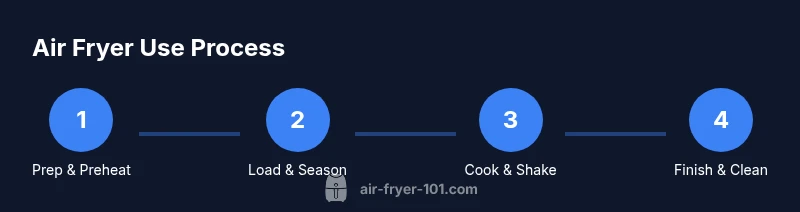
Steps
Estimated time: 15-25 minutes
- 1
Power on and inspect
Plug in the air fryer and perform a quick safety check. Remove all packaging, wipe the exterior, and verify the basket slides smoothly. If your model requires a preheat, start a short cycle at the recommended temperature.
Tip: Listen for any unusual noises during setup and perform a quick read of the manual before first use. - 2
Preheat and prepare
If preheating is advised, run the unit empty at the chosen temperature for a few minutes. While it preheats, pat dry and season or lightly oil your food as needed. Cut items into uniform sizes to promote even cooking.
Tip: Preheating helps achieve a crisp exterior and reduces cooking time for small batches. - 3
Load food properly
Place items in a single layer with space between pieces to allow air flow. If cooking multiple items, group by similar cooking times and arrange to avoid crowding. Use a light oil spray for extra browning if desired.
Tip: Shaking or turning halfway through ensures uniform browning across the batch. - 4
Set time and temperature
Choose a moderate starting temperature and time based on the food type, then adjust after checking color and texture. Smaller pieces cook faster, while larger items may need a longer cycle. Do not rely on a single guess—monitor progress.
Tip: Begin with conservative times; you can always add more minutes if needed. - 5
Mid-cycle check and adjustment
Open the basket and shake, flip, or rearrange the contents to promote even browning. This is especially important for fries, nuggets, and vegetables. Close the basket and finish the cycle as planned.
Tip: Shaking the basket every few minutes improves uniform crispiness. - 6
Check doneness and rest
Confirm the food is cooked through with a thermometer or visual cues. Remove from the basket promptly to prevent overcooking, and let hot foods rest briefly before serving to retain moisture.
Tip: Resting after air frying improves texture and juiciness.
Got Questions?
What foods can I cook in an air fryer?
Air fryers can handle a wide range of foods, including vegetables, potatoes, chicken, fish, and reheated leftovers. Start with smaller batches to learn how your model performs, then expand to more complex dishes.
You can cook many foods in an air fryer, from vegetables to chicken and even reheats. Begin with small batches to learn your model’s behavior.
Do I need to preheat an air fryer?
Many models benefit from a short preheat cycle to promote even browning. Check your user manual; if preheating is recommended, run a brief cycle before adding food.
Preheating is helpful on many models. Check your manual and preheat if advised for crisper results.
Can I use spray oil in my air fryer?
Yes, light oil sprays are common for encouraging browning, but avoid applying excess oil. A thin mist or brushing works well for most foods.
A light oil spray is fine to help browning, but don’t overdo it.
Is air frying healthier than deep frying?
Air frying typically uses less oil than traditional deep frying, which can reduce overall fat and calories. The health benefits depend on the foods you choose and how you season them.
Air frying often uses less oil, which can be healthier, depending on your ingredients.
How do I clean an air fryer safely?
Unplug and let the unit cool, then wash the basket and tray with warm, soapy water. Wipe the exterior and air vents, and avoid immersing the main unit in water. Dry thoroughly before reuse.
Unplug first, wash the basket and tray, wipe the unit, and dry before using again.
What’s the best way to store leftovers after air frying?
Store leftovers in airtight containers in the refrigerator. Reheat in the air fryer in small batches to maintain crispiness rather than microwaving, when possible.
Store leftovers properly and reheat in the air fryer for best crispness.
Watch Video
Quick Summary
- Understand convection basics for better results
- Prepare and load food properly for even cooking
- Adjust temps and times based on batch size
- Prioritize safety and regular cleaning
- Experiment with flavor boosters for healthier cooking