Fish in the Air Fryer: A Complete How-To Guide
Learn to cook fish in the air fryer with confidence. This Air Fryer 101 guide covers fish selection, prep, seasoning, timing, and safety to deliver crispy, healthy results for weeknights and weekend meals.


This guide helps you cook fish in the air fryer to flaky, tender perfection. You’ll learn how to choose the right fillets, pat them dry, season for flavor, and avoid overcooking. We cover preheating, ideal temperatures, cooking times by thickness, and safety tips for serving. With clear steps and practical tricks, you’ll eat healthier fish in less time.
Why fish in the air fryer makes sense
Cooking fish in the air fryer offers a quick path to flaky, flavorful fillets with less oil than traditional frying. According to Air Fryer 101, this method helps preserve moisture while delivering a crisp exterior, making it a popular choice for health‑conscious home cooks. The Air Fryer 101 team found that proper prep and gentle handling are keys to success, especially for delicate whitefish and salmon fillets. This approach also reduces kitchen heat and cleanup, which many busy households appreciate. As you read, you’ll discover how to select the right fish, prep it for air frying, and finish with a crisp, delicious result that satisfies both taste and nutrition goals.
Choosing the right fish and fillet sizes
Not all fish behaves the same in an air fryer. Lean, mild fillets such as cod, haddock, and tilapia cook quickly and stay tender when not overcooked. Richer fish like salmon and trout have more fat and a naturally moist texture, which can help you avoid dryness when cooking without heavy breading. For best results, select fillets that are evenly thick (about ½ inch to ¾ inch) and roughly uniform in size. If you must cook different thicknesses at once, cut thicker portions to match thinner ones to promote even cooking. Fresh or thawed fillets both work, but pat them dry before seasoning. A dry surface improves browning and helps the seasoning stick. Healthful choices include wild or responsibly farmed options, which Air Fryer 101 often highlights for flavor and sustainability.
Preparing fish: thawing, patting dry, and moisture control
Moisture is the enemy of crisping. Start with thawed fillets and pat them thoroughly dry with paper towels. Any surface moisture creates steam, which can soften the crust. If you’re thawing from frozen, patience pays off—maximize surface dryness before seasoning. Lightly dust the fillets with a small amount of oil or spray before applying seasoning to help adhesion. For delicate fish, skip heavy coatings and favor a simple, well-seasoned finish. Keeping the fillets dry also helps prevent sticking to the basket and supports even browning across all sides.
Oil, seasoning, and breading options
A light oil spray is enough to help browning without wasting calories. For a crisp exterior, you can pair a simple salt-and-pepper dusting with lemon zest, garlic powder, and paprika. If you prefer breading, panko breadcrumbs offer a lighter crunch than traditional breadcrumbs. Dip the fillets in a thin coating of beaten egg, then press the breading evenly to avoid clumps. Alternatively, you can use a dry rub or a cornmeal crust for a cornbread-like crust. Either way, be mindful of the coating’s thickness—too thick can prevent browning and create a soggy interior. For best results, keep the coating light and even.
Preheating and loading the basket
Preheating helps create an immediate sear, improving crust formation. Set your air fryer to a moderate temperature (around 350°F/177°C) for a few minutes before adding the fish. Do not overcrowd the basket; arrange fillets in a single layer with space between pieces so air can circulate around each filet. If you’re cooking multiple fillets, you might need to work in batches. Use tongs to place fillets gently into the basket to avoid breaking the coating. Proper loading ensures uniform heat exposure and reduces the risk of uneven doneness.
Cooking times and temperature guidelines
Cooking times vary with thickness and fillet type. A good starting point is 350°F–400°F (177°C–204°C). Thin fillets (about ½ inch thick) can cook in roughly 6–8 minutes; thicker pieces (¾ inch or more) may need 9–12 minutes. Flip halfway through to promote even browning on both sides. If you’re unsure, start with a shorter time and check doneness, then resume cooking in 1–2 minute increments. Always rely on internal temperature for doneness rather than color alone.
Checking doneness and safety
The safe internal temperature for most fish fillets is 145°F (63°C) according to federal guidelines. Use an instant-read thermometer inserted into the thickest part of the fillet to confirm. The flesh should be opaque and flake easily with a fork. If you’re cooking a thicker cut, you can remove the fish when it’s near the target temperature, as residual heat will bring it to completion. Let the fish rest for a minute or two after cooking to reabsorb juices.
Troubleshooting common issues
If the coating isn’t crisp, the basket may be overcrowded or the surface moisture was too high. Ensure fillets are dry and not stacked tightly. A pale crust usually signals insufficient heat or too little time; increase temperature slightly or extend time in short increments. A dry, crumbly crust often means the coating is too thick or the fish was cooked at too high a temperature without adequate moisture. For soggy coatings, switch to a lighter breading and consider a quick spray of oil mid‑cooking.
Serving ideas and leftover tips
Serve with lemon wedges, a light tartar sauce, or a yogurt-dill dip. Fresh herbs, such as parsley or chives, brighten the flavor. Leftovers refrigerate well for 1–2 days; reheat gently in the air fryer for a quick, improved texture—avoid microwaving as it can soften the crust. A simple green salad or roasted vegetables makes a balanced, healthy meal when paired with air-fried fish.
Health, budget, and environmental considerations
Air frying typically uses less oil, which can reduce calorie counts and fat intake compared with deep frying. This method also lowers kitchen heat and cleanup time, translating to energy savings and convenience. To maximize health benefits, choose lean or responsibly sourced fish and limit breading to keep added fats low. If you’re cooking on a budget, buy fish in bulk when on sale, portion correctly, and store it properly to reduce waste over the week.
Cleaning and maintenance tips
Let the air fryer cool before cleaning. Remove the basket and wash with warm, soapy water; use a soft sponge to avoid scratching nonstick surfaces. Avoid abrasive cleaners or metal scrubbers. If there’s stubborn residue, a quick soak in warm water with a splash of dish soap helps. Dry all parts completely before reassembling. Regular maintenance extends the life of your appliance and keeps flavors consistent over time.
Quick-start shopping guide: what to look for in an air fryer
Look for a model with even heat distribution, a reliable nonstick basket, and a size that fits your family’s needs. Consider features like adjustable temperature, a timer, and a simple interface. For best results with fish, you’ll want consistent airflow and enough capacity to avoid crowding. Check for dishwasher-safe parts and a bake/roast mode in addition to frying function.
Tools & Materials
- Air fryer(Any size that fits your typical fillet sizes; consider models with at least 4-quart capacity for family meals)
- Cooking spray or oil(Light spray with high-smoke-point oil (e.g., avocado oil) to promote browning without excess fat)
- Tongs(Non-metal tongs to prevent scratching nonstick surfaces)
- Paper towels(For patting dry and quick cleanup of any moisture or oil droplets)
- Instant-read thermometer(Important for verifying doneness (target 145°F/63°C for most fish))
- Fish fillets (thawed or fully thawed)(Choose evenly thick fillets ½–¾ inch thick for consistent results)
- Lemon or herbs (optional)(For finishing and fresh flavor)
- Baking sheet or parchment/pouch liners (optional)(Used to reduce cleanup for breaded coatings)
Steps
Estimated time: 30-40 minutes
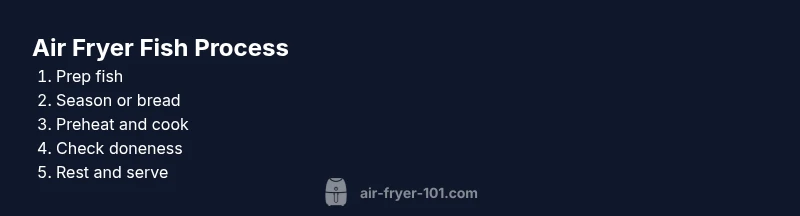
- 1
Choose and prep the fish
Select evenly sized fillets and pat them dry with paper towels to remove surface moisture. Trim any uneven edges to promote uniform cooking. Rinse gently if needed and pat dry again. This step sets the stage for even browning and prevents steam from spoiling the crust.
Tip: Dry fillets thoroughly; moisture is the enemy of crisping. - 2
Season or coat lightly
Apply a light coat of oil or spray and season with a simple blend of salt, pepper, and a citrus zest or paprika for color. If you prefer breading, dip the fillets in beaten egg and press on a thin layer of breadcrumbs or panko.
Tip: Keep coatings thin to promote crispiness and even cooking. - 3
Preheat the air fryer
Preheating helps ensure a quick sear once the fish hits the basket. Run the air fryer at 350°F/177°C for 3–5 minutes before adding the fish.
Tip: Preheating reduces sticking and promotes even browning. - 4
Load the basket in a single layer
Place fillets in a single layer with space between pieces. Overcrowding blocks air flow and leads to uneven cooking and soggy crusts.
Tip: If you have many fillets, cook in batches rather than stacking. - 5
Cook and flip halfway
Start at 350–400°F (177–204°C) and cook for 6–12 minutes depending on thickness. Flip halfway so both sides brown evenly and the interior heats through.
Tip: Flipping at halfway ensures balanced texture. - 6
Check for doneness
Use a thermometer to confirm an internal temperature of 145°F (63°C). The flesh should be opaque and flake easily with a fork.
Tip: If you’re close to the target, you can remove the fish and let carryover heat finish cooking. - 7
Rest briefly and serve
Let the fish rest for 1–2 minutes to reabsorb juices. Serve with lemon wedges and a light sauce.
Tip: Resting improves juiciness and flavor distribution. - 8
Clean up after cooking
Soak the basket in warm, soapy water and wipe down the exterior. Dry completely before your next use.
Tip: Regular cleaning prevents buildup and preserves performance.
Got Questions?
Can I cook frozen fish in the air fryer?
Yes, you can cook frozen fillets, but expect longer cooking times and check for doneness with a thermometer. Thawing briefly or patting dry before cooking improves crust and texture.
Yes, you can cook frozen fillets; just allow extra time and check the temperature to ensure doneness.
What temperature should I use for fish in the air fryer?
A moderate heat between 350°F and 400°F works well for most fillets. Start at 375°F, then adjust up or down based on thickness and desired crispness.
Typically 350 to 400 degrees Fahrenheit; start around 375 and adjust as needed.
Which fish are best for air frying?
Cod, haddock, tilapia, and salmon are popular due to their texture and moisture. Delicate whitefish and thinner fillets cook quickly, while thicker cuts benefit from slightly longer times.
Popular options include cod, haddock, tilapia, and salmon.
Do I need to preheat the air fryer for fish?
Preheating helps achieve a quicker sear and crisper crust. If your model runs hot or cooks slowly, preheat for 3–5 minutes before adding the fillets.
Preheating helps with crispiness and even cooking.
How should I store and reheat leftovers?
Store cooled leftovers in a shallow container in the fridge for up to 2 days. Reheat in the air fryer at a lower temperature to preserve moisture and crust integrity.
Keep leftovers in the fridge and reheat in the air fryer for best texture.
Watch Video
Quick Summary
- Prepare fillets of even thickness for even cooking
- Pat dry and lightly oil or spray for crisp crust
- Don’t overcrowd; cook in batches if needed
- Use a thermometer to verify 145°F doneness
- Experiment with minimal, flavorful coatings for best results