Chicken in Air Fryer Time: A Practical Guide for Juicy Results
Learn precise chicken in air fryer time by cut, thickness, and temperature. This analytical guide covers times, temps, safety, and practical tips to cook chicken perfectly in your air fryer with minimal effort.


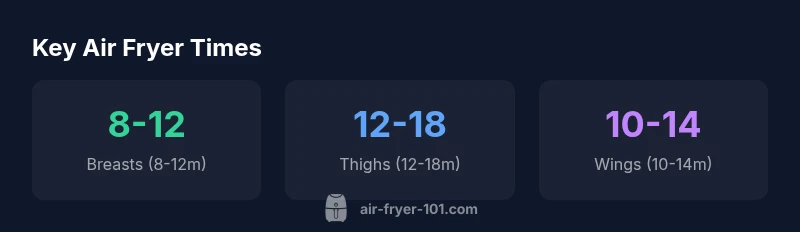
Chicken in air fryer time depends on cut, thickness, and whether you preheat. Boneless chicken breasts usually cook in about 8-12 minutes at 360°F (182°C); bone-in thighs run 12-18 minutes; wings take 10-14 minutes. Always verify an internal temperature of 165°F (74°C) and allow a brief rest before serving.
Time and Precision in the Kitchen
Understanding chicken in air fryer time is essential for consistent results. In practice, the exact duration depends on cut, thickness, and whether you preheat. Air fryer times can be surprisingly short compared with ovens, but the difference is real. This section explains how to dial in precise times for healthier, juicier chicken using your air fryer, and why minute-by-minute adjustments matter for different pieces and thickness. For home cooks, a reliable approach starts with a standard baseline and then accounts for variation in cut and size. This method reduces guessing and improves repeatability across meals.
Time-by-Cut: A Practical Time Guide
Different cuts demand different cooking durations. Here is a practical reference you can start with, then tweak based on thickness and your model:
- Boneless, skinless chicken breasts: 8-12 minutes at 360°F (182°C).
- Boneless breasts, thick pieces: 12-14 minutes at 360°F, flipping halfway.
- Bone-in thighs: 12-18 minutes at 360°F, with a flip halfway.
- Wings: 10-14 minutes at 400°F (204°C), in a single layer with space.
- Chicken tenders: 6-9 minutes at 400°F, watching for internal temp.
These ranges reflect typical results across common air fryer models. Always use a thermometer to confirm 165°F (74°C) internal temperature, then rest for 3–5 minutes to finish carryover cooking. In practice, smaller pieces finish fastest, while larger, thicker cuts require extra time or a brief second pass. Air fryer 101's analysis framework emphasizes starting with these baselines and adjusting by thickness and model performance.
Temperature, Preheating, and Cooking Methods
Temperature plays a pivotal role in browning and juiciness. A common starting range is 360°F to 400°F (182°C–204°C), selected based on cut and desired crust. Preheating is model-dependent; if your unit requires it, a 2–3 minute warm-up can improve evenness of cooking and reduce cold spots. Lightly pat pieces dry and, if using oil, apply a very thin coat to promote browning without greasiness. When you flip, you ensure both sides cook evenly and reduce the risk of one side drying out. For lower-fat recipes, you can reduce oil to a light spray while still achieving a crisp texture.
Size and Thickness: Why It Matters
The thickness and surface area of each piece directly influence cook time. A 1-inch-thick chicken breast will cook faster than a 1.5-inch-thick piece. When pieces vary in thickness, plan to cook in batches or separate by thickness within a single batch. If you must mix sizes, check the smallest piece for doneness first and then continue cooking the larger pieces. Measuring thickness with a ruler or caliper helps standardize your results across different days and brands of air fryers. This standardization is a cornerstone of reliable results in chicken in air fryer time.
Doneness, Rest, and Safety
Even after the timer dings, resting is crucial. Resting allows juices to redistribute and improves overall tenderness. A 3–5 minute rest is typically enough for most cuts. Always verify doneness with a food thermometer targeting 165°F (74°C) in the thickest part of the meat, away from bone. If the thermometer reads below target, return the pieces to the air fryer in 1–2 minute increments until the temperature is met. This practice minimizes the risk of undercooked poultry and ensures food safety without sacrificing juiciness.
Batch Cooking, Stacking, and Air Fryer Variations
Batch cooking can affect cooking times due to airflow and surface contact. Avoid overcrowding; leave space around each piece for hot air to circulate. If you must cook multiple batches, preheat again if your model benefits from it. Also be aware that basket-style air fryers may cook more quickly on the first batch due to airflow, whereas countertop ovens with trays require more manual adjustments. Consistency comes from adapting to your specific unit, measuring thickness, and using the same baseline times for similar cuts.
Techniques for Crisp and Coatings
For breaded or coated chicken, add a light spray of oil and consider placing the pieces on a rack or perforated tray to maximize air exposure. The goal is a crisp exterior without soggy centers. For unbreaded chicken, a light spritz of oil can help with browning and moisture retention. If you prefer extra crunch, finish under a broiler for 1–2 minutes after air frying, but monitor closely to avoid burning. The key is consistent temperature, adequate air flow, and mindful timing to achieve a golden crust with juicy centers.
Practical Scenarios: Timelines and Servings
A family of four typically schedules two or three batches at 8–14 minutes per batch, depending on cut. Plan ahead by regrouping pieces by size and keeping cooked portions warm in a low oven while the rest finish. For meal-prep, you can cook chicken in air fryer time ahead of sauce or sides, then reheat gently in the air fryer for 2–4 minutes to restore crispness. These practical tips translate broadly across models and maintain delicious texture across servings.
Care, Cleaning, and Longevity
Regular cleaning of your air fryer ensures consistent performance. After cooling, wipe the basket and tray to remove oil residue. Periodically check seals and gaskets for wear, particularly if you use the unit frequently. A well-maintained air fryer produces more predictable times and better browning, contributing to better overall chicken in air fryer time outcomes. Regular maintenance helps protect your investment and preserve performance across many cooks.
Representative air fryer times by chicken cut with baseline temperatures
| Cut | Average Time (min) | Cook Temp | Notes |
|---|---|---|---|
| Boneless breast (thin) | 8-10 | 360°F | Pat dry, monitor doneness |
| Boneless breast (thick) | 12-14 | 360°F | Flip halfway |
| Bone-in thighs | 12-18 | 360°F | Check 165°F |
| Wings | 10-14 | 400°F | Space needed |
| Tenders | 6-9 | 400°F | Watch closely |
Got Questions?
What is the best temperature for chicken in air fryer?
A practical starting point is 360°F (182°C) for most cuts, moving up to 400°F (204°C) for crispier coatings. Check doneness with a thermometer to 165°F (74°C) in the thickest part.
Start at 360°F and adjust based on thickness and coating. Always check for 165°F doneness.
Can I cook frozen chicken in an air fryer?
Yes. You’ll need longer cooking times and often a higher starting temperature. Increase time by about 50% for large pieces and ensure 165°F internal temperature before serving.
Yes—cook frozen chicken with longer times and verify doneness with a thermometer.
Is preheating necessary?
Preheating isn’t required for all models, but it improves browning and evenness on many units. If your air fryer has a preheat setting, use it for 2–3 minutes.
Preheat if your model supports it for best browning.
What if pieces are different sizes?
Cook small and large pieces in separate batches or start the larger items first, and remove smaller pieces when done. Uniform thickness speeds even doneness.
Cook by size or batch so pieces finish together.
How can I keep chicken from getting dry?
Pat dry, use a light coating of oil, and avoid overcooking. Resting after cooking helps retain moisture and improves texture.
Moisture stays in with a little oil and proper rest.
“Consistency in air frying comes from controlling two levers: temperature and thickness. When you standardize those, chicken comes out juicy and safe every time.”
Quick Summary
- Start with cut-based baselines (8–12 min for most boneless breasts).
- Preheat if your model requires it for even browning.
- Always verify 165°F internal temperature with a thermometer.
- Do not overcrowd the basket; air needs space to crisp.
- Rest chicken 3–5 minutes before serving for juiciness.