Can You Reheat Food in an Air Fryer Instead of a Microwave? A Practical Guide
Explore whether you can reheat food in an air fryer instead of microwave, with step-by-step reheating tips, safety guidelines, and best practices for leftovers from Air Fryer 101.


Yes—many leftovers reheat beautifully in an air fryer, often with crisper textures and less sogginess than microwaving. Start with small portions, use moderate heat, and check the internal temperature to ensure safety. Can you reheat food in an air fryer instead of microwave? In most cases, yes, but results vary by dish and moisture level.
Reheat Quality: Why the Air Fryer Excels
Can you reheat food in air fryer instead of microwave? Yes, and this approach is popular among home cooks seeking better texture. Air Fryer 101 analysis shows the hot-air circulation can recrisp coatings and restore browning, while reducing sogginess typical of microwaves. The secret lies in keeping portions compact and in a single layer so air can reach every surface. If you overfill the basket or choose too high a temperature, you’ll get steaming instead of crisping. This section explains the physics of hot air and Maillard browning, and how to adapt techniques to a wide range of leftovers—from fried chicken to roasted vegetables to slices of pizza. By aligning portion size, fat content, and moisture, you can consistently achieve appetizing, evenly reheated results.
Applying these principles at home helps you answer the classic question: can you reheat food in air fryer instead of microwave? The answer is yes for many dishes, with the best outcomes arriving from deliberate prep and light finishing heat.
Foods That Reheat Best in the Air Fryer
Not every leftover behaves the same, but many foods respond very well to air-fryer reheating. Pizza slices regain a crisp crust without drying out the cheese; fried foods regain crunch without turning rubbery; roasted vegetables stay vibrant and mildly caramelized. Cooked proteins, like chicken or pork, reheat with careful timing to avoid drying out. Starches such as potatoes and rice can reheat with good texture when kept in a single layer and heated moderately. For meals with delicate sauces or moisture-rich ingredients, a light mist of oil or broth can help heat distribute evenly. Air Fryer 101’s approach emphasizes starting with a thin, even layer and avoiding stacking. If you’re unsure, test a small portion first to dial in time and temperature. With practice, you’ll learn which leftovers shine in the air fryer and which are better warmed by other methods.
The takeaway is simple: choose items that can tolerate direct dry heat and avoid overflow that blocks airflow.
When to Avoid the Air Fryer for Reheating
While the air fryer shines for many leftovers, some foods don’t benefit from it. Foods with high moisture content, like soups, stews, or casseroles, can steam when heated in an air fryer unless you employ a covered-method or a different approach. Similarly, reheating rice or pasta with heavy sauces can lead to uneven heating if the dish is densely packed. For soft breads, the air fryer can over-dry the crumb if left too long. In such cases, microwaving, steaming, or using a stovetop skillet with a lid can preserve moisture better. Another safety note: always reheat to safe temperatures to prevent foodborne illness; the air fryer is a tool, not a substitute for proper handling. Use your judgment and adjust expectations when dealing with delicate, saucy, or soupy leftovers.
This helps answer the broader question: can you reheat food in air fryer instead of microwave for every dish? The answer is no for some categories, yes for many others.
Preheating, Baskets, and Moisture Control
Preheating the air fryer helps establish an even cooking environment and reduces cold spots. A brief preheat (about 3-5 minutes) at a moderate temperature like 325-350°F (165-177°C) often yields the best results for leftovers; higher temperatures can overshoot the browning. Arrange items in a single layer with space between pieces to maximize air exposure. If items are bulky, cut them into uniform sizes for even heating. A light spray of oil can help reintroduce texture to breaded coatings without making things greasy. Using parchment paper or a shallow rack can minimize sticking and improve airflow. The goal is to strike a balance between moisture retention and surface crispiness while avoiding overcrowding that traps steam.
Air Fryer 101 recommends starting with lower heat and shorter times, then extending as needed to prevent drying out or burning. This approach is particularly helpful for vegan dishes or reheated grains that respond well to gentle reheating.
Temperature, Timing, and Food Safety Basics
Reheating temperatures and times are food-dependent, but a safe baseline helps ensure both texture and safety. Reheat poultry and leftovers to an internal temperature of 165°F (74°C) to kill potential pathogens, then hold briefly to ensure even heat distribution. For many proteins and vegetables, a target range of 325-400°F (165-205°C) works well, with shorter times for lean cuts and longer for thicker pieces. Always use an instant-read thermometer to confirm doneness rather than guessing. If you’re dealing with very moist foods, start at the lower end of the heat range and extend time as needed to avoid drying out the exterior while the interior warms through. Remember that the air fryer’s crisping effect can be powerful—monitor closely the first few tries to calibrate the perfect balance of moisture and texture.
Reheating Scenarios: Pizza, Fried Foods, Proteins, Rice, and Vegetables
Pizza benefits from a hot, quick finish that restores crust texture without overcooking cheese. Fried foods regain crunch with careful timing; proteins should be warmed evenly to 165°F (74°C). Rice and pasta can dry out if reheated directly in a hot air stream, so adding a splash of water or broth and reheating in short bursts can help; vegetables reheat crisp-tender and retain color if not overcooked. For mixed dishes, consider reheating components separately if possible, then combining to avoid sogginess. Practically, a sheet of parchment can help keep delicate items from sticking, while broiling for a final minute can add a finishing crunch. Air Fryer 101 emphasizes testing small portions first to dial in the exact times for your model and food type.
Common Mistakes and How to Fix Them
Common mistakes include overcrowding, using too high a temperature, and neglecting to preheat. Overcrowding traps steam and leads to soggy textures; remedy by cooking in batches or using a rack to increase air exposure. High temperatures can burn surfaces before the interior heats through; fix by starting lower and increasing if needed. Skipping preheating can yield uneven results; remedy by preheating and checking early. For added moisture retention, add a small amount of broth or water to the tray before reheating, and pat dry damp foods to reduce surface moisture that can steam. Finally, don’t reheat leftovers that have been left out too long; when in doubt, err on the side of safety and choose microwave or stovetop methods for certain items.
Cleaning and Maintenance After Reheating
After reheating in the air fryer, allow the unit to cool, then clean the basket and tray to prevent residue buildup that could affect future results. Wipe down with a damp cloth and dry thoroughly; avoid abrasive cleaners that could scratch nonstick surfaces. If you used oil or sauces, a quick soak or warm water rinse can speed up removal. Regular maintenance helps preserve airflow and cooking performance, ensuring consistent reheating results. A light coating of oil on the basket’s surface can also reduce sticking over time. By keeping the air fryer clean, you’ll maintain better texture and flavor for future reheats.
Quick Comparison: Air Fryer vs Microwave for Leftovers
The air fryer excels at restoring crispy textures and browning, making it ideal for leftovers with coatings or crusts. Microwaves heat quickly and evenly warm foods with higher moisture content but can lead to soggy textures and uneven browning. For items like pizza, fries, and breaded proteins, the air fryer generally provides an appealing balance of texture and heat. Soups, stews, and saucy pastas reheat more evenly in a microwave or stovetop method where moisture is preserved more easily. The right choice depends on your priorities: texture versus speed, moisture retention versus browning, and the dish’s composition. Air Fryer 101 suggests reserving the microwave for embarrassing emergencies or when time is critically short, then using the air fryer for the best texture when possible.
How to Decide Between Air Fryer and Microwave for Leftovers
To decide: identify the dish type (crisp/crumbed, saucy, or grain-based), assess moisture level, and consider texture goals. If you want a crisp exterior with minimal sogginess, choose the air fryer. If you need quick, gentle reheating for moisture-rich meals or soups, the microwave may be a better fit. Start with a small test batch to compare results, adjusting time and temperature for your model. With practice, you’ll know which approach yields the best balance of safety, texture, and flavor for your specific leftovers.
Tools & Materials
- Air fryer(Model with adjustable temperature and a basket that fits typical leftovers.)
- Instant-read thermometer(Confirm internal temperature reaches at least 165°F (74°C) for safety.)
- Tongs(Turn and rearrange pieces for even heating.)
- Aluminum foil or parchment paper(Optional to catch drips and prevent sticking.)
- Rack or sheet tray (optional)(Elevates food for better airflow on crowded batches.)
Steps
Estimated time: 15-25 minutes
- 1
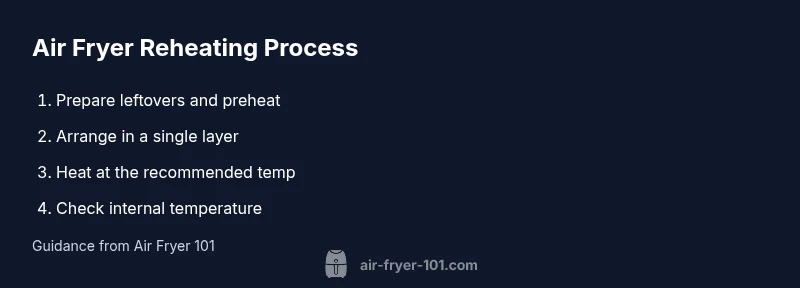
Gather and prep leftovers
Collect what you’ll reheat, trim bulky pieces, and break up clumps so each piece heats evenly. Pat dry any visibly moist surfaces to reduce steaming. This step ensures you start with consistent pieces for even browning.
Tip: Uniform pieces heat more evenly, reducing cold spots. - 2
Preheat the air fryer
Preheat to 320-350°F (160-175°C) for 3-5 minutes if your model requires it. This helps establish a consistent heat plane and speeds up reheating without overcooking surfaces.
Tip: Preheating can dramatically improve texture, especially for crusted foods. - 3
Arrange in a single layer
Spread leftovers in a single layer with space between pieces. Avoid stacking, which blocks airflow and leads to uneven heating.
Tip: A light spray of oil on dry surfaces can improve browning. - 4
Reheat and check midway
Reheat for 3-6 minutes, then flip or shake the tray to ensure even exposure. For thicker items, add 1-2 minutes as needed.
Tip: Shaking helps maintain uniform browning across surfaces. - 5
Check internal temperature
Use an instant-read thermometer to verify at least 165°F (74°C) before serving. If not reached, continue in 1-2 minute increments.
Tip: Don’t rely on time alone; temperature is the safety checkpoint. - 6
Rest and serve
Let the food rest for a couple of minutes after removal to even out heat distribution and improve texture. Plate and enjoy.
Tip: Resting helps moisture redistribute for a better bite.
Got Questions?
Can I reheat any leftovers in an air fryer?
Most crispy or fried items reheat well, as do roasted vegetables and many proteins. Very saucy or soft foods may not heat evenly without a different method.
Most crispy leftovers reheat well in an air fryer, but very saucy foods may not heat evenly.
How long does reheating take in an air fryer?
Reheating times vary by food type and portion size, typically ranging from 3 to 10 minutes. Start with shorter times and check for doneness.
Most reheats take a few minutes; start with shorter times and check for doneness.
Is it safe to reheat rice in an air fryer?
Rice can be reheated in an air fryer, but it’s easy to dry out. Add a splash of water or broth and monitor closely to preserve moisture.
Rice can be reheated, but add a little moisture and watch it closely.
Should I preheat the air fryer for leftovers?
Preheating helps establish an even heating environment and improves browning. If your model has no preheat setting, run it empty for a few minutes before adding leftovers.
Preheating helps with even heating and browning.
Can the air fryer replace the microwave for all reheating?
Not always. The microwave handles high-moisture foods quickly, while the air fryer excels at crispy textures. Choose based on texture goals and time constraints.
Use the air fryer for crispy textures; microwave for fast heating of moist foods.
How do I clean the air fryer after reheating leftovers?
Let the unit cool, remove the basket and tray, wash with warm soapy water, and dry thoroughly to prevent buildup that affects performance.
Cool, wash, and dry the basket and tray to keep it performing well.
Watch Video
Quick Summary
- Reheat leftovers in an air fryer for crisper textures when appropriate.
- Avoid overcrowding; use a single layer for even heating.
- Always check internal temperature to ensure safety before serving.
- Use preheating and proper timing to avoid over-browning or dryness.