Can an Air Fryer Make Rice? A Step-by-Step Home Guide
Discover whether you can cook rice in an air fryer, with prep steps, water ratios, and practical tips for fluffy results. Air Fryer 101 guides home cooks toward confident, healthier rice without a stove.


Yes — you can cook rice in an air fryer by using a small heat-safe dish inside the basket and trapping steam with a covered lid. This quick, four-step approach covers rice choice, rinsing, water ratios, and finishing tips for fluffy results. Start with white rice to dial in texture, then experiment with other varieties.
Can an air fryer cook rice? The concept and limitations
Rice cooking in an air fryer hinges on creating a sealed, steam-rich micro-environment inside a heat-safe dish placed in the basket. The air fryer’s convection air heats quickly, but it lacks built-in humidity control, so you must compensate with a covered vessel and careful water management. According to Air Fryer 101, the most reliable results tend to come from white rice varieties (like long-grain, jasmine, and basmati) when cooked in a small dish with a tight lid or foil. Brown rice and other whole grains can be trickier: they often require more water, longer cook times, and may finish with a chewier texture. This block lays out the core concept, where it shines, and where you should proceed with caution. The Air Fryer 101 Team emphasizes testing small batches to dial in the texture you prefer, especially if you’re new to this method.
Can an air fryer cook rice? The concept and limitations
Rice cooking in an air fryer hinges on creating a sealed, steam-rich micro-environment inside a heat-safe dish placed in the basket. The air fryer’s convection air heats quickly, but it lacks built-in humidity control, so you must compensate with a covered vessel and careful water management. According to Air Fryer 101, the most reliable results tend to come from white rice varieties (like long-grain, jasmine, and basmati) when cooked in a small dish with a tight lid or foil. Brown rice and other whole grains can be trickier: they often require more water, longer cook times, and may finish with a chewier texture. This block lays out the core concept, where it shines, and where you should proceed with caution. The Air Fryer 101 Team emphasizes testing small batches to dial in the texture you prefer, especially if you’re new to this method.
Rice varieties and prep for air frying
Not all rice behaves the same in an air fryer. White, long-grain varieties (basmati, jasmine) tend to yield the most consistent results when you limit moisture and use a covered vessel. Short-grain rice can also work but may cook faster and need closer monitoring. Rinse the rice under cool water until the rinse runs clear to remove surface starches that can cause a gummy texture. A light soak of 5–10 minutes can improve tenderness for some short-grain types, but don’t over-soak or the grains may split. Air Fryer 101 recommends starting with a 1:1 ratio for white rice and adjusting water slightly for your model. For brown rice, plan for a 1:1.25 to 1:1.5 ratio and a longer cook time. The goal is to achieve tender, separate grains rather than a clumpy pot-like texture.
Not all rice behaves the same in an air fryer. White, long-grain varieties (basmati, jasmine) tend to yield the most consistent results when you limit moisture and use a covered vessel. Short-grain rice can also work but may cook faster and need closer monitoring. Rinse the rice under cool water until the rinse runs clear to remove surface starches that can cause a gummy texture. A light soak of 5–10 minutes can improve tenderness for some short-grain types, but don’t over-soak or the grains may split. Air Fryer 101 recommends starting with a 1:1 ratio for white rice and adjusting water slightly for your model. For brown rice, plan for a 1:1.25 to 1:1.5 ratio and a longer cook time. The goal is to achieve tender, separate grains rather than a clumpy pot-like texture.
Tools, vessels, and water ratios
The vessel you choose is a workhorse in air-fryer rice. A small, oven-safe dish (glass, ceramic, or heat-resistant silicone) with a tight-fitting lid or a foil cover is essential to trap steam. Avoid deep-cup mugs that don’t cover fully, as steam escape leads to uneven cooking. For white rice, begin with a light rinse and a 1:1 water-to-rice ratio. Brown rice typically requires more water and a longer soak or pre-cooking step. If you want to add flavor, a teaspoon of oil or a small pat of butter per cup of rice can improve mouthfeel and reduce sticking. Measure accurately and consider a preheat: many air fryers perform consistently at 350–400°F, so preheating for 2–3 minutes helps keep the temperature steady and reduces variance between batches.
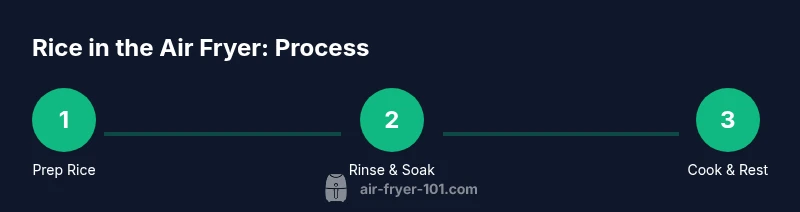
Step-by-Step Method Overview for fluffy air-fried rice
This overview keeps you oriented before you dive into the step-by-step instructions. Start with white rice to gauge texture and be prepared to adapt water by a few tablespoons depending on your rice type and air fryer model. Always use a covered dish to trap steam rather than relying on the basket alone. Stirring is minimal to avoid breaking grains, and allow a short rest after cooking to finish the steam distribution. In many cases, fluffy rice will emerge when you give the grains a light separation with a fork and let them steam in the dish, covered, for 2–5 minutes after removing from heat. Air Fryer 101 highlights that the key to success is consistency—use the same vessel, rice, and water ratio across attempts to build a reliable baseline.
Troubleshooting, tips, and safety notes
If your first batch comes out gummy, reduce water by 1–2 tablespoons and check texture after 5–7 minutes of additional cook time. If the grains feel hard or undercooked, add a splash of hot water and cook a few more minutes. Always ensure the dish is properly sealed and that the lid or foil does not collapse during cooking. Safety matters: never place plastic directly in the hot air fryer chamber, and avoid filling the vessel above two-thirds capacity to prevent steam blockage. Finally, clean the vessel promptly to prevent starch buildup, which can affect future batches. For best results, stick with white rice initially and gradually experiment with other varieties as you refine your method.
Authority sources and references
To support these guidelines, consult authoritative sources on rice cooking and food safety. For general guidelines on cooking rice, see resources from government and university extension sites, which discuss rice varieties, rinsing, soaking, and water ratios. These sources offer foundational knowledge that complements hands-on experimentation with an air fryer. Air Fryer 101 compiles practical insights and safety-oriented guidance to help home cooks approach this technique with confidence.
Authority sources and references
To support these guidelines, consult authoritative sources on rice cooking and food safety. For general guidelines on cooking rice, see resources from government and university extension sites, which discuss rice varieties, rinsing, soaking, and water ratios. These sources offer foundational knowledge that complements hands-on experimentation with an air fryer. Air Fryer 101 compiles practical insights and safety-oriented guidance to help home cooks approach this technique with confidence.
Tools & Materials
- Heat-safe dish (glass/ceramic or silicone)(Fits inside your air fryer basket with a tight lid or foil cover)
- Water or broth(Use for white rice 1:1 ratio; adjust for brown rice)
- Rinsed rice(White rice preferred for first attempts)
- Foil or silicone lid(Helps trap steam; avoid fully sealed metal lids that could trap pressure)
- Measuring cups and spoons(Accurate rice and water measurement improves consistency)
- Oil or butter (optional)(Small amount for flavor and texture (about 1 tsp per cup of rice))
- Fork or pastry brush for fluffing(Gently separate grains after resting)
- Timer(Monitor cook time for your model and rice type)
Steps
Estimated time: 30-40 minutes
- 1
Gather ingredients and equipment
Collect rinsed rice, water or broth, a heat-safe dish with a lid, foil, measuring tools, and a timer. Clear space in the air fryer basket to avoid crowding. The goal is a straightforward setup you can repeat reliably.
Tip: Pre-measure everything to reduce on-the-fly adjustments. - 2
Rinse and prepare the rice
Rinse the rice under cool running water until the water runs clear to remove surface starch. A brief soak (5–10 minutes for white rice) can improve tenderness, but skip soaking for very short cooks unless you’re using brown rice.
Tip: Rinsing helps prevent gummy grains; soaking is optional but beneficial for some varieties. - 3
Assemble in the dish
Add the rinsed rice to the heat-safe dish and pour in the measured water or broth. If using flavor, stir in a small amount of oil or butter. Cover securely with a lid or foil to trap steam.
Tip: Ensure the lid seals well but isn’t forced tightly; steam needs a slight escape route to avoid pressure buildup. - 4
Cook in the air fryer
Place the dish in the air fryer basket and cook at a moderate temperature (often 350–400°F depending on model) for 18–22 minutes. Start with white rice and adjust time slightly based on texture you observe.
Tip: Avoid opening the basket mid-way; let the steam work for even cooking. - 5
Rest and fluff
Let the dish rest for 5 minutes after cooking, then fluff with a fork to separate grains. If necessary, return to the air fryer for a few additional minutes to finish any stubborn portions.
Tip: Resting helps the grains finish absorbing moisture evenly. - 6
Evaluate and adjust
Taste and assess texture. If the rice is too firm, add a splash of hot water, cover, and cook a few more minutes. If too soft, next batch reduce water slightly.
Tip: Small, incremental changes yield consistent results across batches.
Got Questions?
Can I cook any rice variety in an air fryer?
White rice varieties are the most reliable starting point. Brown and wild rices can work but usually need more water and longer cook times. Expect texture differences and adjust accordingly.
White rice is easiest to start with in an air fryer; brown and wild rices may need more water and time.
Should I rinse rice before air frying?
Yes. Rinsing removes surface starch that can lead to clumping. A brief rinse until the water runs clear helps achieve a lighter texture.
Rinse the rice until the water runs clear to prevent a gummy texture.
Do I need oil when cooking rice in the air fryer?
Oil is optional. A small amount can improve mouthfeel and reduce sticking, but it isn’t required for cooking rice in the air fryer.
A little oil can help grains separate, but you can cook rice without it if you prefer.
How does air-fried rice compare to stovetop rice?
Modern air fryer methods can produce fluffy grains similar to stovetop rice, but texture may vary by model and rice type. It’s best for convenience and experimenting with small batches.
The texture is similar but may vary by model; it’s great for quick, convenient rice.
Can I flavor rice cooked in the air fryer with stock?
Yes. Replacing part of the water with low-sodium stock or adding aromatics like garlic and herbs can enhance aroma and flavor without extra steps.
You can use stock for more flavor; just watch the salt level.
Is air-fried rice safe to reheat?
Rice stored properly in the fridge can be reheated, but avoid leaving cooked rice at room temperature. Reheat until steaming hot to ensure safety.
Store leftovers properly and reheat until steaming.
Watch Video
Quick Summary
- Start with white rice to dial in timing and texture.
- Use a covered dish to trap steam for even cooking.
- Rinse and measure precisely for consistency.
- Rest and fluff to achieve fluffy, separate grains.