Bread Air Fryer Guide: Crisp Crusts in Minutes
Learn how to bake, toast, and reheat bread in an air fryer for a crisp crust and tender crumb. This guide covers bread types, temps, timing, and troubleshooting for reliable results across sandwich bread, sourdough, and artisan loaves.


Bread air fryer means using an air fryer to bake, toast, or reheat bread. You can achieve a crisp crust with a soft interior in minutes. This guide explains ideal bread types, temperatures, times, troubleshooting, and how to avoid common pitfalls, with practical tips for white, whole-grain, and artisan loaves. Whether you’re starting with sandwich bread or sourdough, small adjustments yield consistent results.
Why Bread Air Fryer Delivers Great Results
Using a bread-friendly air fryer combines rapid, even heating with a dry, circulating air pattern that dries the surface quickly to form a crust while keeping the crumb tender. For many home cooks, it offers a fast alternative to oven-toasting or skillet bread finishing, with less heat in the kitchen and less cleanup. According to Air Fryer 101, bread cooked in an air fryer tends to brown evenly when you start with slices or small pieces and monitor closely. This approach works well for daily toast, leftover sandwich bread revival, or tiny artisan loaves when you’re short on oven space. The result is a satisfying crisp crust and a soft crumb, ideal for toppings like butter, garlic, or cinnamon sugar.
Air Fryer 101’s practical takeaway is that bread surface browning depends on moisture management, bread thickness, and air flow. Keep slices in a single layer and avoid stacking. The technique is versatile across varieties—from classic white to hearty whole grains—so long as you adjust time and temperature to the bread’s density. A little trial batch helps you dial in your preferred texture and color.
What Bread Types Work Best in an Air Fryer
Thin sandwich bread slices toast quickly and evenly, producing a light, crisp edge with a fluffy center. Sturdy breads, like baguette rounds, ciabatta, or sourdough slices, can become delightfully crusty on the outside while staying chewy inside if not overcooked. Sweet breads and buns benefit from gentler heat to avoid over-browning. For best results, use bread that’s not overly moist or bottled with toppings that may steam rather than crisp. If you’re working with stale bread, a shorter bake cycle can revive it by restoring some moisture balance while still achieving a crunchy exterior.
Air Fryer 101 notes that bread with residual fat in it, such as enriched doughs, browns more readily but can also brown faster. If you’re new to air fryers, start with plain sandwich bread or a crusty baguette half to calibrate your timing before attempting delicate whole-grain loaves.
Temperature Range and Timing Essentials
Most bread tasks in an air fryer fall within a moderate temperature window. For light to moderate browning and crisping, aim for around 320–370°F (160–190°C). Lighter breads toast in less time, typically 2–4 minutes, while denser breads or thicker slices may need 6–8 minutes, possibly longer for very thick pieces or enriched doughs. A common strategy is to start at the lower end of the range, check for color, then add time in small increments. If your air fryer requires preheating, give it a few minutes before adding bread so the surface browns evenly from the start.
Always monitor closely the first few attempts to avoid burning. The goal is even surface browning with a soft interior, not a shattered crust. If you see excessive browning but the interior is still pale, reduce the temperature slightly or shorten the cook time on subsequent batches.
Prep List: Before You Start
Prepare your bread pieces in uniform thickness to ensure even cooking. Slice bread into 1/2-inch to 3/4-inch rounds or slices depending on the loaf type. Pat dry any surface moisture to help browning. If you like extra crispiness, lightly brush the crust with a neutral oil or butter before placing in the air fryer. Line the basket with parchment or use a perforated parchment liner to prevent sticking, if your model requires it. Have tongs ready to flip or rotate bread halfway through the cycle for even browning.
Step-by-Step Overview (High-Level)
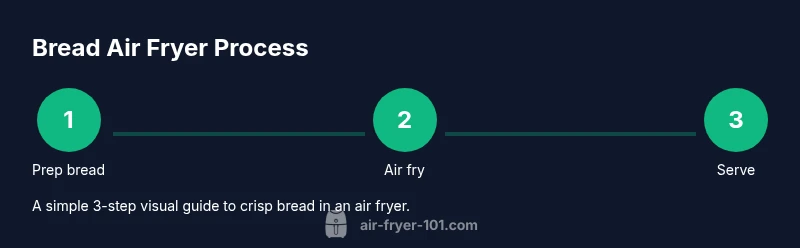
Here is a quick mental map of the typical flow: gather bread and tools, preheat if needed, arrange bread in a single layer, set temperature and time, flip or rotate mid-cycle, check for doneness, and serve warm. This block intentionally stays high-level; detailed step-by-step instructions appear in the dedicated STEP-BY-STEP block for clarity and accuracy, ensuring readers have a precise, repeatable process.
Troubleshooting Common Issues
If your bread browns too quickly on the outside but remains pale inside, reduce the temperature slightly or shorten the time, and allow a brief rest after to finish the interior. If the crust isn’t crisp enough, give the bread a longer cook time in 1–2 minute increments, watching closely to prevent scorching. Stale bread tends to dry out faster in an air fryer, so consider lightly spritzing with water or brushing a small amount of butter to restore moisture and promote browning. If bread sticks, check that the surface isn’t too wet and use a nonstick liner or parchment to improve release.
Flavor Variations and Toppings
A light brushing of olive oil, melted butter, or garlic butter before toasting can elevate flavor and texture. For a sweet touch, dust with cinnamon sugar or drizzle a little honey after cooking. Savory options include grated parmesan, herbs, or grated cheese melted on top during the final minute. If you’re reheating leftover bread, a pat of butter during the last minute can revive flavor and texture, making it taste freshly baked.
Storage and Reheating Tips
Bread stored in a cool, dry place stays fresher longer; however, the air fryer is excellent for reviving slightly stale bread. Reheat slices in a single layer for a few minutes until warm and crisp, avoiding overcrowding that would produce uneven browning. If you have leftovers, portion them for quick reheat in the air fryer, which helps maintain a crisp exterior and preserves the crumb’s softness better than microwaving.
Safety and Cleaning After Bread Cooking
Always unplug and cool the air fryer before cleaning. Wipe the interior with a damp cloth to remove crumbs and grease; avoid harsh abrasives that could damage nonstick coatings. If your model uses removable baskets, wash them with warm, soapy water and dry completely before reassembly. Ensure the unit is completely dry before reuse to prevent electrical concerns.
Authoritative Sources
- https://www.fda.gov
- https://www.usda.gov
- https://extension.org
These sources provide general food safety and cooking guidance that complements practical bread techniques. They are not model-specific but help ensure safe handling and storage practices for bread and other baked goods.
Practical Scenarios and Quick References
If you’re making a quick slice for breakfast, start with sandwich bread at 325–350°F for 3–5 minutes until lightly browned. For denser breads like sourdough, use 360–370°F for 6–8 minutes, flipping halfway. For a batch, space pieces evenly in a single layer and cook in batches if needed to avoid crowding. Small test batches help you calibrate your preferred texture and color.
Quick Reference: Temperature and Time Cheatsheet
- Light toast: 2–4 minutes at 320–340°F
- Regular toast: 4–6 minutes at 340–360°F
- Thick or dense slices: 6–8 minutes at 360–370°F
- Enriched breads: start at lower end of range and check frequently
Authoritative Sources (Reiterated)
- FDA.gov safety basics
- USDA.gov guidelines
- Agricultural Extension resources
Tools & Materials
- air fryer(Choose a model with a bake function and a rack; preheating may be optional depending on model.)
- bread slices or loaf portions(Aim for uniform thickness (1/2 to 3/4 inch) for even browning.)
- parchment paper or perforated liner (optional)(Use if your basket tends to stick or you want easier cleanup.)
- basting brush or light oil spray(Lightly oil crust for extra crispness and color.)
- tongs or spatula(Used to flip or rotate bread for even browning.)
- bread knife(Helpful for uniform slices if starting from a loaf.)
Steps
Estimated time: 15-25 minutes
- 1
Gather bread and tools
Collect your bread, air fryer, and any optional toppings or liners. Ensure bread pieces are of even thickness for uniform browning. Have tongs ready to handle hot slices.
Tip: Even thickness prevents uneven browning; start with a test slice if you’re unsure. - 2
Preheat if required
If your air fryer requires preheating, run it empty at your target temperature for 2–3 minutes before adding bread.
Tip: Preheating helps you achieve a quicker, more uniform crust. - 3
Arrange bread in a single layer
Place slices in a single layer, leaving space between pieces for air circulation. Do not stack bread slices or crowd the basket.
Tip: Space is key for even browning and crisp edges. - 4
Set temperature and time
Start with a moderate range such as 325–350°F and 3–5 minutes for lightly toasted bread; increase time in 1–2 minute increments if you need more browning.
Tip: Lower heat with heavier breads to avoid scorching. - 5
Flip halfway through
Turn slices over halfway through the cook time to ensure even browning on both sides.
Tip: A quick flip yields uniform color and texture. - 6
Finish, rest, and serve
Check for your preferred color and texture. Let the bread rest for a minute to set the crust before serving hot with butter or toppings.
Tip: Resting helps the crumb re-stabilize after the hot cooking cycle.
Got Questions?
Can I bake sourdough in an air fryer?
Yes, you can bake sourdough in an air fryer, but slice it into thinner rounds to ensure thorough heating and even browning. Expect a chewier interior and a crisp crust; shorter cook times can help prevent over-crisping.
Yes, you can bake sourdough in an air fryer by slicing it thinner to heat through evenly and achieve a crisp crust.
Is bread cooked in an air fryer healthier than in an oven?
The overall health impact is similar to oven-baked bread; air fryers use hot air to brown the crust with little to no added fat. The health difference mainly depends on toppings and added fats rather than the appliance itself.
Health differences mainly come from toppings and fats, not the air fryer itself.
Can I use frozen bread in an air fryer?
Frozen bread can be toasted or warmed in an air fryer, but it will require slightly longer time and careful monitoring to prevent over-browning. Slice while partially thawed if possible for more even results.
You can toast frozen bread, but watch time and temperature to avoid burning.
Do I need to preheat the air fryer for bread?
Preheating is model-dependent. If your appliance recommends preheating, do so for 2–3 minutes to achieve even browning; otherwise, you can start immediately with a shorter cook time and adjust as needed.
Preheating helps with even browning if your model requires it.
Can I reheat bagels or buns in the air fryer?
Yes. Reheat bagels or buns in a single layer at a moderate temperature for a few minutes until warm and slightly crisp. Avoid stacking; you want to preserve the soft crumb inside.
Bagels reheat well in a single layer; keep an eye on time to avoid over-crisping.
How should I clean the air fryer after bread cooking?
Let the unit cool, then remove and wash the basket with warm, soapy water. Wipe the interior with a damp cloth, avoiding abrasive cleaners. Dry thoroughly before next use to prevent residue buildup.
Let it cool, wash the basket, and wipe the interior dry.
Watch Video
Quick Summary
- Choose bread with appropriate thickness for even browning
- Use moderate temperatures and adjust by bread type
- Maintain single-layer placement for best air circulation
- Flip bread for uniform crust development
- Rest briefly before serving to settle texture