Air Fryer to Warm Up Pizza: The Ultimate Reheating Guide
Master reheating pizza with an air fryer. Learn temps, timing, and expert tips to keep crust crisp and cheese melted, plus troubleshooting and variations for leftovers.


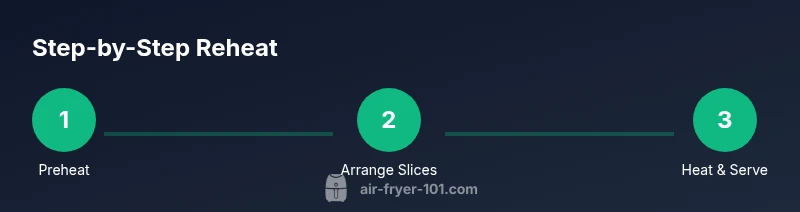
With the air fryer, you can warm up leftover pizza to restore a crisp crust and melted cheese. Start by preheating to 350°F, place slices in a single layer on parchment or a perforated basket, and avoid stacking. Heat for 3-5 minutes, checking at 2-minute intervals until the cheese is melted and the crust is crisp.
Why using an air fryer to warm up pizza matters
Leftover pizza can quickly shift from delicious to disappointing if reheated poorly. The air fryer method preserves a crisp crust, bubbly cheese, and evenly heated toppings in a fraction of the time compared to a conventional oven or microwave. According to Air Fryer 101, the secret is a controlled hot air environment that crisps the crust while melting cheese without steaming the pizza. This approach minimizes moisture that makes crusts soggy in microwaves, and it delivers that just-out-of-the-oven bite with minimal effort. For home cooks who want consistent results, the air fryer is a reliable option for reheating pizza. The goal is to achieve a restaurant like bite in minutes, without turning the slice into a chewy mess. Reheating pizza in this way also helps preserve the flavor profile of toppings and preserves the balance between crust and cheese that many people miss when using less effective methods.
Preheating and setup essentials
Preheating matters for even heat distribution. Set your air fryer to 350°F (177°C) and let it run for 2-3 minutes before you add the pizza. If your model requires a preheat cycle, perform it; if it does not, you can still ensure the cavity is hot before cooking. Use parchment paper or a perforated parchment liner to prevent sticking and to facilitate cleanup. Place slices in a single layer with space between them so air can circulate around every piece; avoid overlapping slices which traps moisture and leads to sogginess. If you are reheating multiple slices, consider doing them in batches to maintain consistent results and avoid crowding. Some models benefit from a light spray of oil along the crust for extra crispness, but this is optional depending on crust thickness and personal preference.
Pizza selection: thickness, toppings, frozen vs fresh
The type of pizza influences reheating time and texture. Thin crust reheats quickly and can become crisp with just a few minutes, while thick crust or deep-dish slices require more time to warm the interior without burning the edges. Fresh slices from the oven usually maintain moisture better than leftovers that have dried out in the fridge. Heavy toppings and high moisture toppings like tomatoes or peppers can release steam during reheating, so you may want to pat dry or remove some toppings to maintain crispness. Frozen pizzas or partially baked frozen slices often need a slightly longer cook time and a careful check every 1-2 minutes to avoid overcooking. Tailor the time based on crust thickness and the amount of toppings to keep the slice balanced and appealing.
Techniques for crust and cheese balance
Achieving a crisp bottom and gooey cheese starts with heat management. Place slices on parchment and maintain a single layer to ensure even heat distribution. For extra melt, a light sprinkle of mozzarella on top or a tiny brush of olive oil around the crust can help. If the cheese browns too quickly, reduce the temperature by 25°F (about 14°C) and continue cooking. Rotate the slices halfway through the cooking cycle to ensure even exposure to hot air, especially in compact baskets. The aim is a balanced heat where the crust is crisp, the cheese is melted and bubbly, and toppings are warm without drying out. If your model runs hotter at the top, place slices closer to the bottom for more bottom crisp.
Common mistakes and how to fix them
Mistake 1: Crowding the basket so air cannot circulate. Fix: cook in batches and maintain space between slices. Mistake 2: Skipping preheating, which leads to uneven heating. Fix: preheat or run a short warm cycle. Mistake 3: Overloading with toppings or heavy sauces that release moisture. Fix: keep toppings light and pat dry if needed. Mistake 4: Using foil or thick sheets that block airflow. Fix: stick to parchment or use a perforated liner. Mistake 5: Letting slices rest in a closed container after reheating. Fix: serve promptly to enjoy the crisp texture while it is fresh. These checks help ensure a reliable, repeatable reheating result with consistent texture across slices.
Flavor boosters and variations
After reheating, you can boost flavor with small touches that do not require heavy modifications. A light drizzle of olive oil or garlic infused oil around the crust adds depth. Fresh herbs like basil or oregano sprinkled on top can brighten flavors, and a touch of chili flakes can add a welcome kick. If you enjoy extra melt, add a slim layer of cheese on top for the last 30 seconds, but monitor closely to avoid burning. For a healthier twist, skip extra cheese and rely on a brighter tomato sauce and a sprinkle of pepper for aroma. When reheating multiple slices with different toppings, set the air fryer to a consistent baseline temperature and tailor time by crust thickness. The result should be a pizza that tastes almost new, with a crisp crust and perfectly warmed toppings.
Wrap up and serving ideas
Serving right away maximizes the crispness that the air fryer creates. Pair warm slices with a drizzle of olive oil, cracked pepper, or a dash of parmesan to elevate flavors. If you are sharing with guests, keep an extra batch going and communicate how long each batch will take so no one waits too long. For a party, consider preheating a second batch while the first batch rests, keeping the slices warm without losing texture. The bottom line is that the air fryer is a flexible tool for quickly reviving leftovers with minimal effort and maximum flavor.
Pro tips for best results
- Always start with a clean basket to avoid transfer of lingering flavors or burnt-on oils. - If your pizza is very thick, consider a two-phase heating: a short initial phase to warm through, followed by a quick finish on a higher setting for crisp edges. - Use a timer and check the pizza at short intervals to prevent overcooking. - If you like extra crispiness, finish with a 30-second blast at a higher temperature on the bottom of the basket. - Keep a small stash of parchment liners handy to swap between batches quickly.
Tools & Materials
- Air fryer (basket or rack)(Any model with a basket that allows single-layer placement)
- Parchment paper or perforated parchment liner(Use perforated parchment if available; helps with air flow)
- Tongs or silicone spatula(For safe handling when hot)
- Kitchen timer(Helpful for precise heat intervals)
- Leftover pizza slices(Size fits basket without overlapping)
Steps
Estimated time: 15-25 minutes
- 1
Preheat the air fryer
Preheat to 350°F (177°C) for 2-3 minutes to ensure hot air circulation starts immediately when you add the pizza. This helps avoid a soggy crust and accelerates even heating.
Tip: If your model does not require preheating, a short warm cycle is still beneficial for consistency. - 2
Prepare the pizza slices
Pat dry any condensation on the crust with a paper towel and ensure toppings are in a single layer. This reduces moisture that can soften the crust and helps heat reach all toppings evenly.
Tip: Remove extra toppings if they overflow the slice to prevent crowding. - 3
Arrange slices in a single layer
Place slices on parchment in a single layer, leaving space between pieces so hot air can circulate freely.
Tip: Avoid overlapping slices; crowding traps moisture and makes the crust soggy. - 4
Heat and check for doneness
Cook for 3-5 minutes, checking at 2-minute marks. Look for melted cheese and crisp edges without burnt spots.
Tip: If crust browns before cheese melts, reduce temperature slightly and continue cooking. - 5
Finish if needed
If cheese needs more melt, add 1 extra minute in 30-second increments.
Tip: A light spray of oil on the crust can boost crispness if desired. - 6
Rest and serve
Let pizza rest for 1-2 minutes before slicing to let cheese set. Serve immediately for best texture and aroma.
Tip: Pair with fresh herbs or a light sprinkle of parmesan for enhanced flavor.
Got Questions?
Can I reheat frozen pizza in an air fryer?
Yes. Thaw if possible, or increase time slightly. Start at 350°F and check every couple minutes until crust is crisp and cheese is melted.
Absolutely. You can reheat frozen pizza in an air fryer; start at 350 degrees and check every couple minutes until it is hot and the crust is crisp.
Do I need to preheat the air fryer before reheating pizza?
Preheating is recommended to ensure even heat and a crispy crust. If your model heats quickly, a short 1-2 minute preheat can suffice.
It is best to preheat for even heat, though some models may heat faster. Follow your manual.
Can I add extra toppings during reheating?
Add quick toppings after the initial 1-2 minutes if you want them heated without burning; otherwise keep to toppings that cook quickly.
You can add quick toppings after a minute or two to prevent burning.
Is parchment paper safe in all air fryers?
Most parchment papers are safe in standard air fryers at moderate temps; avoid wax coated or printed brands that could catch fire.
Yes, as long as you use plain parchment and keep it within the basket.
How do I get even melt on cheese?
Spread slices evenly and avoid overcrowding; one layer ensures cheese melts evenly across the surface.
Spread out the slices so the cheese can melt evenly.
Watch Video
Quick Summary
- Preheat for best results
- Cook in a single layer for crisp crust
- Monitor time for crust thickness
- Use parchment to prevent sticking
- Serve hot for optimal texture