How to Dehydrate Fruit in an Air Fryer: A Step-by-Step Guide
Learn how to dehydrate fruit using an air fryer with practical steps, temps, timing, flavor ideas, and storage tips for healthy, shelf-stable snacks.


This guide shows you how to dehydrate fruit using an air fryer. You'll need an air fryer with a dehydration setting or precise temperature control, thinly sliced fruit, parchment or a silicone mat, and a cooling rack. Start with fruit that dries evenly, slice to uniform thickness, and monitor progress. Set temperatures around 130–165°C (270–330°F) and allow several hours for crisp results.
Why this method works: air fryer to dehydrate fruit
According to Air Fryer 101, using an air fryer to dehydrate fruit leverages convection to remove moisture while preserving nutrients. This method can be faster than traditional oven dehydration and gives you more control over texture and flavor with minimal added sugars. For home cooks seeking healthy snacks, this approach balances convenience with results. You’ll notice crisper fruit with a touch more sweetness than some store-bought options, especially when you customize thickness and aromas. The technique also aligns with health-conscious cooking goals, because it uses little to no oil and preserves natural fruit notes. Air Fryer 101 Team emphasizes that success comes from even slices, proper spacing, and attentive monitoring during the process.
What fruits work best for air-fryer dehydration
Not all fruits dehydrate at the same rate, but many store well when dried properly. Ideal candidates include apples, pears, mangoes, kiwis, berries, peaches, and bananas. Firmer fruits tend to dry faster and more evenly, while juicy varieties may require thinner slices and shorter cycles. It’s smart to start with a small batch of a couple of fruit types to dial in your preferred texture. Remember: uniform thickness is the key to consistent results, so aim for 1–3 mm slices and remove seeds or cores before drying.
Preparing fruit for dehydration in an air fryer
Begin with fresh, ripe fruit that isn’t overly soft. Wash thoroughly, pat dry, and slice uniformly. For browning prevention, toss sliced apples or pears with a splash of lemon juice or a citrus solution and spread on parchment or a silicone mat. Pat the fruit dry again to remove surface moisture. If you’re using strawberries or kiwis, consider slicing a bit thicker to maintain structure while drying. Pre-treating fruit helps preserve color and texture during the long dehydration cycle.
Slicing and thickness: why uniformity matters
Uniform thickness ensures all pieces finish at roughly the same time, preventing under-dried centers or over-dried edges. Aim for 1–3 mm thick slices; thicker pieces will take longer and may remain chewy, while thinner slices can turn to brittle chips. If you have a mandoline slicer, use it for precision. If you’re unsure about thickness, test with a single piece before committing the whole batch. Consistency reduces guesswork and waste.
Equipment and setup you’ll need
Aside from the air fryer itself, assemble parchment paper or a silicone mat to prevent sticking, a cooling rack to elevate slices for airflow, and a timer to track progress. A sharp knife or mandoline makes even slices, and a light bowl or tray helps you collect and rearrange pieces. If your air fryer doesn’t include a dehydrating mode, you can still dehydrate at low temperatures with several short cycles, rotating the basket between rounds to maximize airflow.
Temperature, time, and sequencing: practical guidelines
The core of dehydration is moisture removal without scorching. Set your air fryer to a low-to-mid range temperature, typically around 130–165°C (270–330°F). Start with a small test batch to gauge drying speed for your specific model and fruit type. Dehydration usually spans multiple cycles, totaling several hours. Plan to monitor every 30–60 minutes after the first 1–2 hours, rotating and rearranging slices for even exposure. Keep in mind that different fruits behave differently, so adjustments are normal and expected.
Layering, airflow, and tray organization
Airflow is the secret sauce of successful dehydration. Arrange slices in a single layer with space between pieces to allow air to circulate. If your air fryer basket is small, dry in batches and re-stack the pieces between cycles, ensuring you don’t overcrowd the tray. Elevate slices on a cooling rack or use a perforated tray insert if available. Clumping reduces surface area exposure and slows drying, so individual pieces should not touch.
Flavoring and pre-treatments you can try
Flavor ideas include a light citrus splash, cinnamon, vanilla, or even chili for a savory twist. You can dust with a touch of sugar or salt depending on your fruit and taste preferences. Pre-treatments like lemon juice help prevent browning and preserve color, while spice rubs can create interesting profiles without added sugars. For a sweeter finish, consider finishing with a brief warm air blast to intensify aroma before cooling.
How to tell when fruit is done and how to store
Dry fruit should be pliable yet not sticky; it should bend slightly without releasing juice. Packaged properly, dehydrated fruit can last for weeks to months in a cool, dry place. Store in airtight containers or resealable bags, ideally with a small desiccant packet if you’re keeping them long term. Before storing, ensure the fruit is completely cooled to avoid condensation and moisture buildup in the storage vessel.
Common mistakes and how to avoid them
Overcrowding slices leads to uneven drying, while too high a temperature can scorch edges and caramelize sugars. Avoid skipping pre-treatments on browning-prone fruits and don’t assume all fruits dry at the same rate; batch smaller when testing. Always use a stable rack or stand to promote air movement and evenly monitor progress to prevent stuck or clumped pieces. Cleaning the air fryer afterwards prevents oils from accumulating and affecting future batches.
Clean-up, maintenance, and safety considerations
After your dehydrating session, unplug the device and let it cool completely before cleaning. Wipe the interior and basket with a damp cloth; avoid abrasive cleaners that could degrade nonstick coatings. Regularly inspect seals and gaskets for wear and ensure cords and plugs aren’t damaged. If you notice unusual odors or smoke, discontinue use and check for oil residues or fallen food in the vents. Safety first ensures consistent results on future batches.
Tools & Materials
- Air fryer with dehydration/temperature control(Must reach and hold 130–165°C (270–330°F) for effective moisture removal.)
- Parchment paper or silicone mat(Cut to fit basket to prevent sticking and promote even drying.)
- Fruit of choice (apples, pears, mangoes, bananas, berries)(Choose firm fruit; wash and dry before slicing.)
- Mandoline slicer or sharp knife(Aim for uniform thickness around 1–3 mm.)
- Cooling rack or raised grid(Promotes airflow during drying and cooling.)
- Timer or kitchen clock(Track cycles and avoid over-drying.)
- Optional: spice sachets or flavoring (cinnamon, vanilla, citrus)(Enhances flavor without needing added sugar.)
Steps
Estimated time: Estimated total time: 3-6 hours
- 1
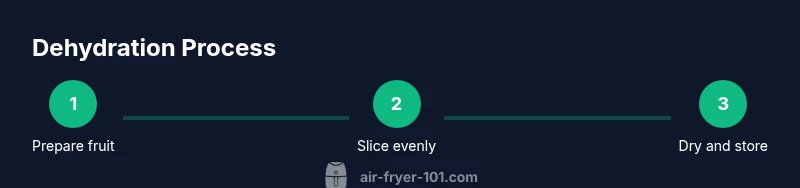
Prepare fruit by washing and slicing evenly
Wash fruit thoroughly and pat dry. Slice to uniform thickness (1–3 mm). This ensures consistent drying and texture across pieces. Avoid slices that are too thick, which dry slowly, or too thin, which can become brittle.
Tip: Use a mandoline to achieve uniform thickness and reduce variation. - 2
Line tray and arrange slices in a single layer
Line the air fryer basket with parchment or place a silicone mat. Arrange slices in a single layer with space between pieces to allow air to circulate. Do not stack pieces; crowding slows drying and leads to uneven results.
Tip: Leave at least 2–3 mm gap between pieces for optimal airflow. - 3
Set temperature and begin dehydration
Choose a low-to-mid temperature, typically 130–165°C (270–330°F). Start with a small batch to dial in timing for your model. If your air fryer lacks a dedicated dehydration mode, use the lowest setting and monitor closely.
Tip: Record your start time and check progress after 1–2 hours. - 4
Rotate or rearrange slices during cycles
Midway through the process, rotate the basket and rearrange pieces for even exposure. This helps prevent hotspots and ensures uniform dryness across the batch.
Tip: If your model uses a turntable, rotate the basket 180 degrees. - 5
Check for dryness and continue if needed
After initial cycles, test a piece for pliability and dryness. It should be flexible but not sticky. If moisture remains, continue in 15–30 minute increments until desired texture is reached.
Tip: Take notes on time to build a reliable baseline for future batches. - 6
Cool completely before storage
Spread dried pieces on a rack to cool fully before sealing. Condensation during cooling can lead to soggy bits and spoilage.
Tip: Cool in a dry room with good air circulation; avoid humid areas. - 7
Flavor and optional pre-treatments
If desired, toss slices with lemon juice, cinnamon, or vanilla before drying. Pre-treatments can help color retention and add depth of flavor without sugar.
Tip: Use light flavoring to preserve the fruit’s natural character. - 8
Store in airtight containers
Once cooled, transfer to airtight jars or bags. Store in a cool, dark place. Dehydrated fruit remains best when protected from moisture and heat.
Tip: Include a desiccant packet for longer shelf life. - 9
Plan batches to manage time
Dehydration often takes multiple cycles for larger batches. Plan ahead by drying in smaller batches to maintain quality and reduce waiting time.
Tip: Label batches with date and fruit type for easy tracking. - 10
Safety and maintenance
Unplug and cool the device before cleaning. Wipe surfaces with a damp cloth and inspect the unit for wear. Regular cleaning helps prevent off-flavors and ensures longevity.
Tip: Avoid harsh cleaners that could degrade nonstick coatings.
Got Questions?
Can I use a regular oven to dehydrate fruit if I don't have an air fryer?
Yes, you can dehydrate fruit in a conventional oven by using a very low setting and propping the door slightly open for airflow. Expect longer durations and check texture frequently to avoid scorching. An air fryer with dehydration settings typically offers more consistent results and energy efficiency.
You can use a regular oven, but expect longer times and careful monitoring. An air fryer usually dries more evenly with less energy use.
What thickness is best for even dehydration?
Aim for slices around 1–3 mm thick. Thinner pieces dry quickly but can become brittle, while thicker pieces may stay chewy or moist in the center. Uniform thickness helps the entire batch finish together.
Use slices about one to three millimeters thick for even drying.
Which fruits work best for air-fryer dehydration?
Fruits with firm texture like apples, pears, mangos, peaches, kiwis, and berries work well. Avoid very juicy fruits or those with high sugar content unless you’re prepared for longer drying times and frequent checks.
Good options are apples, pears, mangoes, peaches, kiwis, and berries.
How long does dehydration take in an air fryer?
Dehydration generally spans multiple hours, often 2–6 hours depending on fruit type and thickness. Start with a test batch and adjust as you learn your device.
Most batches take a few hours; start with a small batch to gauge timing.
Can I sweeten or flavor dehydrated fruit?
Yes, you can add cinnamon, vanilla, citrus zest, or a light sugar glaze after dehydration. Pre-treatments like lemon juice also help preserve color and brightness.
Flavor with cinnamon or vanilla, or a light citrus splash before drying.
How should I store dehydrated fruit for maximum shelf life?
Store in airtight containers in a cool, dry place. For longer shelf life, add a small desiccant or store in the refrigerator/freeze depending on climate and humidity.
Keep in airtight containers in a cool, dry place; refrigerate or freeze for longer shelf life if you like.
Watch Video
Quick Summary
- Choose uniform slices for consistent drying.
- Maintain air flow with parchment or mats and single-layer layout.
- Monitor progress and adjust time to avoid over-drying.
- Cool fully before storage to prevent moisture buildup.
- Experiment with mild flavors to enhance natural fruit notes.