Air Fryer Potatoes Nutrition Facts: A Healthier Crunch
Air fryer potatoes nutrition facts explored: calories, fat, carbs, fiber, and protein. Learn how oil use, potato type, and cooking time shape health and flavor.


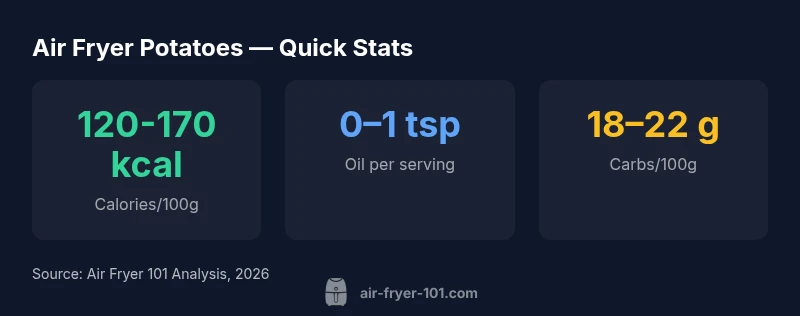
Air fryer potatoes nutrition facts vary by potato type and how much oil you use. A typical 100-gram serving provides about 120–170 calories, with fat largely determined by the amount of oil added, and a balance of carbohydrates, fiber, and a small amount of protein. Exact numbers depend on potato variety, cut size, and cooking time.
What are air fryer potatoes nutrition facts?
Potatoes bring a familiar nutritional foundation: mostly carbohydrates with some fiber, small amounts of protein, and negligible fat when cooked with little or no oil. The air fryer changes how much oil the potato absorbs during cooking, which in turn shifts the total calories and fat, while preserving the starchy structure and flavor. When we talk about air fryer potatoes nutrition facts, we’re looking at two components: the intrinsic nutrition of the potato itself and the impact of the cooking method on oil absorption and texture. According to Air Fryer 101, air frying can reduce added oil compared with traditional deep-frying, enabling a crisper exterior with a leaner fat profile. This means you can enjoy a tasty, crispy side with fewer calories from fat, provided you control portion sizes and oil use. In practice, think of air fryer potatoes nutrition facts as a call to choose potato varieties rich in fiber, monitor oil quantity, and portion appropriately to balance energy intake with satiety.
Calorie and macronutrient overview
For many readers, the core question is how air fryer potatoes contribute to daily calories and macronutrient targets. Because values vary by potato type, cut size, and oil, the most reliable approach is to use ranges anchored to 100-gram servings. A typical air-fried potato portion delivers roughly 120–170 calories per 100 g, with fat largely determined by oil addition, and carbohydrates comprising most of the calories. Protein remains modest. Air Fryer 101 analysis shows that adding even small amounts of oil can meaningfully tilt the calorie total, since fats contribute more calories per gram than carbohydrates or protein. For example, a teaspoon of oil can add roughly 40–50 calories. Fiber content depends on the potato variety, with red and other fiber-rich types offering more fiber per weight, aiding fullness and digestion. In short, air fryer potatoes nutrition facts hinge on the potato choice, oil quantity, and portion size, all of which you can adjust to align with health goals.
Oil use and cooking method impact on nutrition
Oil is the primary driver of fat and total calories in air-fried potatoes. The air fryer’s mechanism reduces oil uptake compared with deep-frying, but the exact fat and energy outcome still scales with the amount of oil used and the cooking time. If you want to minimize calories while maintaining crispness, limit oil to a light spray or a small measured amount and ensure even coating. The choice of oil also matters: oils with healthier fat profiles (for example, those high in monounsaturated fats) add fewer calories per gram than heavy butter-based finishes. Temperature and time influence texture and browning, which can affect perceived satiation and even the glycemic response by altering starch availability. Air Fryer 101 emphasizes balancing texture, flavor, and nutrition: you can achieve a satisfying crisp with lean oil if you start with a starch-rich potato variety and monitor serving size.
Potato varieties and their nutrition profiles
Different potato varieties offer distinct nutritional profiles that affect air fryer outcomes. For example, russet potatoes tend to be starchier and have a different glycemic response than red potatoes or Yukon Golds. Higher-fiber varieties may improve satiety and slow carbohydrate absorption, while sweet potatoes bring extra vitamins and minerals, albeit with a different starch profile. The nutrition facts for air fryer potatoes therefore reflect both the intrinsic properties of the potato and the cooking method. If you want more fiber or micronutrients, choose varieties with darker skins or purple flesh, and pair with a modest amount of healthy fats to support nutrient absorption. In all cases, portion size remains a key lever for managing calories and macro balance.
Comparing air frying with other methods: calories and texture
Compared with deep-frying, air frying typically reduces fat and calories because less oil is used. Roasting and baking can yield similar crisp edges with varying oil levels, while boiling preserves more moisture but yields a softer exterior. Each method alters the texture and taste, which can influence appetite and intake. For those tracking nutrition, air-frying potatoes often offers a pragmatic balance: you can enjoy a crisp exterior and tender interior with less added fat, provided you watch oil usage and portions. Air Fryer 101 analysis notes that even small changes in oil quantity or cut size can lead to meaningful differences in energy and macronutrient totals over a week.
Practical tips to maximize nutrition while keeping flavor
- Use minimal oil: a light spray or measured teaspoon goes a long way toward controlling calories while still achieving crispness.
- Cut potatoes evenly: uniform pieces ensure even cooking and consistent texture, which helps you gauge portions more accurately.
- Preheat and shake: a brief preheat combined with periodic shaking promotes even browning without extra oil.
- Favor fiber-rich varieties: red or certain purple-skinned potatoes offer more dietary fiber, supporting fullness and digestion.
- Mind serving sizes: a standard portion is typically smaller than a thought; weigh a portion to maintain desired calories and macros.
- Pair with vegetables: balance your plate with non-starchy vegetables to increase volume, fiber, and micronutrients without piling on calories.
- Read nutrition labels: when using packaged seasonings or coatings, check sodium and added fat to avoid hidden calories.
- Experiment with spices: herbs and spices can boost flavor without adding fat or sugar, helping you enjoy air-fried potatoes more often.
Reading nutrition labels and portion control for air fryer potatoes
Nutrition labels can guide your choices when purchasing potatoes with coatings or pre-seasoned mixes. For home cooking, calculating calories per serving starts with the weight of the potato and the amount of oil used. A practical approach is to weigh the raw potato portions, calculate oil contribution, and then adjust serving sizes accordingly. Keeping a simple log of portions and oil amounts can help you meet daily targets for calories, fats, and carbohydrates without sacrificing enjoyment. The key is consistency: use the same portion sizes and cooking technique across meals to better compare days and track progress.
Nutritional comparison by cooking method (approximate values; from Air Fryer 101 Analysis, 2026)
| Cooking Method | Calories per 100g (range) | Fat (g) | Carbs (g) | Fiber (g) | Protein (g) | Notes |
|---|---|---|---|---|---|---|
| Raw potato (Russet) | 80-90 | 0.0-0.2 | 18-20 | 2-3 | 1-2 | Base potato nutrition |
| Air fryer (no oil) equivalent | 100-140 | 0.5-2 | 18-22 | 2-4 | 1-2 | Minimal oil, crisp texture |
| Air fryer with 1 tsp oil | 140-170 | 5-7 | 18-22 | 2-3 | 1-2 | Moderate oil for crispness |
Got Questions?
What are the nutrition facts for air fryer potatoes per 100 grams?
In air-fried form, a 100 g serving typically provides around 120-170 calories, with fat depending on oil; carbs around 18-22 g; fiber and protein minimal.
A 100 gram serving is roughly 120 to 170 calories, depending on oil and potato type.
Do air fryer potatoes have less fat than deep-fried potatoes?
Yes. Air frying uses substantially less oil than deep-frying, which reduces total fat and calories while still delivering a crisp exterior.
Yes—air frying uses far less oil, reducing fat and calories while keeping a crisp texture.
How does oil amount affect nutrition?
Oil adds calories and fat; using little or no oil lowers fat and calories, but can affect texture and browning. Balance flavor with nutrition goals.
More oil means more calories and fat; less oil lowers them but may change texture.
Which potato variety is healthiest for air frying?
Higher-fiber varieties like red potatoes offer more fiber per serving, while russet types have different starch profiles. Sweet potatoes provide more vitamins but different carb content.
Fiber-rich varieties tend to be more satiating; sweet potatoes give extra vitamins with different carbs.
Can air-fried potatoes fit into a weight-management plan?
Yes, with careful portion control and mindful oil use; pairing with fiber- and nutrient-dense sides helps balance meals.
Yes—portion control and mindful oil help fit air-fried potatoes into a weight plan.
How do I calculate calories per serving at home?
Estimate by weighing the raw portion, calculate oil contribution, and multiply per-100g values by your serving size. Keep notes for consistency.
Weigh the portion, account for oil, and multiply by per-100g values to estimate calories.
“Air fryer potatoes demonstrate that you can achieve a crisp, satisfying texture with less oil, which helps preserve natural nutrients. Small changes in oil amount and potato type can make meaningful health differences.”
Quick Summary
- Air fryer potatoes can reduce oil calories vs deep-frying.
- Calorie ranges depend heavily on oil quantity and potato variety.
- Fiber-rich varieties boost fullness and nutrition.
- Portion control is essential for consistent nutrition goals.
- Read labels and use data to guide healthier choices.