Air Fryer Egg Bites: A Quick, Fluffy Breakfast Solution
Master fluffy air fryer egg bites with customizable fillings. This comprehensive how-to covers ingredients, equipment, timing, and storage for quick, healthy breakfasts.


Air fryer egg bites are a quick, protein-packed breakfast you can customize with veggies and cheese. This guide shows you how to make fluffy, savory bites in under 25 minutes with minimal cleanup. According to Air Fryer 101, preheating the air fryer and using silicone cups yields the most even texture.
Why Air Fryer Egg Bites Are a Practical Breakfast
Starting your day with protein and veggies helps sustain energy until lunchtime. Air fryer egg bites combine eggs with mix-ins like cheese, vegetables, and herbs, delivering soft centers and lightly crisp edges without oil-splattering heat. The air fryer’s rapid convection seals flavors quickly, so you can cook multiple portions in a single batch. For busy mornings, this means less cooking time and fewer dishes.
When choosing fillings, aim for ingredients that cook quickly and evenly. Fine dice vegetables to the same size as cheese shreds, so every bite has a balanced texture. If you prefer a lighter texture, whisk in a splash of milk or cream and use less cheese; for richer flavor, add more cheese, but keep an eye on density. A well-balanced mix of protein, fat, and fiber helps you stay full longer.
Health-wise, egg bites are versatile and adaptable to dietary needs. You can swap dairy for non-dairy options, use egg whites for fewer calories, or add plant-based proteins. Batch cooking lets you portion meals ahead of time, store them in the fridge or freezer, and reheat quickly in the air fryer for breakfast on demand.
note":null},
Flavor Builders: Cheese, Veggies, and Proteins
The base of good egg bites is a balanced mix of eggs, dairy, and add-ins. Grated cheddar, mozzarella, or pepper jack brings creamy moisture and flavor that withstands air frying. Mix-ins like diced bell peppers, spinach, red onions, mushrooms, or cooked sausage provide texture and color. For a leaner option, substitute turkey or chicken sausage and reduce cheese slightly.
When assembling fillings, keep pieces small and uniform so each bite cooks evenly. A tablespoon of cream cheese or Greek yogurt in the egg mixture adds tenderness, while a pinch of grated parmesan gives a savory finish. If you prefer a lighter result, you can reduce cheese by one-third and rely on milk or water to loosen the mixture.
Tip: Pre-grate cheese and dice vegetables ahead of time to streamline weekday mornings. This keeps your prep time low and prevents soggy bites from over-wetting ingredients.
note":null},
The Science Behind Texture: Fluffy vs. Dense
Texture is influenced by emulsification, air incorporation, and moisture balance. Whisking eggs with a small amount of dairy helps trap tiny air pockets, producing a lighter, fluffier interior. Adding milk or cream enhances moisture, but too much liquid can make bites spongy. The key is a thick, cohesive batter that holds shape when spooned into cups.
Another lever is temperature: eggs that are too cold can seize less evenly; room-temperature ingredients emulsify more consistently, improving texture. Avoid over-mixing once ingredients are combined, or excessive air will collapse during cooking. Proper filling height matters too—fill cups about 3/4 full to allow expansion without spilling.
Air frying creates a quick crust around the edges while keeping centers tender. If you want a more pronounced crust, give the bites a quick 1–2 minute blast at higher heat after the initial bake.
note":null},
Ingredient Substitutions for Dietary Needs
Egg bites are inherently adaptable. For dairy-free options, use unsweetened almond milk, soy milk, or oat milk and a dairy-free cheese. To boost protein without dairy, mix in finely chopped cooked tofu or finely diced lean ham. For vegetarians, rely on mushrooms, peppers, onions, spinach, and sun-dried tomatoes to boost flavor.
Gluten-free cooks can keep this recipe naturally GF as long as you choose gluten-free toppings. If you’re avoiding fats, skip extra cheese and rely on egg whites to reduce calories; to maintain creaminess, add a small amount of low-fat milk or a dairy-free alternative. The combinations are endless, so experiment with what you have on hand.
Air Fryer 101 analysis shows that preheating and using silicone cups helps maintain texture and even cooking, especially with dense fillings.
note":null},
Equipment and Prep: Pans, Cups, and Oil
Start with silicone muffin cups or a small, silicone muffin pan that fits your air fryer basket. Lightly oil or spray the cups to prevent sticking; choose a neutral oil with a high smoke point. A mixing bowl and whisk are essential for a smooth batter. Have a ladle or spoon ready to portion batter for uniform bites. If your air fryer basket is small, work in batches to prevent overcrowding, which can cause uneven cooking.
Prep vegetables by washing and dicing them into small, uniform pieces. Grate cheese ahead of time and beat eggs with a splash of milk until slightly foamy. This setup streamlines the process when you’re ready to cook and reduces the risk of over-mixing. Finally, keep your ingredients close to the workspace to minimize time between steps.
note":null},
How to Prevent Dryness and Bind Flavors
Dry bites are usually a sign of over-baking or insufficient moisture. To prevent dryness, whisk eggs with a small amount of dairy or dairy-free milk and avoid over-stirring after adding add-ins. Use a cheese that melts well but doesn’t release excessive liquid. If you notice moisture pooling, drain vegetables thoroughly before adding them to the mix.
For extra flavor, season the batter with salt, pepper, garlic powder, or paprika, and consider a quick herb blend—parsley, chives, or dill add brightness without overpowering the eggs. If you refrigerate the batter before cooking, bring it back to room temperature to aid even cooking. Batch-cooking tips: portion into cups and freeze, then defrost in the fridge before cooking. This saves time during rushed mornings.
Air Fryer 101 analysis shows that consistent cup size and preheated equipment deliver better texture outcomes.
note":null},
Storing, Reheating, and Freezing for Meal Prep
Cooked egg bites refrigerate well for 3–4 days. Reheat in the air fryer at 320°F (160°C) for 2–4 minutes, or until heated through and edges re-crisp. For longer storage, flash-freeze individual bites on a tray, then transfer to a sealed container. Frozen bites reheat in 6–8 minutes at 330°F (165°C).
When freezing, consider leaving toppings like fresh herbs off until serving to preserve texture. If you prefer a softer center, reduce the initial cooking time by a minute or two and complete the rest with a brief final bake. This approach keeps the center tender while preventing overcooking.
Storage notes: use airtight containers to limit moisture loss and prevent freezer burn. Air Fryer egg bites stay flavorful and convenient for quick breakfasts or meal-prep lunches.
note":null},
Common Mistakes and How to Troubleshoot
Common mistakes include overfilling cups, which causes spillover, and omitting preheating, which can lead to uneven cooking. Another frequent error is using too much liquid, which makes bites soggy. If your bites aren’t set after the timer, add 1–2 minutes and check centers with a small knife—the knife should come out clean or with a trace of yolk for soft centers.
If you notice uneven browning, rotate the cups halfway through the bake or provide more space between cups. For very dense mixtures, blend the eggs longer or reduce filling to keep centers tender. If you’re short on time, you can prep batter in advance and store in the fridge for up to 24 hours before cooking.
Air Fryer 101’s team recommends ramping up the heat briefly at the end if you want a crispier top.
note":null},
How Air Fryer Egg Bites Compare to Alternative Methods
Compared with pan-frying or baking in a traditional oven, air frying generally yields quicker cooking times and less oil. The convectional air fryer creates a uniform crust while preserving a tender interior, which is sometimes harder to achieve in a conventional skillet. Oven-baked bites may require longer cook times and a risk of uneven bottoms if the batter isn’t evenly distributed. Overall, the air fryer offers a balance of speed, convenience, and texture that many home cooks prefer for everyday breakfasts.
note":null},
Tools & Materials
- Eggs(Large eggs, room temperature if possible)
- Milk or cream (optional)(Adds tenderness; dairy or non-dairy alternatives work)
- Shredded cheese(Cheddar, mozzarella, or pepper jack)
- Diced vegetables(Bell peppers, spinach, onions, mushrooms)
- Salt and pepper(To taste)
- Silicone muffin cups(Or a silicone muffin pan that fits your air fryer)
- Non-stick spray or oil(Lightly coat cups to prevent sticking)
- Measuring cups/spoons(For accuracy and consistency)
- Mixing bowl and whisk(For whisking eggs until slightly foamy)
- Air fryer(With adjustable temperature control)
- Optional mix-ins(Cooked sausage, bacon bits, herbs)
Steps
Estimated time: 20-25 minutes
- 1
Prep ingredients and cups
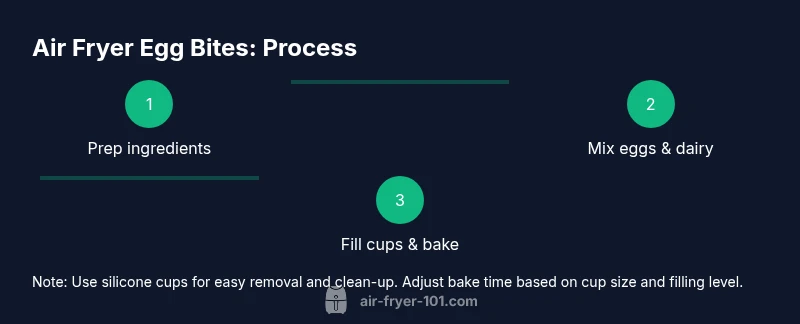
Gather eggs, dairy, cheese, and fillings. Dice vegetables uniformly and lightly oil silicone cups. This setup ensures even cooking and easy release.
Tip: Measure ingredients before you start to keep ratios balanced. - 2
Whisk eggs with dairy
Beat eggs with milk or cream until just combined and a few bubbles form. Do not overmix; a little air helps with fluffy centers.
Tip: Keep ingredients at room temperature for better emulsification. - 3
Stir in fillings
Fold in cheese and vegetables evenly so every bite has flavor and texture. If using meat, ensure pieces are small and pre-cooked.
Tip: Dry vegetables slightly to avoid extra moisture in batter. - 4
Prepare cups
Spray or lightly oil silicone cups to prevent sticking. Set them in a single layer with space between cups for air circulation.
Tip: For very crowded setups, cook in batches. - 5
Fill cups 3/4 full
Scoop batter into each cup, leaving space for expansion. Level the tops so bites cook evenly.
Tip: Overfilled cups lead to spills and uneven centers. - 6
Air fry at 300°F (150°C)
Cook for 8–12 minutes, until edges are lightly browned and centers are just set. Check at the 8-minute mark to prevent overcooking.
Tip: If your bites are still runny, extend by 1–2 minutes in 1-minute increments. - 7
Rest and cool
Let bites rest in the cups for 2–3 minutes before removing. This helps set the structure and makes removal easier.
Tip: Use tongs or a small spatula to lift bites gently. - 8
Store or serve
Serve warm or store in the fridge/freezer for meal prep. Reheat in the air fryer for 2–4 minutes until hot.
Tip: Label portions for quick week-day access.
Got Questions?
Can I use egg whites instead of whole eggs?
Yes, you can use egg whites, but the texture will be lighter. Use 2–3 whites per whole egg as a general guideline and consider adding a touch of milk or yogurt to improve moisture. Season well to compensate for the milder flavor.
Yes, you can use egg whites, but you may need more whites to get the same set and moisture.
How long can cooked egg bites be stored?
Cooked egg bites store well in the refrigerator for 3–4 days in an airtight container. For longer storage, freeze individual bites and reheat in the air fryer when needed.
Store in the fridge for up to four days or freeze for longer keeping.
Can I freeze and reheat them later?
Yes. Freeze individual bites on a tray, then transfer to a freezer bag. Reheat in the air fryer at 320°F (160°C) for 6–8 minutes until hot. This works well for batch meal prep.
Yes—freeze, then reheat in the air fryer until hot.
Do I need to preheat the air fryer?
Preheating helps with even cooking and better texture. If your air fryer has a preheat setting, use it; otherwise, run a quick 2–3 minute warm-up before cooking.
Preheating helps with even cooking and texture.
Can I bake these in a conventional oven?
You can bake similar batter in a conventional oven at 350°F (175°C) for about 15–18 minutes in lightly oiled muffin tins. Results may differ in texture and browning compared to the air fryer.
Yes, but the texture and timing will differ from air frying.
Are air fryer egg bites safe for kids?
They’re generally safe for kids when cooked to proper doneness. Cut into kid-friendly sizes and avoid overly sharp toppings. Always supervise younger children during meals.
They’re safe for kids when cooked through and cut into pieces suitable for them.
Watch Video
Quick Summary
- Whip up easy, customizable air fryer egg bites
- Use silicone cups to simplify removal
- Preheat for even texture and faster cook time
- Batch-cook for rapid, ready-to-eat breakfasts
- Store and reheat efficiently for meal prep