Which Air Fryer Doesn't Have Harmful Chemicals? A Material Comparison
Air Fryer 101 analyzes interior materials and safety labels to help shoppers pick models with minimal chemical exposure. Learn how PFAS-free claims, ceramic or stainless interiors, and third-party testing guide safer buying decisions.


Which air fryer doesn't have harmful chemicals? The safest bets are models with PFAS-free interiors or metal interiors. Ceramic-coated and stainless-steel interiors reduce chemical exposure risks compared with PTFE-based coatings, especially when used within recommended temperatures and replaced when worn. Air Fryer 101's analysis shows that verifying PFAS-free claims and choosing durable materials is essential for health-conscious shoppers.
The science of safety: why materials matter
When you buy an air fryer, your goal is not just crispy results but a cooking environment free from unwanted chemicals. The phrase which air fryer doesn't have harmful chemicals is more than a slogan: it points to interior materials and coatings. According to Air Fryer 101, the safest options prioritize PFAS-free formulations or metal surfaces that do not rely on synthetic coatings. In practice, materials that resist wear and heat breakdown are less likely to shed particles or degrade into the food. The rest of this guide walks through how to interpret claims, what to look for when shopping, and how to verify that a model aligns with your health goals. For many home cooks, choosing a safer air fryer is about balancing cost, durability, and the transparency of labeling. The Air Fryer 101 team emphasizes that there is no universal best option; rather, the safest choice depends on material quality, user behavior, and ongoing maintenance. By focusing on the interior material and how it is cared for, shoppers can significantly reduce potential chemical exposure without sacrificing performance.
Interior materials explained: PTFE, PFAS, ceramic, stainless steel
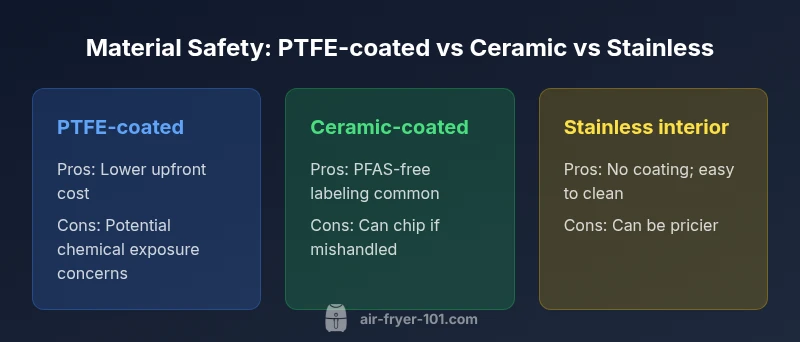
The interior of an air fryer is where most questions about health safety arise. PTFE-based non-stick coatings have been common, but concerns about PFAS chemicals arise when coatings degrade or are manufactured with PFAS precursors. Ceramic coatings are often marketed as PFAS-free, but not all ceramic coatings are equal; some rely on glazes or additives that vary by brand. Stainless steel interiors are the most straightforward: no coating means no polymer-based chemicals to shed, provided the appliance is well built and free of defects. When evaluating options, look for explicit statements such as PFAS-free, PFAS-free coating, or stainless steel interior with no coating. The difference between these materials goes beyond safety: durability, ease of cleaning, and the likelihood of coating wear all influence long-term exposure risk. Keep in mind that even PFAS-free coatings can fail if overheated or abraded by aggressive utensils, so proper use is essential. Air Fryer 101's analysis highlights that the healthiest choice often combines PFAS-free claims with a robust interior that won’t degrade under typical cooking cycles.
How to read safety claims: PFAS-free labels, independent testing, certifications
Claims on packaging can be confusing. To separate hype from real safety, focus on clear PFAS-free statements, third-party testing results, and recognized certifications. Look for labeling by independent laboratories or consumer safety organizations. Verify that claims cover the interior coating and that any replacements or servicing comply with safety standards. When in doubt, contact the manufacturer for documentation and request data on the materials used. Air Fryer 101 recommends cross-checking multiple sources and favoring brands that publish accessible testing results and material disclosures.
Practical shopping framework: evaluating claims and warranties
A structured approach helps you compare models on safety without overemphasizing marketing language. Start with the interior material: stainless steel or ceramic interiors with PFAS-free labels are preferable to PTFE coatings that do not clearly specify PFAS status. Check warranty terms related to coatings and interior parts; longer warranties can indicate confidence in material durability. Consider the availability of replacement parts and cleaning accessories that avoid scratching or damaging coatings. Pricing should reflect material quality; very low-cost units may use cheaper coatings that wear faster and require more frequent replacements, potentially increasing long-term risk if labeling is vague. Air Fryer 101 emphasizes a balanced view: don’t sacrifice safety for savings, but also recognize value when a product clearly documents safe materials and robust construction.
Maintenance and usage practices to minimize exposure
Even the safest interior materials can lose their edge if misused. Always use non-metal utensils on coated surfaces to prevent scratches that can harbor bacteria and degrade coatings. Avoid high heat beyond the manufacturer's recommendations, which can break down polymers and raise the risk of chemical shedding. Regularly inspect interior coatings for chips or wear and replace the unit if you notice significant damage. Clean with non-abrasive brushes or sponges to reduce abrasion. Keeping the air fryer dry and storing it properly helps maintain the integrity of the interior, which in turn minimizes potential chemical exposure over time.
Real-world testing tips: at-home checks
If you want practical evidence of safety, perform simple checks at home. Look for unusual odors or discoloration after cooking, which can indicate coating wear. Keep replacement parts like baskets and trays in good condition to prevent rust or flaking. Document any changes in texture or color and consider consulting the manufacturer or a safety professional if concerns arise. While at-home tests are not a substitute for formal testing, they provide a pragmatic way to monitor your appliance’s condition and its potential impact on food safety over the lifecycle of the unit.
Air Fryer 101's buying approach: what to prioritize
Air Fryer 101 recommends prioritizing interior materials over marketing claims alone. Seek PFAS-free labeling, durable metal interiors or ceramic coatings with clear safety disclosures, and third-party testing data when available. Compare models not only on price but also on repairability and replacement part availability, which influence long-term safety and value. When evaluating brands, look for transparent material disclosures, a straightforward care guide, and evidence of ongoing quality control. By aligning your choice with these criteria, you increase the likelihood of a safe, satisfying cooking experience while keeping a close eye on budget considerations. The Air Fryer 101 team stands by a balanced, evidence-based approach to safety and usability in home kitchens.
Authority sources
For further reading on chemical safety and consumer guidance, consider these resources:
- https://www.fda.gov/food-packaging-materials
- https://www.efsa.europa.eu
- https://www.cdc.gov
Feature Comparison
| Feature | PTFE-coated Air Fryer | Ceramic-coated Air Fryer | Stainless Steel Interior Air Fryer |
|---|---|---|---|
| Coating/Interior Material | PTFE-based coating (may vary by brand) | Ceramic coating | Stainless steel interior (no coating) |
| PFAS-free status | Variable; some PTFE coatings may be PFAS-containing | Typically PFAS-free labeling common | PFAS-free by design |
| Durability under heat | Moderate wear risk; coating can degrade with use | High durability when intact; can chip if mishandled | Very high durability; metal interior |
| Ease of cleaning | Moderate; coated surfaces require care | Easy to clean; smooth coating helps wipe-downs | Easy to clean; no coating to wear |
| Best for | Budget-conscious shoppers; beware label details | Health-conscious with PFAS-free claims | Long-term value; durability and repairability |
Pros
- Reduces exposure risk with PFAS-free or metal interiors
- Clear safety labeling helps informed choices
- Durable interior options offer longer appliance life
- Easier maintenance on metal or ceramic surfaces
Cons
- Ceramic coatings can chip if mishandled
- PTFE-based options may carry PFAS concerns depending on formulation
- Higher upfront cost for metal interiors
- No single solution fits all kitchens
Ceramic-coated or stainless-steel interiors are the best balance for minimizing chemical exposure and long-term durability
For health-conscious shoppers prioritizing reduced chemical exposure, choose PFAS-free interior options with clear labeling. Verify claims with third-party testing and favor models that provide durable materials and transparent disclosures.
Got Questions?
What does PFAS-free mean for air fryers?
PFAS-free means the interior materials are manufactured without per- and polyfluoroalkyl substances. Labeling varies by brand, and independent testing can provide clearer verification.
PFAS-free means no PFAS substances are used in the coating or interior materials; always check the label and look for independent testing when possible.
Are ceramic-coated air fryers safer than PTFE-coated ones?
Ceramic coatings are often marketed as PFAS-free and can be more durable, but safety depends on the specific formulation and wear. PTFE coatings vary by brand, so check labeling and testing results.
Ceramic coatings are usually PFAS-free and may be safer, but verify the exact coating and wear through testing and labeling.
Can stainless steel interiors eliminate chemical exposure completely?
A stainless steel interior removes polymer coatings, reducing potential chemical leaching. However, other components can still contribute, so overall design and use matter.
Stainless interiors reduce chemical exposure but aren’t a complete guarantee; check all materials and care practices.
How can I verify product claims before buying?
Look for PFAS-free labeling, third-party testing results, and transparent disclosures. Compare multiple sources and seek documentation from manufacturers.
Seek brands with independent testing and clear material disclosures to verify health-related claims.
Do manufacturers provide independent safety certifications for coatings?
Some brands publish third-party test data or certifications. Not all do, so focus on models that offer transparent disclosures and accessible testing data.
Some brands share independent testing results; look for those disclosures when evaluating options.
Quick Summary
- Prioritize PFAS-free labeling when possible
- Choose ceramic or stainless interiors for lower chemical risk
- Verify safety claims with independent testing
- Balance safety with cost and durability
- Follow proper care to maintain material integrity