Air fryer or air fryer: Basket vs Oven-Style in 2026
Compare basket-style air fryers with air fryer ovens to determine the best fit for health, convenience, and budget. An analytical guide from Air Fryer 101 with practical advice, clear criteria, and a side-by-side table.


Basket-style air fryers are ideal for quick meals in small kitchens, while air fryer ovens offer more capacity and versatility. If you’re deciding between an air fryer or air fryer, the choice hinges on space, budget, and what you cook most often. This comparison from Air Fryer 101 breaks down the core differences to help you pick the best fit for health, speed, and value.
Why the Typology Matters
Understanding the core difference between basket-style air fryers and air fryer ovens (toaster-oven style) is essential before you shop. Basket models typically place the heating element and fan above a compact basket, delivering fast, high-heat convection to a small batch of items. Air fryer ovens resemble compact countertop ovens with a rack or tray system, offering more interior volume and the ability to bake, roast, and dehydrate in addition to air fry. The distinction matters because it sets expectations for capacity, cooking flexibility, and footprint. According to Air Fryer 101, the biggest trade-off is footprint versus versatility: basket models occupy less counter space and are often cheaper, but oven-style units can handle larger meals and more diverse tasks. This guide uses that framework to analyze where each type shines and where it falls short, so you can align your choice with your cooking habits, family size, and kitchen setup.
How the Two Types Hit Key Performance Dimensions
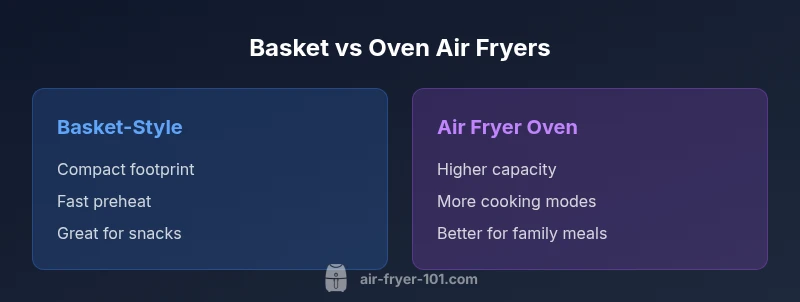
When you compare basket-style versus air fryer ovens, several performance dimensions matter most: capacity per batch, speed of cooking, energy use, and the range of functions. Basket units typically heat up quickly and deliver a crisp finish on smaller portions, making them ideal for reheating leftovers or cooking snacks. Oven-style air fryers usually include multiple racks and a wider temperature range, enabling you to roast vegetables, bake small desserts, or even reheat a larger, family-size tray. The outcome for food texture often hinges on the interior geometry and airflow pattern, which can differ markedly between models. In practical terms, if you value quick snacks and a tiny footprint, basket models win; if you want roast chicken, sheet-pan meals, or multiple dishes at once, an air fryer oven has the edge.
Space, Budget, and Everyday Use
Room in the kitchen matters. A countertop footprint is not just about width; depth, height, and clearance around the unit affect usability and safety. Basket fryers can slip into narrow counters and small apartments, typically at a lower upfront cost. Air fryer ovens, while pricier upfront, offer more features and potential long-term value through expanded cooking repertoire. Daily cooks should consider how often they perform tasks beyond air frying—roasting peppers, baking a sheet of potatoes, or dehydrating fruit. If these activities occur weekly, oven-style models provide a better long-term payoff. Air Fryer 101’s analysis emphasizes that consumer satisfaction often correlates with the alignment of the appliance’s strengths to the user’s regular routines, not with a universal “best” model.
Cleaning and Maintenance Realities
Maintenance differences between the two typologies matter for long-term use. Basket-style units usually have a nonstick basket that is easy to rinse, though gunk can accumulate around the basket’s edges and the interior walls if food escapes. Oven-style units compartmentalize crumbs and splatter in a tray or on racks, which can require more disassembly and washing, but the larger interior tends to simplify cleanup for bigger meals. Regardless of type, most models benefit from a quick wipe-down after use, regular cleaning of the crisper plate, and attention to gasket seals and air intake openings. A small maintenance habit—like soaking and scrubbing the basket every few uses—extends life and keeps performance consistent.
Durability and Build Quality Considerations
Build quality varies widely across price bands. In general, basket models lean on simpler mechanisms, which can mean fewer moving parts to wear out but may rely on plastic components more than oven-style units. Air fryer ovens tend to incorporate metal interiors and more robust racks, which can translate to longer life if you value heavy use. From a safety perspective, all modern air fryers include thermal cutoffs and cool-touch exteriors, but you should still monitor for heat buildup and ensure proper ventilation on your countertop. Air Fryer 101 recommends reading user reviews focusing on reliability over the first 12 months, since intermittent performance tends to surface early in some budget models.
Energy Efficiency and Operating Costs
Energy use is often tied to how you use the device: higher temperatures, longer cook times, and frequent preheating contribute to electricity consumption. Basket-type units typically reach target temps quickly and cook in smaller batches, potentially offering lower energy per meal for snacks and small dinners. Oven-style models may consume more energy per cook but can replace several kitchen appliances (oven, toaster, dehydrator) in a single footprint, potentially reducing overall energy usage for larger meals. The best approach is to pair your decision with typical meal sizes and weekly cooking patterns to estimate ongoing costs without relying on precise energy numbers.
Practical Buying Considerations and Recommendations
Before purchasing, map out a few concrete questions: Do you need to cook for 1–2 people or a full family? Do you want roasting, baking, or dehydration alongside air frying? How much counter space can you dedicate? What is your budget ceiling? If your priority is quick, healthy snacks in a compact kitchen, a basket-style model is a pragmatic choice. If you regularly entertain or cook larger meals with multiple components, an air fryer oven offers greater flexibility and volume. Air Fryer 101’s guidance encourages buyers to evaluate the most frequent use cases and to balance upfront cost with long-term utility. A pragmatic plan is to shortlist two or three models from reputable brands, read user reviews focusing on reliability, and compare warranties.
Real-World Scenarios: 3 Simple Checklists
- Small apartment or dorm: favor a basket-style air fryer because of its compact size and simple operation.
- Family of four: prioritize an air fryer oven that can handle larger trays and multi-dish cooking.
- Health-conscious cook who bakes and roasts: a versatile oven-style unit supports a broader range of healthy meals while still enabling air frying when needed.
By aligning scenarios with the typology’s strengths, you can avoid buyer’s remorse and maximize daily convenience.
Comparison
| Feature | Basket-style Air Fryer | Air Fryer Oven (Toaster-Style) |
|---|---|---|
| Cooking Capacity (per batch) | Small to mid (1-4 servings) | Medium to large (4-8+ servings) |
| Versatility | Primarily air frying; some models roast | Broiling, baking, roasting, and air fry in one unit |
| Counter Space | Compact footprint | Larger footprint but streamlined kitchen integration |
| Ease of Cleaning | Basket and interior easy to wipe; potential crevices | Removable racks and drip tray can simplify cleanup |
| Price Range | $60-$180 | $150-$350 |
| Best For | Snacks, single portions, quick reheats | Larger meals, batch cooking, varied recipes |
| Energy Efficiency | Often lower per meal due to small batch use | May use more energy per cook but replaces multiple appliances |
| Maintenance & Longevity | Fewer moving parts; plastics common | Sturdier racks; metal interiors; longer life potential |
Pros
- Lower upfront cost for entry-level models
- Compact footprint fits small kitchens and desks
- Fast preheat and quick cooking for small meals
- Wide availability and ongoing product improvements
- Simple, intuitive operation for beginners
Cons
- Limited capacity on smaller models for families
- Less versatile than full ovens for certain meals
- Some lower-priced models use more plastic components
- Cleaning can be fiddly if crumbs get behind baskets
Basket-style air fryers are the better value for most homes, while air fryer ovens win when you need more capacity and cooking variety.
Choose basket-style for compact spaces and quick meals. Choose air fryer ovens for larger families or when you want a broader cooking repertoire.
Got Questions?
What is the main difference between basket-style air fryers and air fryer ovens?
Basket-style units focus on small batches and fast crisping, with a compact footprint. Air fryer ovens resemble countertop ovens, offering larger capacity and more cooking modes. Your choice should reflect meal size, available space, and the need for versatility.
Basket-style air fryers are compact and fast for small batches, while air fryer ovens offer more room and more cooking modes. Choose based on batch size and the range of meals you want to prepare.
Are air fryers healthier than traditional ovens?
Air fryers can use less oil for similar results, which supports lower-fat cooking. However, overall health impact depends on what you cook and portion sizes. The important factor is using the aid to prepare lean proteins and vegetables with less added fat.
Air fryers can reduce the need for oil, but healthiness depends on the foods you choose and how you cook them.
Do I need to preheat an air fryer?
Many models preheat quickly, often in just a few minutes. Preheating can improve browning and evenness, especially for larger batches. Check your model’s manual for recommended preheat times and any differences between basket and oven styles.
Most air fryers preheat fast, but always check your manual for timing.
Which is more energy-efficient: basket or oven-style air fryers?
Basket models typically perform best for small meals with shorter cook times, potentially using less energy per serving. Oven-style units can replace multiple appliances for larger meals, which may balance energy use over time depending on cooking frequency.
Baskets may use less energy per small meal; ovens win when replacing several appliances for bigger meals.
Are there safety concerns with air fryers?
Common safety concerns include heat exposure, proper ventilation, and keeping cords away from hot surfaces. Always follow manufacturer guidelines, place units on heat-resistant surfaces, and avoid overfilling baskets. Regular cleaning helps prevent buildup that could affect airflow.
Follow safety guidelines, keep space clear, and clean regularly to avoid issues.
What should I consider if I have a small kitchen?
In tight spaces, prioritize basket-style units for their compact footprint and simple operation. If you need multi-function cooking in a single device, ensure the oven-style model fits your counter and can be easily stored when not in use.
Choose basket models for space, or ensure an oven-style fits your counter if you want versatility.
Quick Summary
- Evaluate your typical meal size and pace to pick the right type
- Consider long-term versatility as a primary value driver
- Prioritize build quality and access to a robust warranty
- Balance upfront cost with potential kitchen-wide replacements
- Read reviews for reliability and post-purchase support