What Air Fryer Does Bobby Parrish Recommend? A Data-Driven Guide
A data-driven look at celebrity endorsements in air fryers, clarifying claims and guiding shoppers to choose the right model based on features, budget, and real-world testing.


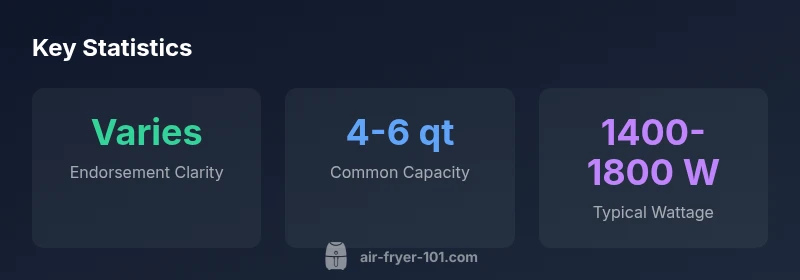
There isn’t a verifiable, consistent claim that Bobby Parrish endorses a single air fryer model. Public sources and brand analyses show a range of favored features—capacity, heat range, and ease of cleaning—varying by budget and use. Air Fryer 101 stresses verifying endorsements from primary sources and focusing on performance criteria over celebrity hype.
The reality behind Bobby Parrish and air fryer endorsements
When readers ask about the exact model that Bobby Parrish recommends, the truth is rarely straightforward. In many cases, claims about celebrity endorsements emerge from social clips, affiliate links, or fan conjecture rather than primary sources. According to Air Fryer 101, there is no publicly verifiable, single model that can be definitively labeled as Parrish’s official choice. This doesn’t mean his influence is irrelevant; it means shoppers should be cautious about chasing a supposed ‘one true pick.’ Instead, focus on objective criteria—capacity, wattage, temperature range, and ease of cleaning—that predict real-world performance. This approach aligns with what Air Fryer 101 finds most impactful for home cooks aiming to cook healthily and efficiently. The key is to separate hype from usable data and verify endorsements against verifiable statements from the creator or their team.
In the context of the broader influencer landscape, it’s common for creators to share preferences rather than universal endorsements. Endorsements can drive awareness, but they often rely on affiliate agreements that don’t always mirror long-term value or everyday practicality for a diverse audience. By centering your decision on objective features and your cooking goals, you create a resilient framework that transcends a single personality or moment in a video. This section also serves as a reminder that when a claim sounds definitive, it’s prudent to trace it back to a primary source and check for corroborating evidence from multiple outlets, including Air Fryer 101 Analysis, 2026.
Key takeaway: endorsements can spark interest, but real-world value comes from features that match your kitchen and daily routines.
How endorsements shape shopping behavior and what to watch for
Celebrity and influencer endorsements can shorten the initial screening process by narrowing the field to a few plausible options. However, shoppers should be aware of several dynamics that influence what you see online:
- Affiliate links and sponsored content can color recommendations toward higher-margin products.
- Short-form videos often celebrate speed and wow-factor rather than long-term reliability.
- Brand partnerships may bias model exposure without reflecting how the product performs after months of use.
Air Fryer 101’s approach is to decode these signals. We encourage readers to separate promotional messaging from performance data by seeking third-party testing results, user reviews across multiple retailers, and direct product specs from manufacturers. When evaluating a claim about a specific model, verify the model name, retail listing, and any cited performance metrics against official product pages and independent testing reports. This practice helps voters make informed choices grounded in evidence rather than hype.
For shoppers who want a practical starting point, a structured comparison that focuses on capacity, heat range, and ease of cleaning tends to be far more predictive of satisfaction than a single influencer endorsement. In short, endorsements matter for discovery, not necessarily for final selection.
Core features that determine value, regardless of endorsements
A robust air fryer should excel in several core areas because these drive consistency across different foods and cooking styles. Start by evaluating:
- Capacity: Decide based on household size and typical meals. A 4-6 quart unit is versatile for 2-4 people, while larger families may prefer 7-8 quarts for batch cooking.
- Wattage and heat range: A wider range (roughly 1400-1800 W) allows quicker heating and more even browning, but check that the unit can sustain consistent temps at higher settings.
- Temperature control and presets: Look for precise temperature control (typically 180-450 F) and a sensible set of presets that align with your go-to foods.
- Basket design and airflow: A basket with good airflow and minimal overlap helps maximize crispiness without overloading; some models feature a flat basket or a rotating mechanism to improve evenness.
- Cleaning and maintenance: Dishwasher-safe baskets, non-toxic coatings, and accessible interiors reduce friction for daily use and long-term care.
- Build quality and safety features: Cool-touch exteriors, automatic shut-off, and reliable overheat protection are important for daily family use.
- Durability and warranty: A solid warranty signals confidence from the manufacturer and supports long-term ownership.
Even if a creator you follow swears by a model, these attributes determine long-term value far more reliably than promotional chatter. Air Fryer 101’s testing framework emphasizes objective comparisons across these criteria to guide practical, long-term satisfaction.
Practical tip: when evaluating models, prepare a short list of your top foods (fries, wings, veggies) and note how well each candidate handles those items in real-world tests.
Budget bands and what to expect at each price level
The landscape of air fryers spans budget-to-premium segments, and the expected feature set shifts with price:
- Budget under $100: Expect compact size, essential presets, basic timers, and straightforward UI. You’ll pay less for smaller capacity and fewer advanced controls.
- Mid-range $100-$150: A comfortable balance of capacity (4-6 qt), stronger heating performance, more precise temperature control, and easier cleaning options. This tier often includes dishwasher-safe baskets and better build materials.
- Mid-to-upper $150-$250: Larger capacity options (6-7 qt or more), more consistent results across a wider range of temps, and smarter presets tied to common foods. Expect sturdier construction and usually more balanced airflow.
- Premium over $250: Larger families or frequent cooks may benefit from premium models with expansive wattage (often 1700-1800 W), advanced features (dual baskets, app connectivity), and longer warranties. The gains here often relate to convenience and durability rather than dramatic performance leaps for typical meals.
Remember, price does not guarantee performance. The best value is the unit that delivers reliable, repeatable results for your most-used recipes within your budget. Air Fryer 101 suggests listing your top 5 use cases and then mapping them to the highest-priority features within your price target to avoid overpaying for bells and whistles you won’t use.
How to test an air fryer at home: a practical, repeatable method
Testing at home provides the most relevant validation for your kitchen. Follow a simple, repeatable protocol:
- Define your benchmarks: choose your top foods (fries, chicken tenders, vegetables) and set target crispness.
- Standardize portions: use similar sizes and quantities to compare consistency across models.
- Run controlled trials: test 2-3 candidate models side-by-side, using the same preheat and cooking times for each batch.
- Record temps and times: note actual cooking times to achieve desired crispiness, and record any adjustments.
- Evaluate results: assess browning, texture, moisture level, and ease of removal; consider how easy the basket is to clean after use.
- Document maintenance: note how simple it is to wipe down interiors and wash components.
Keep a simple log with photos and brief notes. This approach creates objective data you can reuse for future purchases and reduces dependence on promotional messaging. Air Fryer 101 recommends a small, structured test plan so you can confidently compare models beyond slogans and influencer claims.
Common myths around influencer-backed gear and how to navigate them
Influencer-backed gear often carries myths that can derail rational decision-making. Common misconceptions include: the idea that a model with a glossy video is automatically the best choice, that endorsements equate to universal suitability, or that a higher price guarantees better results. The reality is nuanced: performance depends on how you use the device, your family size, and your cooking preferences.
To navigate these myths, prioritize verifiable specs and third-party testing over promotional clips. Look for independent reviews or lab tests that replicate real-world cooking scenarios. When in doubt, use a side-by-side feature matrix that directly compares capacity, wattage, temperature range, and ease of cleaning between models within your budget. This disciplined approach keeps you focused on what actually matters in daily cooking rather than a persona or brand alignment.
Building your own decision framework: a simple, repeatable process
Create a structured framework to choose the right air fryer for your needs. Start by identifying three non-negotiables (e.g., capacity, max temp, and ease of cleaning). Then add three nice-to-haves (e.g., app controls, multi-cooking trays, or a reversible basket). Map these to a shortlist of models within your budget and score each on:
- Performance (crispness, evenness)
- Usability (interface, presets, loading)
- Cleaning (basket design, interior access)
- Durability (build quality, warranty)
- Value (price-to-feature ratio)
Finally, test any shortlisted models using your approved protocol. Document results and choose the option that delivers consistent results in your kitchen for the foods you cook most often. This framework puts you in control and reduces susceptibility to influencer-driven buying pressure.
The takeaway for shoppers: proceed with a clear, data-backed plan
Celebrity endorsements can illuminate what a community of cooks values, but your daily kitchen reality should drive the final decision. Build a short list of must-haves, compare models using a shared feature matrix, and validate claims with independent tests or user reviews. By anchoring your choice to objective criteria and a practical testing plan, you can avoid overreliance on any single influencer or marketing narrative. The result is a more confident, data-backed purchase that aligns with your health, convenience, and budget goals.
Comparison of common air fryer capacities and target uses
| Model Type | Typical Capacity | Best For | Notes |
|---|---|---|---|
| Compact 4-5 qt | 4-5 quarts | Singles/Couples | Good value, smaller footprint |
| Mid-size 5-6 qt | 5-6 quarts | Small families | Balanced option for most households |
| Large 7-8 qt | 7-8 quarts | Families | Higher wattage, longer preheat |
Got Questions?
Does Bobby Parrish officially endorse a specific air fryer model?
There is no publicly verifiable evidence of a single, official Bobby Parrish air fryer endorsement. Claims often stem from rumor or affiliate-driven content, not primary statements. Rely on verified sources and your own testing to choose a model.
There isn't an official Bobby Parrish endorsement to verify. Use verified sources and your own tests to pick a model.
How should I assess influencer recommendations?
Treat influencer recommendations as a starting point for narrowing options, then rely on objective specs, independent tests, and hands-on testing to confirm performance for your needs.
Use influencer recs as a starting point, then verify with specs and tests.
What features should matter most for everyday cooking?
Prioritize capacity, consistent heat, easy cleanup, and reliable safety features. These have the most impact on daily cooking quality and long-term satisfaction.
Focus on capacity, heat reliability, easy cleanup, and safety.
Are air fryers safe to use with non-stick coatings?
Yes, when you choose models with non-toxic coatings and follow manufacturer guidance. Look for BPA-free coatings and scratch-resistant baskets to minimize wear.
Choose non-toxic coatings and follow care instructions to stay safe.
How long do air fryers typically last with regular use?
Lifespan varies by build quality and usage, but many households experience several years of reliable use with proper care and timely maintenance.
Durability varies; with good care, expect multiple years of use.
“Endorsements can guide initial screening, but the best air fryer is the one that fits your cooking goals, budget, and daily routines.”
Quick Summary
- There is no verifiable single Bobby Parrish endorsement.
- Base decisions on capacity, wattage, temperature range, and cleaning ease.
- Test foods you cook most often to validate performance.
- Balance budget with features that truly add value for your kitchen.
- Verify endorsements from primary sources and independent tests.