What Air Fryer Can Cook Pizza: A Practical Guide
Explore which pizzas your air fryer can handle, ideal settings, crisp crust tips, and model-agnostic guidance from Air Fryer 101.


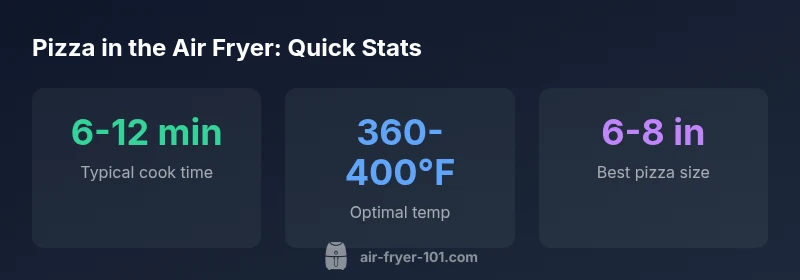
An air fryer can cook most pizzas, including fresh dough and frozen pies, as long as the pizza fits the basket or tray. Personal pizzas around 6–8 inches work best; larger 10–12 inch pizzas may fit only on a rack or in a multi-tier setup. Adjust time to achieve a crisp crust.
Why the question matters for home cooks
For many home cooks, the idea of cooking pizza in an air fryer raises questions about reliability, crust texture, and how it compares to a traditional oven. According to Air Fryer 101, understanding what air fryer can cook pizza is essential for budgeting time and maximizing health benefits without sacrificing flavor. The Air Fryer 101 team found that most pizzas that fit inside a standard basket can achieve a hot, bubbly top and a crust with a satisfying bite. The key is size, placement, and a short, targeted cooking window rather than long baking times. This matters especially for households with limited kitchen space, busy weeknights, or the desire to reduce energy waste. In practice, you’ll want to think about three factors: pizza size, crust type, and topping layout. When these align with your specific air fryer model, you can replicate a near-oven crust in far less time. The result is a versatile, quick solution for dinner emergencies, weekend indulgences, or a simple weeknight meal.
Air Fryer 101’s practical approach helps you avoid the disappointment of soggy crusts or uneven cheese. By understanding the physical limits—namely basket size, heat distribution, and airflow—you can plan a pizza workflow that fits everyday life. This isn’t about baking a pie in a toaster oven; it’s about translating high-heat, convection-style air frying to a thinner crust and a faster cook time. The core takeaway is simple: size your pizza to fit, preheat when possible, and monitor closely for that perfect balance of golden crust and molten cheese.
What air fryer can cook pizza: scope, sizes, and types
This section clarifies the scope of what can be cooked, from frozen to fresh dough, and from personal pizzas to small party pies. Most home air fryers handle pizzas that fit in the basket or on a perforated tray. Personal pizzas in the 6–8 inch range work reliably, while larger 10–12 inch pies often require cutting into slices or using a rack to maximize air flow. The best results come from thin to medium-thin crusts that do not overwhelm the basket, allowing hot air to circulate. When choosing toppings, light, flat toppings work best to avoid blocking air flow and producing soggy spots. In practice, you’ll find that most standard pizzas—whether frozen or homemade—can be adapted to air frying by adjusting size, crust thickness, and cooking time. The Air Fryer 101 team emphasizes that model variation means you should start with conservative settings and adjust by small increments to dial in texture and melt. This method fosters a practical, reliable pizza routine rather than a hit-or-miss experiment. Sweet spot discovery is part of the learning curve, but the payoff is consistent, crave-worthy results with less oven heat and faster dinner prep.
Frozen vs. fresh: best practice for pizza in an air fryer
Frozen pizzas bring convenience, but texture can be unpredictable if the crust is overly thick or the toppings are moisture-rich. Fresh dough brings better control over crust texture and color, especially when you pre-roll to a uniform thickness. Air Fryer 101 analyses show that fresh dough tends to develop a crisper bottom and a more evenly melted top when given a brief preheat and a gentle, even pressure during placement. For the best results with both frozen and fresh options, aim for a flat, evenly sized disk. Use parchment or a perforated tray to promote air flow and avoid sticking. If you’re starting with frozen items, consider letting the product thaw for a few minutes and then patting the surface dry to avoid excessive moisture. A light spray of oil on the crust edge can promote browning and crispness without greasiness, especially when working with home-made toppings.
Getting crust crisp: timing, temperature, and placement
Crust crispness hinges on a few repeatable steps. Start with a preheated air fryer set to 360–400°F (182–205°C). Place the pizza on a parchment sheet or a perforated tray that fits your basket. If your model allows, elevate the pizza on a small rack or use a two-tier approach to improve air circulation. In general, avoid overloading with toppings—moist ingredients like fresh tomatoes can steam the crust and soften it. Cook for 6–12 minutes, checking around the halfway point to rotate for even browning. If the crust looks pale or soft at the 6-minute mark, give it another 2–3 minutes. For extra crispness, remove excess cheese from the edges where it tends to pool and burn less quickly on the center. The goal is a crust that’s sturdy enough to hold toppings while remaining pleasantly light and crisp. Using parchment trimmed to fit the basket is a simple way to prevent sticking and expedite cleanup.
Cheese, toppings, and sauce: toppings that work best
Choosing toppings that cook evenly and stay flat is essential in an air fryer. Shredded cheese melts quickly and distributes evenly without pooling, while whole slices can create uneven hotspots if they are too thick. Lightly pre-cook toppings like mushrooms or peppers that release moisture, or slice them thin to ensure even cooking. Heavy, thick slices of vegetables or large chunks of meat can impede air flow and lead to soggy crusts. Sauces should be applied sparingly to avoid making the crust soggy; a light drizzling of olive oil around the crust edges can promote browning and flavor. For cheese lovers, a final sprinkle of grated cheese after the main cook can create a gooey, well-bonded top. This approach balances texture, flavor, and air flow.
Real-world recipes and quick-start settings
Here are a few practical, quick-start templates you can try. For a fresh 6–8 inch margherita, preheat to 380°F (193°C), place on parchment, and cook 6–9 minutes, checking for bubbling cheese and a crisp bottom. For a frozen pepperoni pizza around 9 inches, set to 400°F (205°C) for 8–12 minutes, rotating halfway through. If you’re working with small flatbreads or mini pizzas, try 360–380°F (182–193°C) for 5–8 minutes. Always adjust based on your model’s performance, as some air fryers run hotter or cooler than others. A short preheat can reduce variance between batches, while using a rack may improve air circulation on larger pies. These templates are meant to be starting points; your best results come from small adjustments after your first trial.
The key is to measure outcomes: is the crust crisp enough? Is the cheese melted evenly? Do toppings look melted without overcooking? Take notes on your exact model, the pizza type, and your preferred texture to create a personal pizza playbook that yields consistent results over time.
Common pitfalls and how to fix them
Even with the best intentions, you may encounter common issues when cooking pizza in an air fryer. A soggy crust usually signals too much moisture on the surface or toppings that release water too quickly. If your crust browns unevenly, try a higher rack position or using a rack to create space for air to circulate under the crust. If toppings burn or cheese scorches, reduce the temperature by 10–20°F and extend the cook time slightly to ensure the crust has time to crisp up. Another frequent pitfall is overloading the basket, which blocks airflow and leads to uneven cooking. Use smaller portions or cut your pizza into slices so air can reach every surface. Finally, if you notice sticking, ensure the surface is well-oiled or lined with perforated parchment to reduce friction and make cleanup easier.
Comparison of pizza types and air fryer outcomes
| Pizza Type | Recommended Setting | Typical Time | Notes |
|---|---|---|---|
| Frozen pepperoni pizza (9–10 inches) | 400°F (205°C) | 8-12 minutes | Cook on tray; check halfway |
| Fresh personal pizza (6–8 inches) | 375-400°F (190-205°C) | 6-10 minutes | Light oil on crust edges |
| Flatbread style pizza | 360-400°F (182-205°C) | 5-9 minutes | Use parchment/rack for airflow |
| Store-bought mini pizzas | 380-400°F | 6-8 minutes | Best on rack or perforated sheet |
| Pizza bagels | 350-380°F (177-193°C) | 6-9 minutes | Watch edges for color |
Got Questions?
Can I cook a full-sized 12-inch pizza in a standard home air fryer?
Most standard air fryers won't fit a full 12-inch pizza. Use 6–8 inch personal pizzas or cut larger pizzas into slices designed for the basket.
A full 12-inch pizza typically won't fit; slice it or use a smaller personal pizza.
Do I need to preheat the air fryer before cooking pizza?
Preheating helps crisp the crust and melt cheese evenly. If your model lacks a preheat function, run 2-3 minutes at the target temperature.
Yes, preheat to improve crust and melt.
What toppings work best in an air fryer pizza?
Choose toppings that cook quickly and stay flat; avoid thick raw vegetables that release moisture. Light cheese and herbs work well without overpowering the crust.
Stick to quick-cooking, flat toppings.
Is parchment paper safe to use in an air fryer?
Yes, when you use parchment rated for high heat and trim to fit, ensuring air flow isn’t blocked.
Yes, with proper parchment for high heat.
How do I prevent a soggy crust in the air fryer?
Space the air well by using a rack or perforated parchment, avoid overloaded toppings, and give the crust a light oiling at the edges.
Give air space and avoid heavy toppings.
Can I reheat leftover pizza in the air fryer?
Yes. Reheat at about 325°F (165°C) for 3–5 minutes to revive crust without drying toppings.
Reheat at a lower temp for a short time.
“With proper preheating and correct sizing, most pizzas can achieve a crisp crust and melted cheese in the air fryer.”
Quick Summary
- Start with the right pizza size that fits your air fryer basket.
- Preheat when possible to improve crust texture and cheese melt.
- Use parchment or a rack to maximize air flow and even browning.
- Thin crusts and flat toppings deliver the best results.
- Experiment with 6–12 minute windows to dial in texture