How to Know If Glass Is Air Fryer Safe: A Practical Guide
Learn how to verify glassware for air fryers with label checks, heat-tolerance, and safe testing. Avoid painted, lead-containing, or cracked glass; prefer borosilicate or ceramic alternatives for peace of mind.


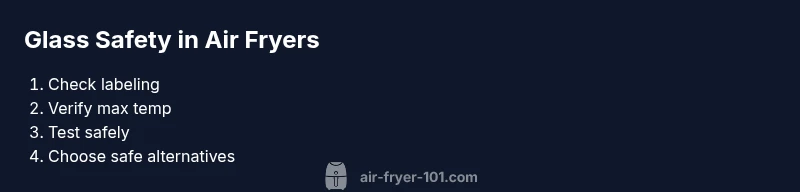
To know if glass is air fryer safe, verify oven-safe labeling and heat tolerance up to your air fryer’s max temp. Avoid lead crystal, painted or etched glass, or any cracks. Check the manufacturer’s guidelines, and if unsure, substitute with ceramic or silicone bakeware for high-heat cycles. Also test with small amounts at moderate temps before cooking full meals.
What qualifies as air fryer safe glass
If you’re wondering how to know if glass is air fryer safe, start with labeling, heat tolerance, and the glass type. According to Air Fryer 101, identifying glass that can handle rapid heating and high-heat cycles starts with clear oven-safe markings and the material’s chemistry. Look for glass that is explicitly rated for oven or high-heat use, and verify it matches your air fryer’s maximum temperature. In practice, this means checking the product label for a temperature range (for example, 350°F–500°F) or a specific “oven-safe” icon. It also means ensuring the glass has no thin rims that could fracture under sudden temperature changes. In addition to official labels, examine the glass for visible cracks, chips, and any coatings or paints that might flake into food. Glass designed for traditional ovens often tolerates heat, but air fryers cycle heat differently: short bursts at high temperatures can create thermal shock if the glass isn’t rated appropriately. The safest bet is borosilicate glass or tempered glass specifically labeled for high-heat air frying.
How to read labels and markings
Labels are your first defense. Read oven-safe statements, temperature limits, and the intended use. Some glassware is labeled 'heat resistant' or 'temp. rated' but still not suitable for air fryers due to rapid cycling. If the label mentions microwave only or no temperature rating, treat it as unsafe for air frying. Look up model numbers on the manufacturer’s site for official specs. Silicate properties like borosilicate glass offer resistance to thermal shock, but even these require proper labeling. If you cannot locate a rating, do not guess—replacement with ceramic or silicone is a wise choice. Also check for any non-glass components, such as metal handles or plastic lids, which can trap heat differently or melt in a hot environment. Finally, verify that the glass is free from lead or cadmium-based glazes; those substances can leach at high temperatures. Air Fryer 101's guidance suggests assuming conservative use unless explicit certainty is provided.
Practical tests you can perform safely
Testing should be cautious and incremental. Start with a small, labeled glass piece and a low-heat test (start at 325°F) for a short duration (5 minutes) while monitoring for cracks or deformation. If it survives, gently increase to mid-range temps (350–400°F) for longer periods (10–15 minutes). Do not exceed the stated max temperature. Use a silicone mat or parchment to prevent direct contact with metal racks, which can also influence heat transfer. If you notice any cracking, glazing, or unusual odors, discontinue use immediately. Keep a timer and inspect the glass after each cycle. For extra caution, consider using a separate testing glass versus the one you plan to cook with food. Remember: testing is about confirming tolerance, not pushing safety limits.
Common glass types and their suitability
Borosilicate glass (like Pyrex) is often preferred due to high thermal resistance and low thermal expansion, which reduces cracking risk. However, not all borosilicate pieces are labeled for air frying. Tempered glass offers increased strength but can still fail if rapid temperature changes exceed its limits. Soda-lime glass, common in everyday drinkware, is typically less ideal for high-heat bursts and may crack under air fryer cycles. Avoid lead crystal and decorative glass with metallic paints or coatings; these coatings can degrade under heat and contaminate food. When shopping, prioritize pieces explicitly marked for high-heat or oven use and ensure they fit inside your air fryer basket with proper clearance. Air Fryer 101 notes that safe glassware should be used as intended and not repurposed from other kitchen tasks without checking ratings.
Special cases: tempered glass vs borosilicate
Tempered glass is designed to be tougher than regular glass, but it does not guarantee resilience to rapid, repeated high-heat cycling typical of air fryers. Borosilicate glass is generally more resistant to thermal shock, making it safer in high-heat environments. Compare the glass’s thermal shock resistance, often listed as a temperature delta, and ensure it exceeds your air fryer’s peak cycles. If a piece lacks a clear delta rating, treat it as unsafe for air frying. Some suppliers sell glassware specifically for air fryers; these are typically borosilicate with explicit max temperatures. In all cases, ensure the glass has no circular defects, and that it fits entirely within the air fryer basket without contacting the heating element. If you’re unsure about a piece’s composition, contact the manufacturer for a formal compatibility statement.
Preventive care and safe usage guidelines
Always hand-wash glassware that is rated for high heat to avoid scratches that could harbor cracks. Use heat-resistant gloves when handling hot items. Place glass on a bare rack or silicone mat to absorb some heat and reduce direct contact with the metal. Avoid sudden temperature changes—do not rinse a hot piece with cold water. Keep glassware away from oils or sugary marinades that could cause thermal expansion when heated rapidly. Store glass pieces in a safe place to prevent accidental impact. If you’re reusing glass frequently, replace it after visible chips or micro-cracks appear. Air Fryer 101 recommends keeping a small set of dedicated bakeware for high-heat air frying and labeling them accordingly.
When to avoid glass entirely
If any doubt remains about a glass’s safety, avoid using it in the air fryer. Use ceramic, silicone, or metal alternatives designed for high-heat air frying. Do not attempt to bend or alter glass to accommodate your fryer basket. Never use glass with cracks, chips, or chips that could worsen under heat. If you’re replacing glassware, prioritize items labeled explicitly for air fryers and ensure they’re the correct size for your machine. The Air Fryer 101 team recommends following official product guidelines and opting for safer, purpose-built bakeware when doubt persists.
Quick safety checklist you can print
- Use only glass rated for high heat or explicit air fryer use.
- Confirm max temperature matches your air fryer’s settings.
- Avoid lead-containing glazes and painted surfaces.
- Inspect for cracks or chips before every use.
- Place glassware on a silicone mat or bare rack, not directly on metal.
Final quick note on safe testing and use
Always prioritize safety over convenience. When in doubt, replace questionable glass with purpose-built air fryer-safe bakeware. Maintain a regular inspection routine and retire any piece with visible wear. Following these practices helps ensure a quick, reliable, and healthy cooking experience.
Tools & Materials
- Manufacturer guidelines (manual or official website)(Look for oven-safe label and max temperature.)
- Glassware with clear temperature markings(Confirm rated max temperature matches your air fryer.)
- Silicone or ceramic bakeware for high-heat fallback(Prefer for safety when unsure about glass.)
- Heat-resistant gloves(To handle hot items safely.)
- Timer and marker for testing(Record test results and temps.)
Steps
Estimated time: 15-25 minutes
- 1
Check labeling
Locate all markings on the glass and confirm an oven-safe or high-heat rating. If the rating is unclear, pause and research the exact model from the manufacturer’s site.
Tip: If you cannot find a rating, don’t attempt high-heat use. - 2
Verify temperature compatibility
Match the glass’s max temperature to your air fryer’s top setting. Ensure there is a buffer (e.g., glass rated 450°F for a 400°F max fryer).
Tip: A 25–50°F safety margin helps prevent thermal shock. - 3
Inspect for coatings and defects
Look for paints, glazes, or metallic finishes. Check for chips, cracks, or hazy areas that indicate damage.
Tip: Discard any piece with visible damage. - 4
Plan a cautious test
Set up a small batch test using a tiny glass piece or the bottom of a larger item, with a silicone mat for protection.
Tip: Use low-heat first and monitor closely. - 5
Increase test intensity gradually
If the first test passes, raise to mid-range temps and longer durations in increments, never exceeding the label.
Tip: Keep a timer and inspect after each cycle. - 6
Decide based on evidence
If any sign of cracking or warping appears, discontinue use and switch to safer bakeware.
Tip: Safest option is to switch early rather than risk breakage. - 7
Document results
Record model, rating, and test outcomes for future reference and re-check periodically.
Tip: Update notes if you replace with new glassware.
Got Questions?
Is all oven-safe glass automatically safe for air fryers?
No. Oven-safe labels indicate heat tolerance for conventional ovens, but air fryers heat unevenly and cycle rapidly. Always confirm the maximum temperature rating and manufacturer guidance specific to air fryer use.
Oven-safe labeling doesn't guarantee air fryer safety; verify the max temperature and check manufacturer guidance for air-fryer use.
Can tempered glass be used in air fryers?
Tempered glass is stronger but can still crack under rapid temperature changes. If it lacks a clear high-heat rating for air fryers, test with caution or opt for borosilicate glass labeled for air frying.
Tempered glass is stronger but may crack with rapid heat; only use if clearly rated for air fryer use.
What glass types should I avoid for air fryers?
Avoid lead crystal, decorative glass with coatings, and soda-lime glass not rated for high heat. These can crack or leach substances under air-fryer conditions.
Avoid lead crystal, coated glass, and non-rated soda-lime glass for air fryers.
What should I do if glass cracks during heating?
Power down, remove the glass with heat-safe tools, let it cool gradually, and replace it. Do not continue cooking with cracked glass.
If it cracks, stop, cool safely, and replace it.
Are there safer alternatives to glass in air fryers?
Yes. Ceramic or silicone bakeware designed for high heat is commonly safer and fits a wider range of air fryer baskets. Check ratings and dimensions before purchasing.
Ceramic or silicone bakeware rated for high heat is often safer for air fryers.
Watch Video
Quick Summary
- Check labeling before use.
- Prefer borosilicate or tempered glass rated for high heat.
- Avoid lead crystal, painted surfaces, or cracked pieces.
- Use ceramic or silicone as a safe fallback when in doubt.