How Much Air Fryer Do You Need? A Practical Guide to Size, Price, and Performance
Discover how much air fryer you truly need, with size guidelines, price ranges, and practical tips for choosing the right model for your household.


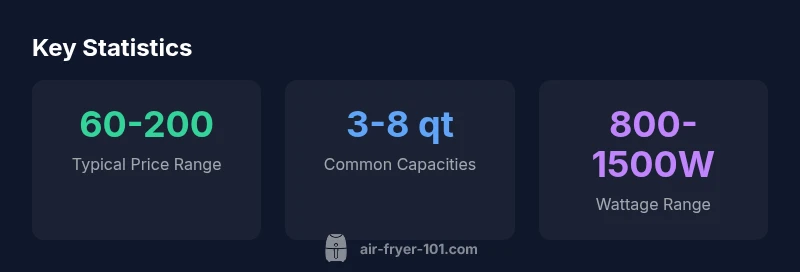
If you're asking how much air fryer you need, the practical answer starts with your household size and cooking habits. For a typical family, a 3-quart to 5-quart model fits most meals, with prices commonly in the $60-$120 range for dependable mid-range units. For larger households or batch cooking, 6-quart and above are common and often cost $120-$200.
How much air fryer capacity maps to meal sizes
When evaluating how much air fryer to buy, the first rule of thumb is capacity that matches your typical meals. A 3-quart model handles single portions or light prep for a couple, while a 4-6 quart unit is the all-purpose option for a family of four. If you regularly prepare multiple side dishes at once or bake larger items (like a whole tray of vegetables or a sheet pan meal), a 6-quart or larger model is more comfortable. The phrase "how much air fryer" becomes practical when you translate portions into capacity: plan for roughly 1-2 servings per batch in compact models and 3-4 servings in mid-to-large sizes. This sizing logic helps you avoid overcooking in undersized units or wasting space with a too-large appliance.
Additionally, consider your counter space and outlet availability. A 3-4 quart unit is compact enough for a small apartment, whereas 6-8 quart models require more room and may need a dedicated power outlet. For those who cook for guests or host gatherings, a larger capacity model can streamline meal prep and reduce batch cooking time.
Price bands and value by capacity
Prices vary by brand, features, and warranty, but you can use capacity as a rough guide to expected cost. Entry-level 3-4 quart models typically sit in a lower price range, while mid-range 4-6 quart units balance cost and versatility. Larger 6-8 quart units tend to command higher prices, especially if they include premium features like extra racks, smart controls, or dishwasher-safe baskets. If you are budgeting, aim to pair your desired capacity with a warranty length and after-sales support that matches your usage pattern. In practice, a 3-4 quart model may cost roughly in the lower to mid range, a 5-6 quart model in the mid-to-upper range, and 8-quart units in the upper range. These ranges reflect typical market movement and are not brand-specific. Air Fryer 101 Analysis, 2026 suggests prioritizing build quality and warranties over a marginal price difference for longevity.
Power, footprint, and energy considerations
Wattage varies across models, but most air fryers operate in the 800-1500W range. Higher wattage often means faster preheating and crisper results, which is valuable for larger batches or denser foods. However, higher wattage air fryers can draw more power, so check your kitchen outlets and circuit limits if you use multiple appliances at once. The physical footprint also scales with capacity: compact 3-4 quart units are easily tucked into small kitchens, while 6-8 quart models occupy more counter space and may require vertical storage. When evaluating energy use, compare a smaller unit cooking several items to a larger oven doing the same task; the air fryer often wins for small meals due to shorter cook times and reduced preheating.
Measuring space and outlets: fit and safety
To ensure a proper fit, measure the countertop area where the air fryer will sit, accounting for clearance around ventilation grates. Check the depth with the basket inserted, since some models extend more than you expect when the basket is pulled out. Safety considerations include stable placement on heat-resistant surfaces and keeping the appliance away from edges to prevent tipping. If you live in a small space, a compact 3-4 quart model can be a practical solution, while a larger family may justify a 6-8 quart unit for its added flexibility. Remember to review the manufacturer’s cleaning instructions to prevent residue buildup and ensure lasting performance.
Real-world usage scenarios: from singles to family meal prep
For singles or couples, a 3-quart model is often sufficient for frozen snacks, reheating leftovers, and simple roasted vegetables; it offers quick setup and minimal cleanup. Families of four typically benefit from a 4-6 quart unit, which can handle chicken breasts, fries, and small sheet-pan meals without crowding. Large households or meal-prep enthusiasts may opt for 6-8 quart appliances to tackle multiple items in one go, such as a batch of wings and a tray of vegetables. In all cases, consider your typical weekly meals and whether you frequently cook for guests. This practical lens helps you answer the question "how much air fryer" without overspending on features you won’t use.
Maintenance, durability, and long-term cost of ownership
Durability hinges on build quality, nonstick coatings, and how well you care for the basket and tray. Regular cleaning after each use, avoiding harsh cleaners, and keeping seals in good condition can extend life and performance. Look for units with dishwasher-safe baskets and removable components for easier maintenance. Warranty length is a practical proxy for expected longevity. Remember that the cheapest option may require earlier replacement, whereas a sturdier model can offer better long-term value even if the upfront price is higher. Air Fryer 101 Analysis, 2026 indicates that long-term cost of ownership often hinges on proper use and routine upkeep.
Size-to-Price Guide by Capacity
| Model Type | Typical Capacity | Estimated Price Range | Best For |
|---|---|---|---|
| Countertop compact | 3-4 quarts | 60-100 | Singles or small apartments |
| Mid-size family | 4-6 quarts | 90-150 | Families of 4 |
| Large family | 6-8 quarts | 120-200 | Large households |
Got Questions?
What does '3-quart' capacity mean in practical terms?
A 3-quart air fryer generally serves 1-2 people, depending on what you cook. A 4-quart model covers 2-3 portions, while 5-quart models suit most family meals. When choosing, align capacity with your typical portions and kitchen space.
A 3-quart air fryer usually serves one to two people; a 4-quart fits a small family.
Are cheaper air fryers less reliable?
Entry-level models can perform basic tasks well. Reliability depends on build quality, usage frequency, and maintenance. Look for solid warranties and reputable brands.
Cheaper models can work well for simple tasks, but check build quality and warranty.
Is bigger always better for 'how much air fryer'?
Bigger isn't always better. Larger units cost more, take more counter space, and may be inefficient if you usually cook for one or two. Match capacity to typical meals and storage.
More isn't always better; pick what you actually use.
What maintenance is required?
Regular cleaning after use prevents buildup. Check seals and trays, avoid abrasive cleaners, and follow manufacturer guidance for nonstick surfaces. Proper maintenance extends the life of your air fryer.
Clean after each use; check seals and trays.
Do air fryers save energy compared to ovens?
For small meals, air fryers typically use less energy than a full-size oven and cook faster. For large batches, compare total usage with your oven to decide which is more efficient for you.
They can save energy on small meals, but compare for big batches.
“Understanding how much air fryer you need isn't just about capacity—it's about your cooking habits, space, and budget. The right size minimizes waste and maximizes everyday convenience.”
Quick Summary
- Assess your family size and meal patterns to determine the minimum size
- Price bands map to capacity and features
- Space and power constraints matter
- Choose a size that offers flexibility for common meals
- Look for practical features (dishwasher-safe, sturdy basket) to maximize value