What to Use in Air Fryer Paper: Parchment, Perforated Liners, and More
Discover the best papers and liners for air fryers, how to choose the right size, and tips to keep airflow steady and cleanup easy. Air Fryer 101 explains parchment, perforated sheets, and reusable options for healthier, crisper results.


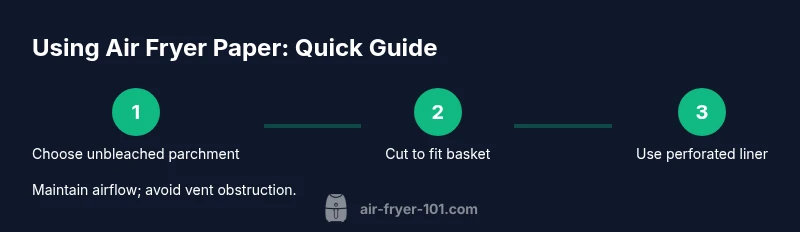
What to use in air fryer paper includes parchment paper (unbleached and heat-rated), perforated parchment sheets, or silicone liners. Avoid wax paper and non-heat-rated sheets that can melt or smoke. This quick answer sets the stage for the detailed steps below.
Understanding the basics of what to use in air fryer paper
According to Air Fryer 101, the safest and most reliable path to crisp, non-sticky results starts with the right paper. Understanding what to use in air fryer paper helps you avoid waste, smoke, or soggy bits. In practice, most home cooks rely on parchment paper that is unbleached and heat-rated for baking and cooking. Perforated parchment options, special air fryer liners, and even minimal contact methods (like a thin sheet trimmed to fit) can protect the basket while preserving airflow. The goal is to keep a barrier between food and the basket surface without blocking the rapid hot air that makes air fryers effective. Foods like fries, chicken nuggets, and vegetables often benefit from a protective layer that prevents sticking, reduces cleanup, and minimizes absorbed oil.
Air Fryer 101’s analysis shows that, for most tasks, the best choice is parchment designed for high-heat cooking. Wax paper or regular printer paper should never be used in an air fryer because they can melt or smoke. Even among parchment papers, choose unbleached varieties with minimal coatings and no added wax. If you want to reuse liners, pick silicone liners or perforated versions that maintain airflow despite repeated use. The bottom line: select a liner that is food-safe, heat-resistant, and fits your basket without covering the vents.
Types of air fryer paper that work well
There are several options that reliably perform in air fryers, each with its own pros and constraints. The most common and widely recommended is unbleached parchment paper designed for high-heat cooking. Look for papers labeled as oven-safe or baking parchment with a heat tolerance that clearly states it can endure the temps you typically use in your model. Perforated parchment sheets are especially popular because the small holes help maintain air circulation while catching drips. Reusable silicone liners are another option for cooks who prefer not to use disposable paper. They provide a smooth surface, are easy to clean, and minimize waste. Avoid plain wax paper and any parchment that has a heavy silicone coating that might separate or smoke under prolonged heat. In addition, never use aluminum foil to completely cover the basket, unless you follow a specific recipe that requires it and leaves gaps for airflow. Remember, the goal is to protect the basket without stifling the hot air that creates the crisp finish.
How to choose the right size and shape for your basket
Start by measuring the width and depth of your air fryer basket. The right paper should cover the basket surface without hanging over the sides or blocking the air vents. If you’re using perforated parchment, ensure the sheet or liner is slightly smaller than the basket bottom so steam can escape through the perforations. For round baskets, a circular sheet trimmed to fit works well; for rectangular baskets, a square or rectangular cut that covers the base with a little margin is ideal. When in doubt, choose a liner that leaves a small border around the edge to maintain airflow. A good fit reduces the chance of curling corners that can cling to food or roll up during cooking. Air Fryer 101 recommends erring on the side of a little extra space rather than forcing a tight fit.
How to position the paper for even air circulation and safe results
Position the liner flat against the basket base and center it before adding food. Ensure there are no folded edges or curled corners that could trap food or snag utensils. If you’re using perforated parchment, the holes should face upward to allow air to flow through them. Place food in a single even layer and avoid overlapping pieces; crowded food steams rather than crisps. When you shake or turn food halfway through cooking, let it rest briefly with the liner in place so you don’t disturb the barrier. This method keeps moisture away from the paper and helps maintain crisp edges.
Common mistakes to avoid and how to fix them
Common mistakes include wrapping the basket in a full sheet of parchment that covers vents, using wax or coated papers, and not trimming the liner to fit. These errors can cause smoke, uneven browning, or sticky residues. Another frequent pitfall is overloading the basket; more food means less hot air circulation, causing soggy results and frequent liner displacement. To fix these issues, trim the liner to fit, use perforated options, and cook in smaller batches when needed. If you notice curling corners during cooking, pause, remove the basket, and flatten the liner before resuming. These small adjustments keep results consistent and reduce cleanup time.
Safe alternatives and when to use them
If parchment paper isn’t available, silicone liners are a good reusable option that maintains air flow and reduces waste. Some cooks also use baking mats with perforations, or lightweight foil with holes, to achieve a similar effect. Always ensure any alternative is food-safe and designed for high-heat usage. The important principle is to maintain air flow around the food while preventing direct contact with the basket surface to minimize sticking and oil absorption. If you choose silicone or mats, follow the manufacturer’s guidance on baking temps and care instructions to prolong the life of the liner.
Real-world cooking scenarios: fries, chicken, and vegetables
Food type matters when choosing the right paper. For fries or potato wedges, parchment with holes helps achieve a crisp exterior while letting moisture escape; for battered items like chicken tenders, a perforated liner or a silicone sheet can prevent soggy bottoms. Vegetables benefit from a light layer that stops sticking without muffling browning. In all cases, preheat if your model requires it, arrange food in a single layer, and monitor the cooking progress. Air Fryer 101 notes that small changes in liner choice or food arrangement can lead to noticeably crisper results with the same cooking time.
Maintenance and cleanup: after the cook
Let the basket cool before removing the liner to avoid burns. If using disposable parchment, simply fold and discard. For reusable silicone liners, rinse with warm water and mild detergent, then air dry before the next use. Clean the basket and any residue from cooking oil to prevent buildup that can transfer to future batches. Properly maintained liners improve performance and extend their life, while also simplifying cleanup after meals.
Tools & Materials
- Parchment paper sheets (unbleached)(Choose perforated sheets or cut-to-fit with holes for airflow)
- Perforated parchment sheets(Designed with holes for air flow)
- Silicone air fryer liner(Reusable option when you don’t want to use paper)
- Food-safe kitchen scissors(Trim liner to fit the basket precisely)
- Tongs or silicone spatula(Use to place and flip food safely)
- Dry paper towels(Pat food dry to reduce moisture transfer)
Steps
Estimated time: 25-40 minutes
- 1
Measure basket and select a liner
Before you begin, measure the width and depth of your air fryer basket. Choose a liner size that covers the bottom without extending over the sides, ensuring it doesn’t block the vents. This helps maintain optimal airflow for crisp results.
Tip: Use a ruler to confirm fit; a slightly smaller sheet prevents curling. - 2
Trim liner to fit the basket
If you’re using parchment, cut it to fit the basket base with a small margin around the edges. Avoid oversized sheets that trap steam or cover vents.
Tip: Round the corners to reduce curling and edge snagging. - 3
Place liner flat and centered
Set the liner flat on the basket bottom, centered to prevent edges from lifting. If you’re using perforated parchment, ensure the holes align with the basket’s airflow patterns.
Tip: Press gently to extinguish any wrinkles before adding food. - 4
Add food in a single layer
Arrange food in a single, even layer on top of the liner. Overcrowding blocks hot air and leads to uneven browning and longer cook times.
Tip: Leave space between pieces for better air circulation. - 5
Cook and shake halfway through
Start the cooking cycle, then shake or flip the contents about midway. This promotes even browning and prevents sticking where food touches the liner.
Tip: Use tongs to avoid burns and protect the liner edges. - 6
Check doneness and remove liner safely
When food reaches your target color and texture, pause if needed and remove the liner carefully with tongs or by sliding it out from the basket rim.
Tip: Be mindful of hot surfaces and steam when lifting the liner. - 7
Clean and dry the liner after use
If using disposable parchment, fold and discard. If using silicone liners, rinse with warm water and mild soap and air dry before next use.
Tip: Keep liners dry to prevent mold or odors between uses.
Got Questions?
Can I use wax paper in an air fryer?
Wax paper is not recommended for air fryers because it can melt or release smoke at high temperatures. Use parchment paper or silicone liners instead.
Wax paper isn’t safe for air fryers; use parchment or silicone liners for safety and better results.
Is parchment paper safe at high temperatures?
Most parchment papers are designed for high-heat cooking and are safe within typical air fryer uses. Choose unbleached parchment with minimal coatings and avoid wax-containing varieties.
Parchment paper is generally safe if it's unbleached and heat-rated; check the packaging for guidance.
Should I preheat with parchment paper?
Preheating with parchment can cause edges to curl or overhang. If you preheat, place the liner after the preheat cycle, or use a perforated liner that won’t block airflow.
Preheat without paper, then add paper and food if your model allows it.
What size parchment is best for my basket?
Choose a size that covers the basket floor with a minimal border and leaves vents clear. Perforated sheets are often easier to fit than a full sheet.
Pick a size that fits snugly without blocking airflow.
Can I reuse parchment paper?
Recycle or reuse parchment only if it’s still clean and not torn. Otherwise, discard to avoid residue and flavor transfer.
Reuse only if it’s still clean and undamaged.
Are there eco-friendly options for air fryer paper?
Yes. Look for unbleached parchment and reusable silicone liners. Check for food-grade coatings and ensure proper cleaning and reuse guidelines.
Choose unbleached parchment or silicone liners for sustainability.
Watch Video
Quick Summary
- Choose unbleached parchment or perforated liners.
- Avoid wax paper and non-heat-rated papers.
- Fit liner to basket to maintain airflow.
- Cook in a single layer for even browning.
- Clean and dry liners after use.